

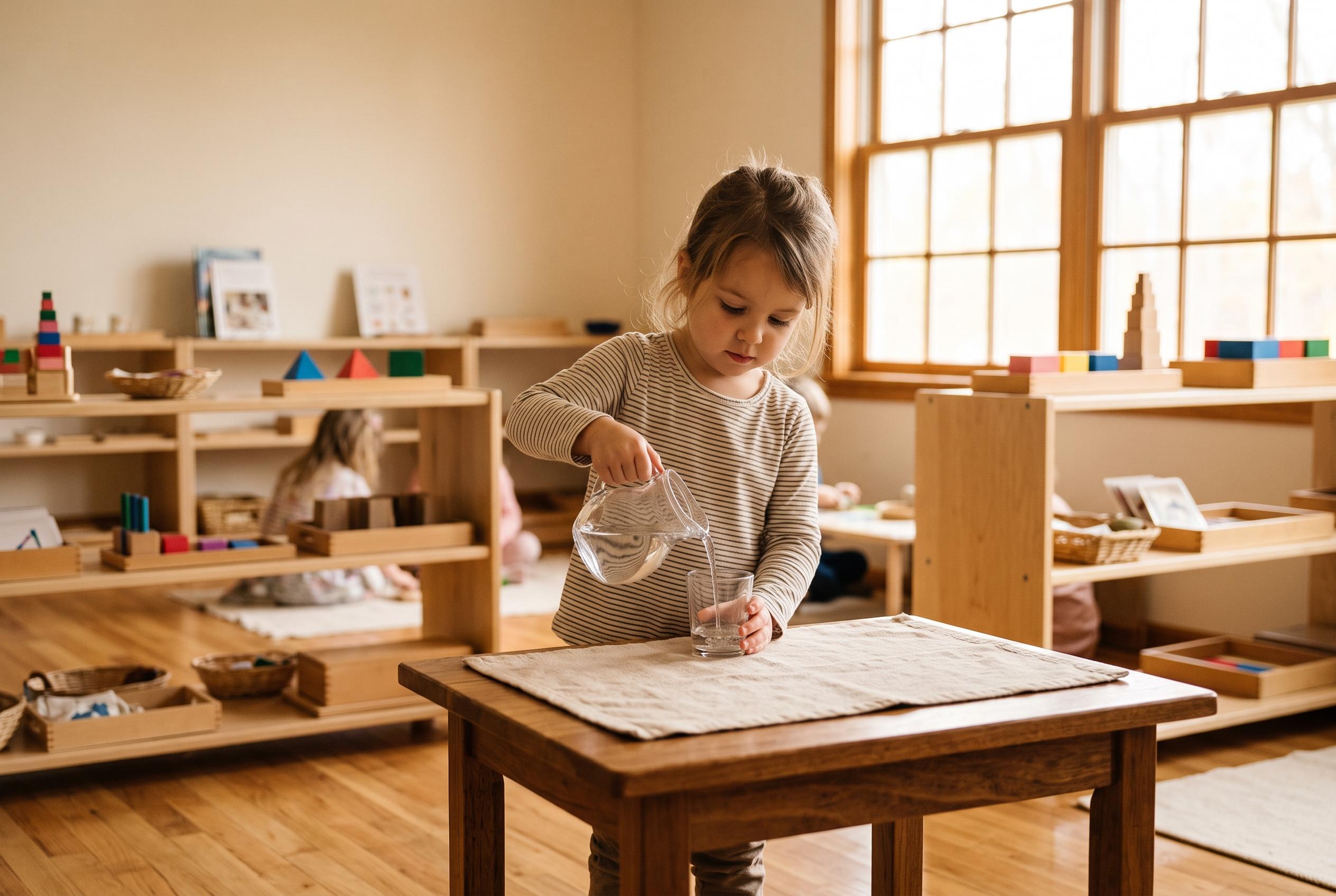

A focus on independence in Montessori education fosters confidence, judgement, and self-respect, helping children grow into responsible and self-assured adults while maintaining vital boundaries and a supportive environment.
A child who feels secure enough to be fully themselves is often a child who can learn more freely. That is the core idea running through Montessori writing on independence: freedom is not simply about doing things alone, but about developing confidence, judgement and a stable sense of self. As several Montessori schools and education writers note, the aim is to help children act with growing responsibility while still keeping the structure they need.
In practical terms, that means more than teaching a child to dress, tidy up or complete everyday tasks. Montessori advocates say independence also includes thinking for oneself, trusting one’s own voice and resisting pressure to become a copy of everyone else. The prepared environment matters here. When children can choose activities, repeat them and work at their own pace, they are more likely to build self-respect and a sense of control over their lives.
This approach also places a clear duty on adults. Teachers and parents are not expected to remove limits altogether. The message across Montessori discussions is that children still need dependable boundaries, but those limits should leave room for different interests, learning rhythms and ways of expressing understanding. In that setting, autonomy is supported rather than managed for them, and confidence grows through practice, role-modelling and hands-on experience.
That balance between freedom and responsibility is what gives the philosophy its strength. Children are not being pushed towards a narrow idea of what a pupil should look like. Instead, they are being given the chance to develop into thoughtful, self-directed people. The argument is simple but powerful: when children feel safe enough to be themselves, they are better placed not just to succeed at school, but to become the adults they are meant to be.
Disclaimer: This content is for informational purposes only and is not intended to be a substitute for professional medical judgment, advice, diagnosis, or treatment.



