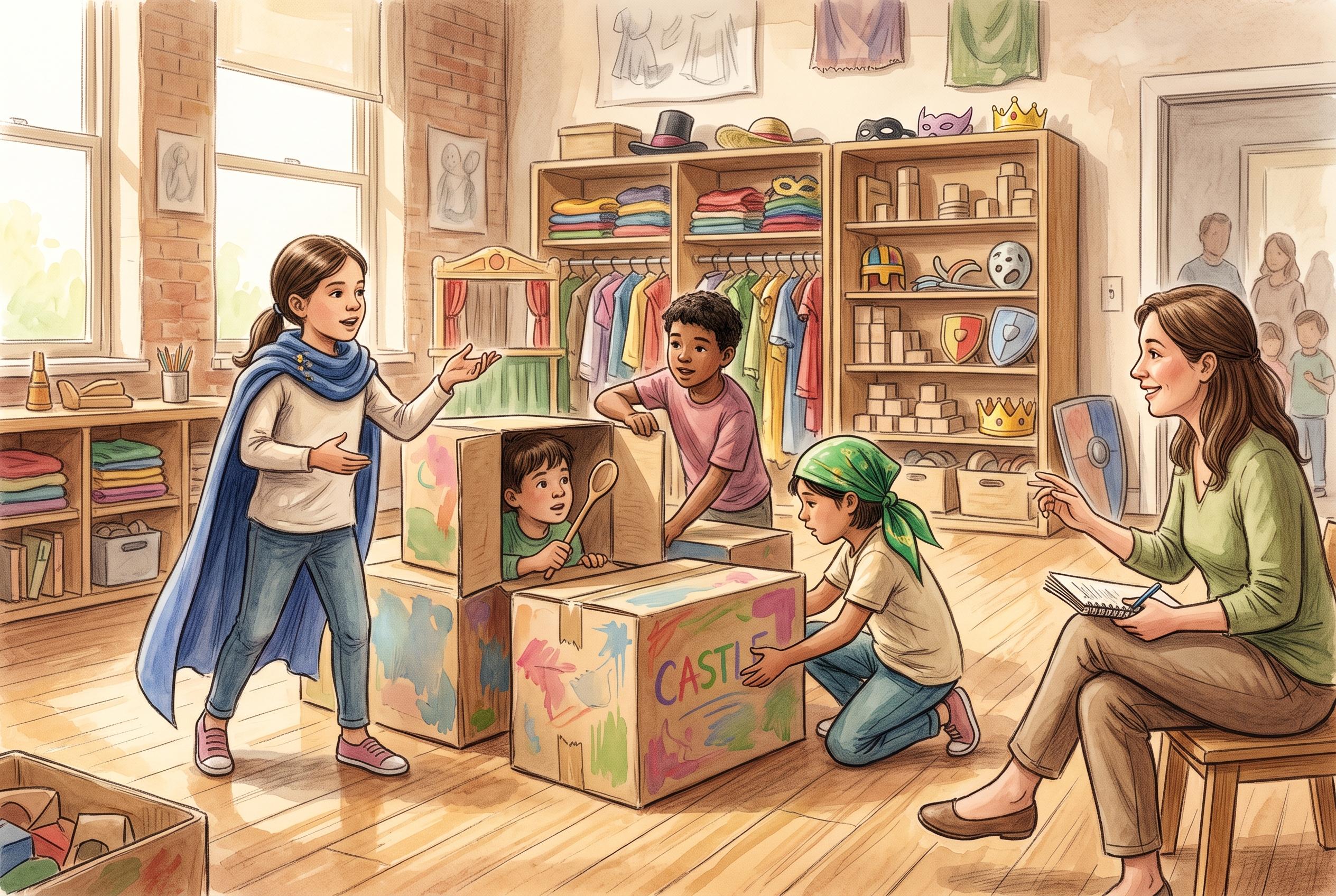

Regular weekly drama classes offer significant developmental advantages for children, boosting confidence, communication, and resilience, while also providing long-term educational and economic benefits, according to recent research.
Choosing a weekly drama class for a child is a decision that reaches far beyond filling an afternoon. For many families, it is about finding an activity that helps children grow in confidence, learn to work with others and feel part of a group. Supporters of drama education say it can do all three, while also giving children a structured outlet away from the pressures of school and screen time.
Research cited by the Child Development journal found that children involved in formal extracurricular activities were less likely to show depressive symptoms. That wider evidence helps explain why parents increasingly see regular enrichment as more than a pleasant add-on. Drama programmes, in particular, are often described by providers as a place where children can practise speaking clearly, handling feedback and expressing themselves in front of others.
What separates a worthwhile programme from a forgettable one is usually consistency. Weekly sessions matter because children tend to learn through repetition, routine and trust. A class that meets at the same time each week, with familiar teachers and peers, can give a child the confidence to take risks and improve gradually rather than simply having a one-off experience.
The quality of the teaching is just as important. Good providers tend to hire instructors with real subject knowledge and experience working with children. They also usually have a clear structure, so that sessions build towards something tangible, such as a performance, a presentation or another visible milestone. Without that sense of progress, even an enjoyable class can lose its value.
The benefits of drama lessons go well beyond the stage. Theatre groups and arts educators say children often develop communication skills, teamwork, resilience and creativity through role-play, storytelling and group performance. Several providers also argue that these skills can carry into school and home life, helping children become more independent and better at solving problems.
There is also an economic case for the arts. Pro Bono Economics has found that every £1 invested in performing arts education can return as much as £32 in long-term benefits for children. For parents weighing up the cost of lessons, that kind of figure strengthens the case for viewing drama not as entertainment, but as an investment in development.
Still, not every weekly programme is worth the commitment. Large class sizes, weak communication with parents, lack of structure and fees that are not matched by quality are all warning signs. Parents are usually wise to ask about staff training, class size, trial sessions, progress updates and cancellation terms before signing up. A trial class can be especially revealing: if a child leaves excited, curious and eager to return, that often says more than any brochure ever could.
Disclaimer: This content is for informational purposes only and is not intended to be a substitute for professional medical judgment, advice, diagnosis, or treatment.