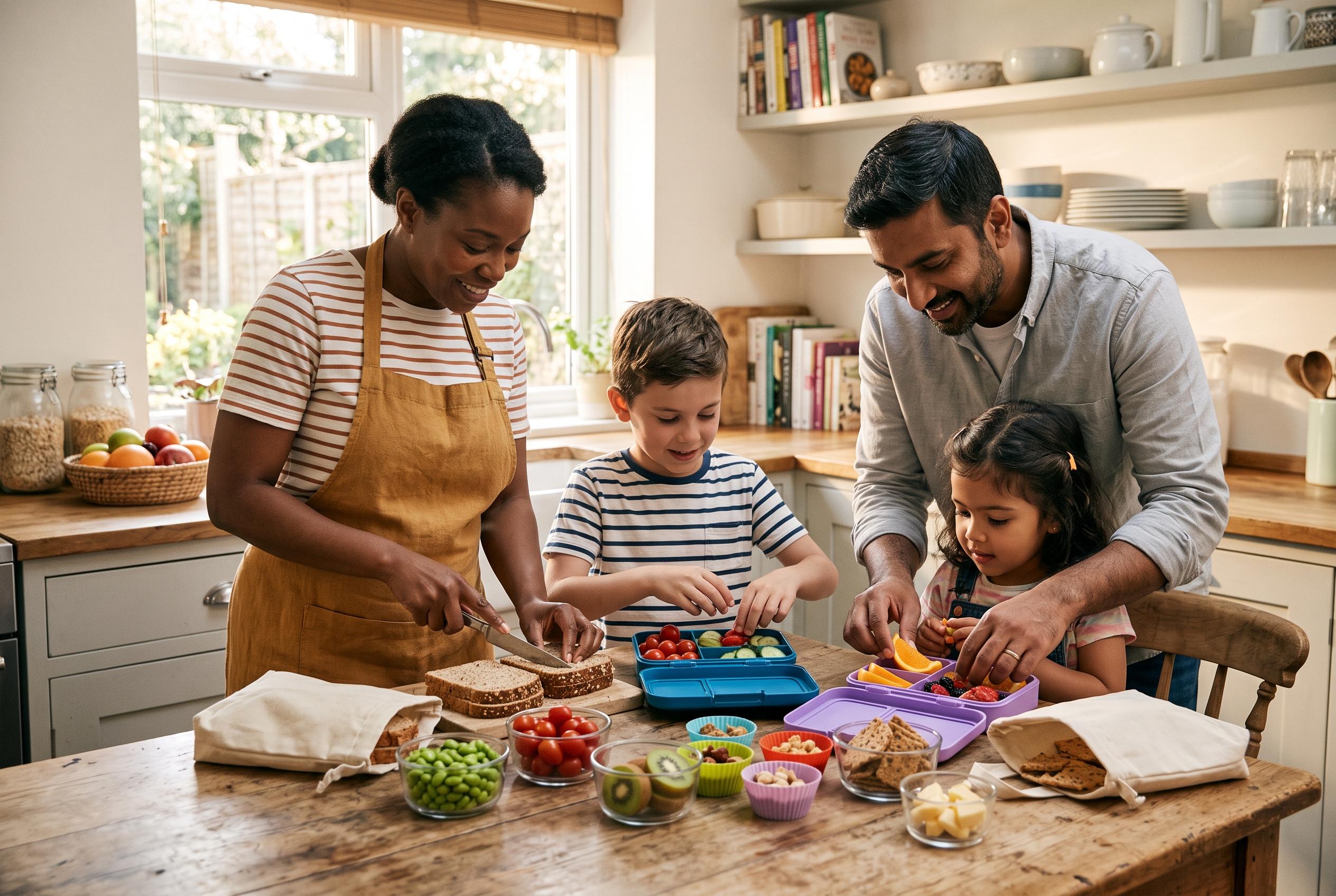

As Dormagen prepares for the new school term, experts emphasise the importance of creating balanced, appealing lunchboxes that foster healthy eating habits and sustain concentration throughout the school day.
As the new school term approaches in Dormagen, many parents are once again facing the daily question of what will actually end up eaten from the lunchbox, not just packed into it. The issue is not only about routine and taste: according to local dietitian Doris Kuhlmann, the contents of a child’s school bag can also reflect wider habits that matter for health later on. She says some pupils reject the traditional sandwich once they get older and instead buy items such as meat rolls, hot dogs or croissants on the way to school, which she regards as a pattern worth avoiding.
Kuhlmann’s advice fits closely with broader guidance from public health groups. Harvard’s T.H. Chan School of Public Health recommends building a child’s lunch around three parts: half fruit and vegetables, a quarter whole grains and a quarter protein, with dairy or an alternative included where possible. The aim is to make the meal balanced enough to sustain concentration through the school day, while still leaving room for foods children are likely to enjoy.
Practical preparation can make that easier. Knowsley Council advises parents to get fruit and vegetables ready the night before, use leftovers to add variety and involve children in choosing or assembling their lunch. That can improve the chances the food will actually be eaten. It also recommends water or milk rather than sweet drinks, and keeping the lunch cool with an ice pack when needed.
Several other health organisations, including Cleveland Clinic, Safefood and Children’s Health Queensland, give similar advice: keep the lunch colourful, rotate the choices and make the food appealing enough that children do not simply trade it away. They suggest simple changes such as cutting sandwiches into shapes, using a bento-style box or layering fillings carefully so bread stays fresh. For parents in Dormagen, the message is straightforward: a good lunchbox is not about perfection, but about balance, variety and a meal a child is willing to finish.
Disclaimer: This content is for informational purposes only and is not intended to be a substitute for professional medical judgment, advice, diagnosis, or treatment.