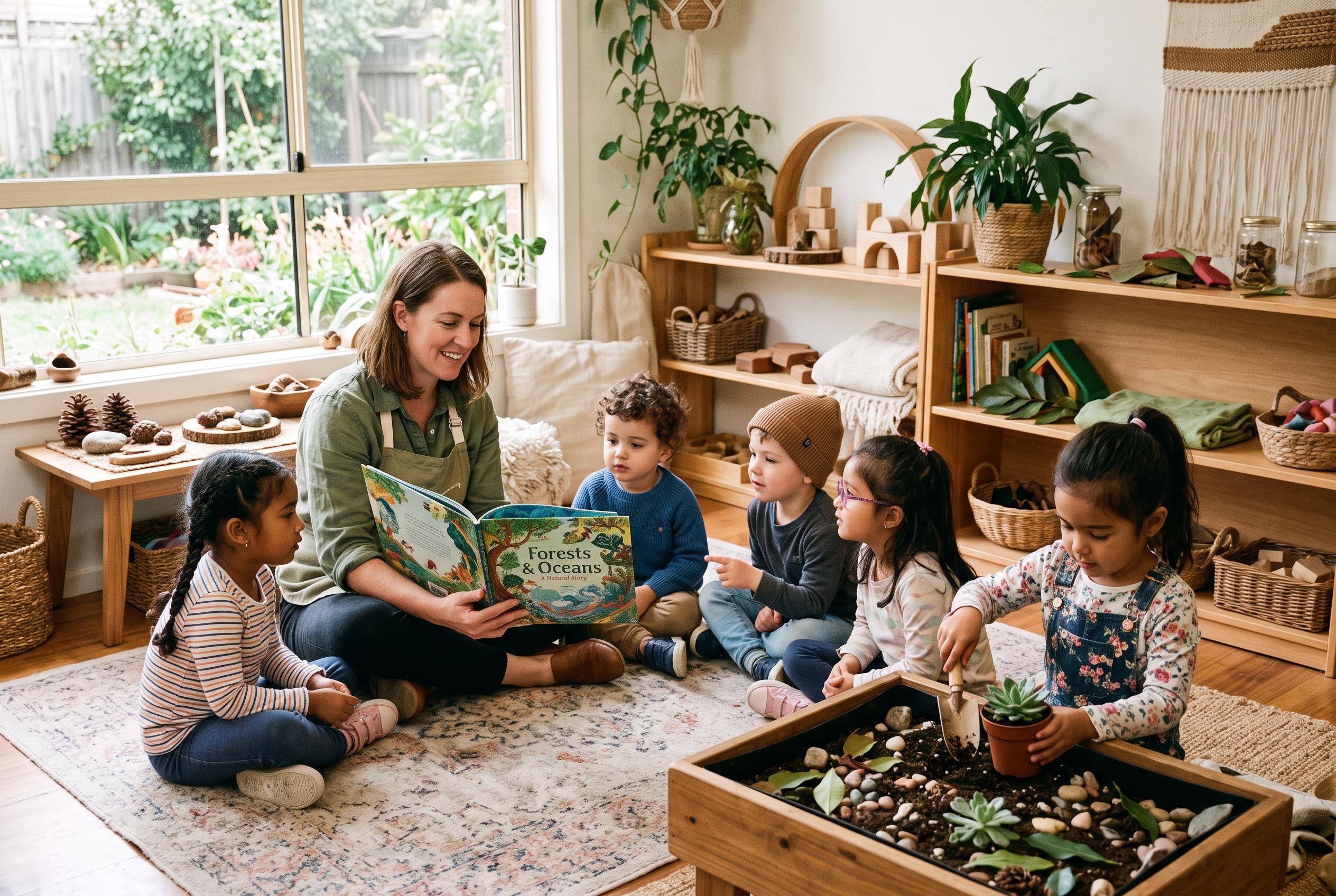

Research shows that instilling ecological awareness in early childhood through storytelling, play, and family involvement can foster lifelong sustainable behaviours, positioning early education as a crucial long-term climate strategy.
Climate change is no longer a distant scientific concern; it is shaping daily life through hotter weather, water stress, pollution, desertification and more frequent extreme events. In that context, the argument that environmental action should begin in early childhood is becoming harder to ignore. The lead essay makes that case clearly: if children learn early why water matters, why trees matter and why waste belongs in proper bins, those habits can become part of how they live as adults.
Research supports that view. A systematic review on early childhood environmental education found that early experiences with nature are linked to stronger environmental concern and more pro-environmental behaviour later in life. Another review of studies on young children and environmental learning said that nature-rich settings and active approaches such as play and movement help support both emotional and cognitive development. Together, the evidence suggests that the earliest years are not too soon for environmental education; they may be the most important time to begin.
The lead article also highlights storytelling as a powerful teaching tool, and that is consistent with wider educational research. A review of environmental education for young children found that storytelling, games, art, technology and direct contact with nature all help build ecological awareness. Separate commentary on environmental storytelling says narratives can make abstract problems feel immediate, emotional and memorable, which can help children and families connect daily behaviour with broader environmental responsibility.
Family involvement remains central. The essay is right to stress that nurseries and kindergartens cannot carry the burden alone, because children learn as much by watching as by being taught. Studies of early childhood environmental education repeatedly point to the role of parents, teachers and other adults as guides, and to the value of linking school learning with home routines and community life. When children see adults conserving water, planting and caring for shared spaces, those actions are far more likely to stick.
That makes environmental education less a side topic than a long-term public investment. UNICEF and other international organisations have argued that building environmental awareness early can support sustainable development, because children who understand nature and resource use are more likely to become adults who make better decisions for the future. The message of the lead article is therefore broader than climate education alone: it is about raising a generation that sees protecting the environment not as a slogan, but as a daily responsibility.
Disclaimer: This content is for informational purposes only and is not intended to be a substitute for professional medical judgment, advice, diagnosis, or treatment.