
Criticism of Indonesia’s free nutritious meal scheme underscores the need for enhanced safety, transparency, and local stakeholder engagement to build public trust and ensure its long-term success.
Criticism of Indonesia’s free nutritious meal programme should not be read simply as resistance to the idea of school feeding. It is better understood as a demand for stronger safeguards, clearer oversight and a scheme that earns public confidence as it expands. The core aim of the programme remains widely supported: improving child nutrition, helping prevent stunting and strengthening the country’s future workforce. But as debate around implementation has shown, a programme built around children’s food will be judged not only by its intentions, but by the safety and reliability of what reaches the plate.
Food safety sits at the centre of that scrutiny. In any large-scale meal scheme, the chain from sourcing to cooking, storage and delivery must be tightly controlled. Concerns about stale food, poor hygiene or uneven quality can quickly unsettle parents and undermine trust. A study on the programme’s implementation in Yogyakarta highlighted coordination and communication problems among those involved, alongside the need for stronger capacity in food safety and distribution. That finding reinforces a simple point: if the process is weak, confidence in the whole programme weakens with it.
Transparency over spending is another pressure point. Indonesia’s Presidential Regulation No. 115 of 2025 sets out the governance framework for the free nutritious meal programme, including supervision, evaluation, reporting, funding and procurement, with the stated aim of giving the scheme legal certainty and accountability. Researchers analysing the policy have argued that open information on budgets, procurement standards, quality benchmarks and programme reviews is essential if misuse is to be avoided and benefits are to be maximised. The argument is not that every operational detail should be published, but that the public must be able to see how money is being used and why the system deserves trust.
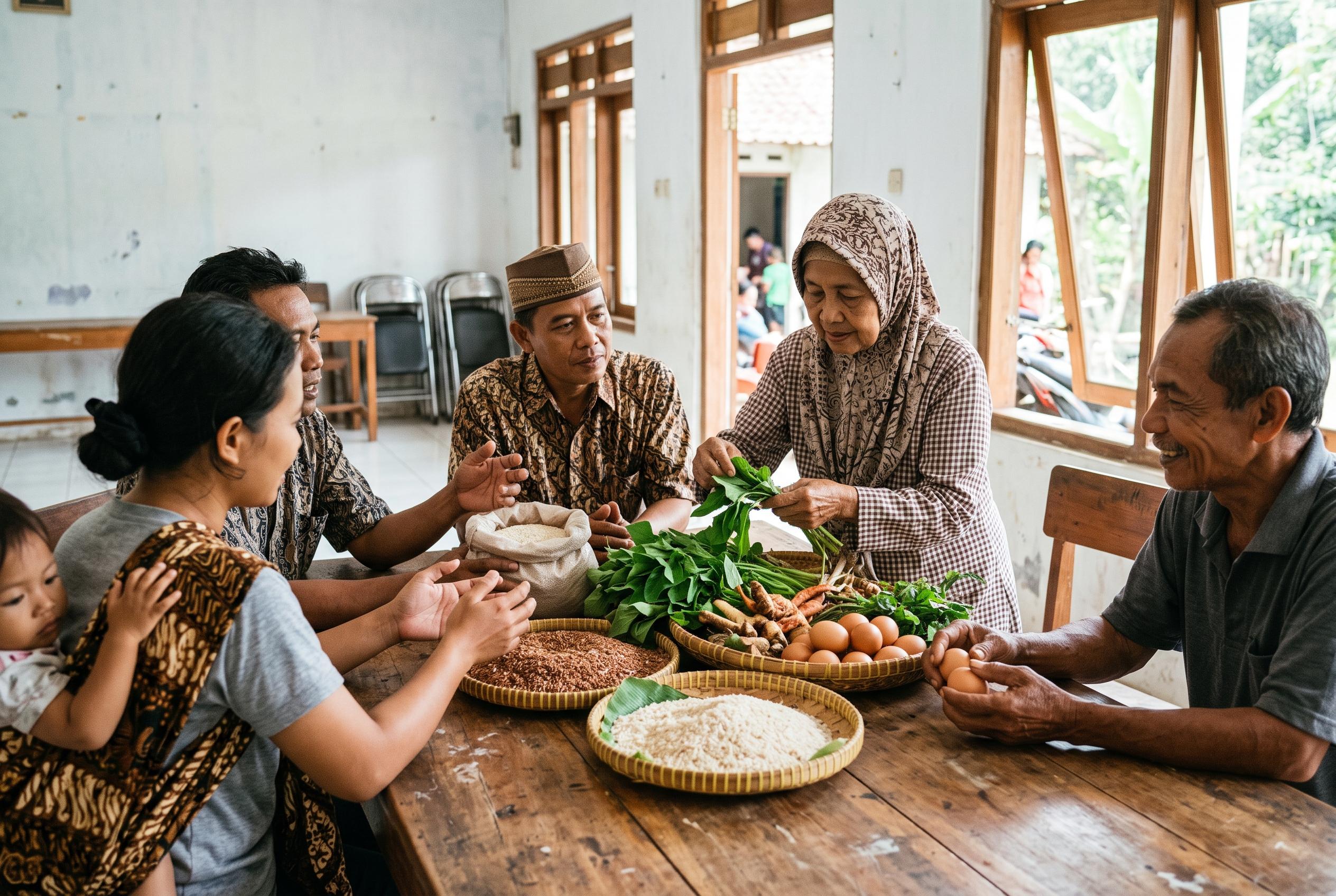
There is also growing support for a more local model of delivery. Analysts and implementation studies have pointed to the value of involving schools, parents, village communities, local caterers, farmers, co-operatives and small businesses near school sites. Such an approach could shorten supply chains, support local economies and make menus more responsive to regional eating habits. It could also turn the programme from a centrally directed scheme into one with shared ownership, which may matter as much as logistics in building long-term legitimacy.
That is why public criticism should be treated as a warning signal, not a rejection of the policy itself. The message from parents and communities is not that children should go without nutritious meals. It is that the programme must be safer, more transparent and more accountable if it is to deliver on its promise. If officials strengthen food safety checks, improve reporting on funds and give local stakeholders a real role in oversight, the programme may gain the credibility needed to endure. For a scheme aimed at children’s welfare, trust is not a side issue. It is the foundation.
Disclaimer: This content is for informational purposes only and is not intended to be a substitute for professional medical judgment, advice, diagnosis, or treatment.