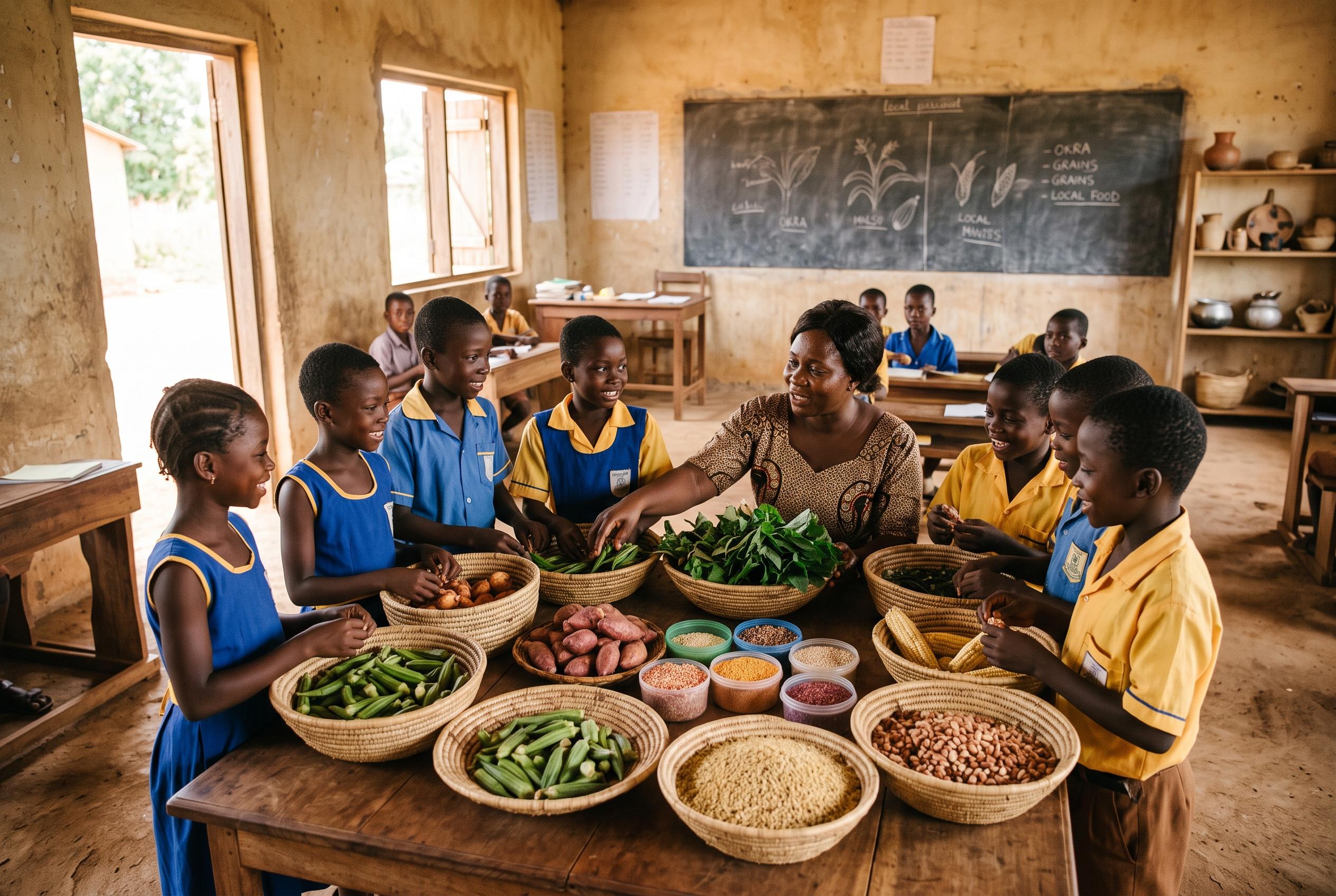

Growing evidence suggests that school meal programmes across Africa can do more than nourish children , they are becoming catalysts for transforming local agriculture, markets, and dietary diversity, with implications for climate resilience and fair livelihoods.
School feeding is often treated as a safety net for hungry children. Yet, as the World Food Programme and a growing body of policy analysis argue, it can do far more than fill stomachs: it can reshape farming, markets, diets and resilience.
Across Africa, about 71.5 million pupils now receive school meals, according to WFP, while government-led programmes reach more than 466 million children worldwide. The agency says school meals are one of the most cost-effective public investments available, with every US$1 spent generating returns of up to US$35. That scale matters because the issue is no longer simply whether children are fed, but what kind of food system is being strengthened each day at the school gate.
A home-grown approach can turn procurement into a reliable market for small farmers. By buying from local producers, governments can support incomes, create demand for crops such as millet, sorghum and pulses, and improve the diversity of children’s diets. WFP’s latest reporting says the continent has seen the strongest growth anywhere in the world, with 20 million more children in sub-Saharan Africa receiving government-led school meals than in 2022. It also says the number of children covered across Africa rose from 66 million in 2022 to 87 million in 2024.
The case for diversification is strengthened by the fragility of the global food system. The Food and Agriculture Organization has long warned that three-quarters of the world’s food comes from just 12 plants and five animal species, leaving diets and supply chains exposed to climate shocks and market disruption. Africa’s own food heritage is much broader, with more than 1,000 traditional edible greens, fruits and vegetables, yet many remain marginal in formal markets. Procurement rules that favour locally grown, nutrient-rich foods could help move these neglected crops into wider use.
Some programmes are already being used as learning environments as well as feeding schemes. Schools can become living laboratories, with gardens, tree nurseries and seed banks linking pupils to biodiversity, agroecology and local food culture. Advocates say this matters because children who learn where food comes from may carry those habits into adulthood, influencing household choices and, over time, market demand. The International panel around the Africa Food Systems Forum in Kigali has presented such ideas as part of a wider push to connect nutrition, agriculture, livelihoods and climate resilience.
The deeper test, however, is whether these programmes change outcomes beyond attendance numbers. A 2024 WFP landscape analysis of home-grown school feeding in West Africa underlined the need for stronger policy design and better coordination if local sourcing is to deliver lasting benefits. That means judging success not only by the number of meals served, but by whether farmers earn more, women and young people participate meaningfully, diets become more varied and underused crops gain stable markets. In that sense, the school plate is not just a place for lunch. It may be one of the clearest entry points for transforming Africa’s food systems.
Disclaimer: This content is for informational purposes only and is not intended to be a substitute for professional medical judgment, advice, diagnosis, or treatment.