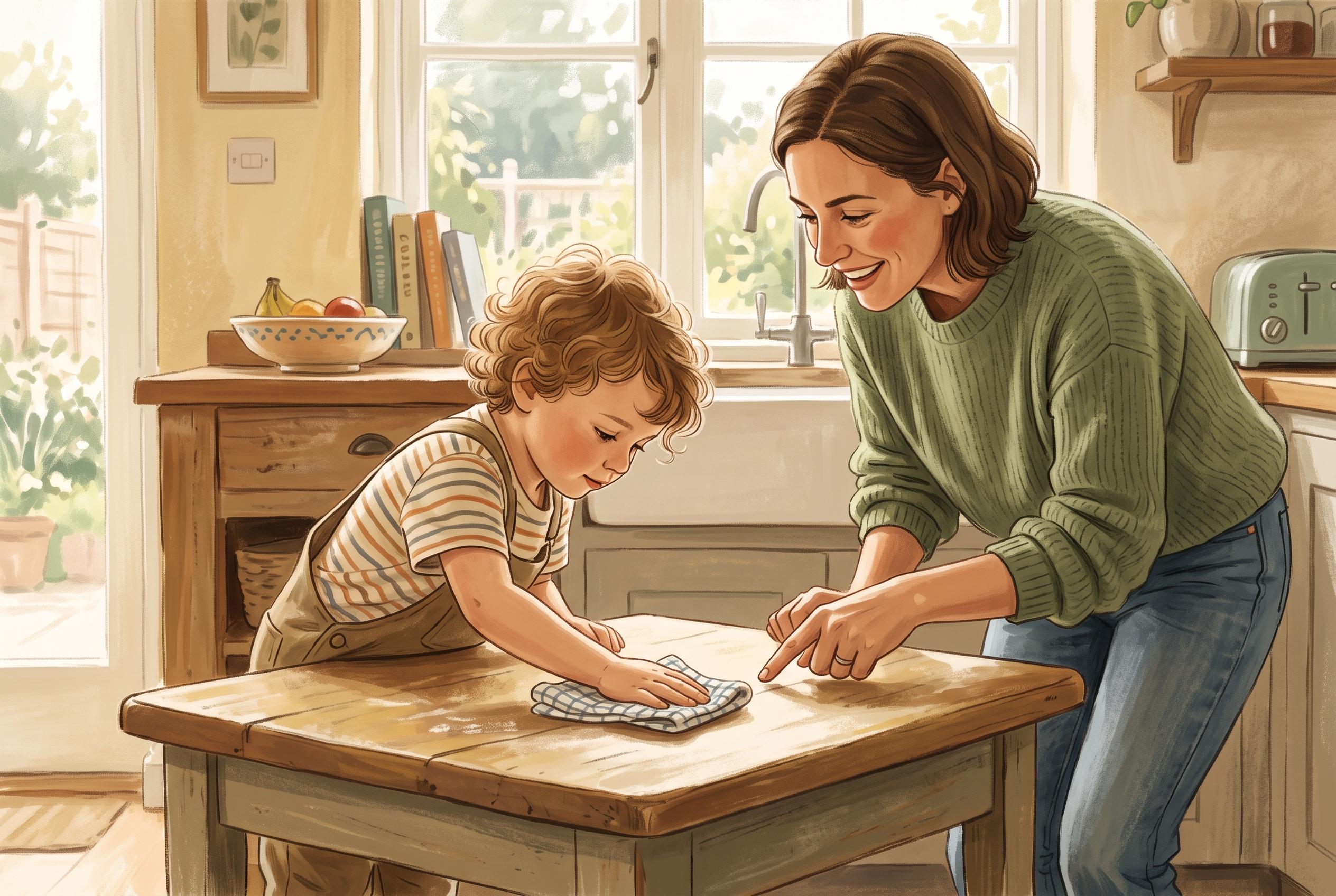

Research from Cleveland Clinic and WebMD emphasises how simple household tasks tailored to a child’s age can foster responsibility, confidence, and a sense of belonging, transforming family life and childhood growth.
Young children can do more around the house than many parents assume, and that matters for more than tidiness. Child-development guidance from Cleveland Clinic and WebMD both note that simple chores can build responsibility, confidence and a sense of belonging in the family. The trick is to match the task to the child’s age and keep expectations clear, short and consistent.
For toddlers aged two to three, the best jobs are small, repetitive and visible. Putting toys back in their bins, carrying plastic plates to the sink, dropping clothes into a laundry basket and wiping up minor spills are all realistic starting points. WebMD also suggests other simple duties such as helping put away pet food or fetching an item for a parent, while Cleveland Clinic recommends giving children one-step instructions that they can understand and complete without frustration.
By the preschool years, children can handle slightly more responsibility. Folding towels, laying out napkins and unbreakable cups, making a bed look neater and returning books to lower shelves are all sensible tasks for children aged four to five. A lightweight dust buster can also give them a useful role after meals, and several parenting guides say this age is ideal for beginning a basic chore chart or visual routine. The point is not perfection; it is participation.
Parents who want chores to stick are often advised to make them part of the day rather than a debate. Cleveland Clinic and WebMD both stress clear expectations, specific instructions and positive reinforcement, while other parenting resources recommend a simple sequence: teach the task, step back and let the child try it, then respond calmly if the job is refused. In practice, that can mean no breakfast until the bed is straightened or no new activity until the play area is picked up. When children learn that helping is simply part of family life, the work usually becomes easier, not harder, over time.
Disclaimer: This content is for informational purposes only and is not intended to be a substitute for professional medical judgment, advice, diagnosis, or treatment.