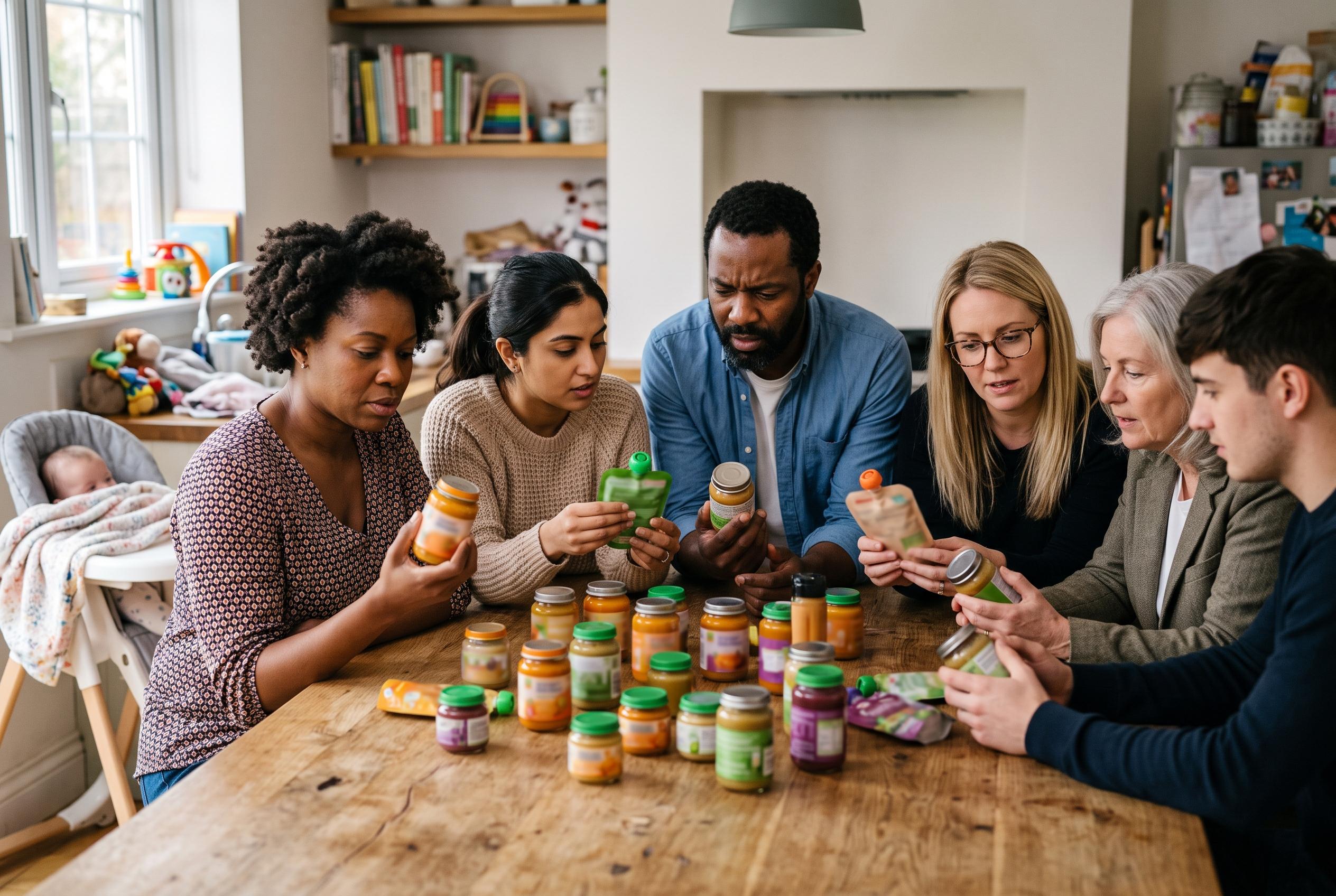

A recent analysis reveals that over half of popular branded baby foods in UK supermarkets exceed government sugar and salt guidelines, raising concerns about infant nutrition and marketing practices despite new regulations introduced last year.
A new analysis suggests that many popular branded baby foods on sale in UK supermarkets still contain too much sugar, despite government guidance introduced a year ago to improve the nutritional quality and labelling of products aimed at infants and toddlers.
The review covered 224 packaged foods and snacks from nine leading brands, including Ella’s Kitchen, Heinz, Organix, HiPP, Kiddylicious, Little Freddie, Piccolo, Aptamil and Cow & Gate. It found that 58% broke at least one of the government’s nine guidelines, while roughly a quarter failed on two or more. Just under a quarter of the products contained excessive sugar, and several items drew more than 80% of their calories from sugar, according to the analysis by Alba Health.
The findings also pointed to concerns over salt levels and marketing practices. Around 6% of the products exceeded the recommended salt limits for babies under one, while 28% breached labelling or advertising rules. That included snacks promoted for children as young as six months old, alongside packaging that experts said could leave a healthier impression than the ingredients justified. The government’s voluntary guidelines, published in August 2025, gave manufacturers 18 months to cut sugar and salt, improve labelling and stop marketing snacks to infants under 12 months, with full compliance due by February 2027.
Paediatric specialists and campaigners said the results reinforced the case for tougher action. Steve Turner, president of the Royal College of Paediatrics and Child Health, said only mandatory standards would properly protect babies and children from products that encourage a taste for sugary foods and may affect long-term health, including obesity and poor oral health. Sonia Pombo, of Action on Salt and Sugar, said parents should be able to trust the imagery and claims on the front of packs. A British Specialist Nutrition Association spokesperson said members had already made progress on reformulation and were on track to meet the guidance, while the Department of Health and Social Care said it wanted parents to have healthier choices and would keep working with industry.
Disclaimer: This content is for informational purposes only and is not intended to be a substitute for professional medical judgment, advice, diagnosis, or treatment.