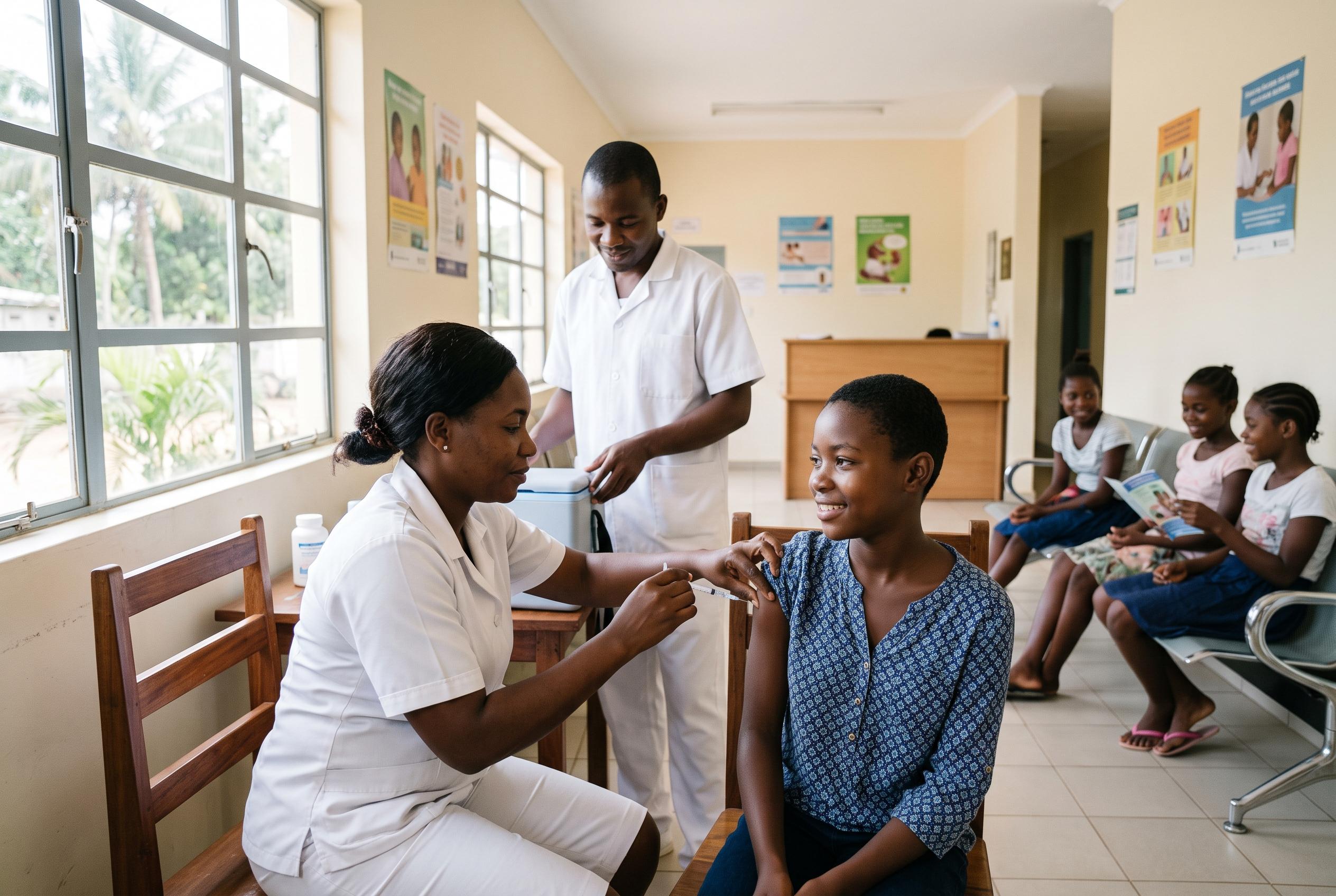

Mozambique’s national HPV vaccination programme now includes a broad catch-up campaign targeting girls aged 9 to 18, leveraging global guidance and partnerships to address its high cervical cancer burden through innovative single-dose immunisation and comprehensive screening.
Mozambique’s HPV vaccine programme is now a central part of the country’s drive to prevent cervical cancer, with girls who turn 9 eligible for free vaccination through the public health system, according to local reporting and UNICEF. The vaccine is offered at health facilities and through mobile teams that visit schools and communities, making it easier for families outside major towns to access the service.
The Ministry of Health’s approach has been reinforced by a wider catch-up campaign. In October 2025, the government, working with Gavi, UNICEF and the World Health Organisation, reached girls aged 12 to 18 across all 11 provinces, building on the introduction of HPV vaccination into the national immunisation programme in 2019. The campaign was designed to reach adolescents who had missed routine vaccination, especially in places where access had previously been uneven.
Health officials say the timing matters. HPV, or human papillomavirus, is the infection most closely linked to cervical cancer, and vaccination is most effective before exposure to the virus. The WHO says nearly all cervical cancer cases are associated with persistent genital HPV infection, and the vaccines target the main cancer-causing strains. In Mozambique, that risk is significant: WHO data have long placed the country among those with a high cervical cancer burden, while officials said in 2025 the disease remains the leading cancer among women of reproductive age.
The country’s vaccination strategy has also evolved. Global guidance from the WHO now allows one or two doses for many age groups, depending on age and medical circumstances, while immunocompromised people generally need additional protection. Mozambique’s 2025 campaign used a single-dose approach for adolescents in the catch-up drive, with Gavi describing the shot as offering strong protection against cervical cancer. Even so, the exact schedule can vary, so families are being advised to confirm eligibility at the nearest health unit.
Authorities and partners say the vaccine is safe, with the most common side effects being temporary pain, swelling or redness at the injection site. But they stress that vaccination is only one part of prevention. Screening remains important for adult women, because no vaccine covers every cancer-causing HPV type. That is why Mozambique’s broader cervical cancer strategy combines immunisation, testing and treatment of pre-cancerous changes.
The scale-up in Mozambique also reflects a broader push backed by global health partners. Gavi says it had supported HPV vaccine introductions in 45 countries by the end of 2024 and had fully immunised more than 59.8 million girls since 2014. WHO’s cervical cancer elimination agenda aims to protect 90% of girls against HPV by age 15, and Mozambique’s experience shows how routine vaccination and catch-up campaigns are being used together to close gaps left by earlier missed opportunities.
Disclaimer: This content is for informational purposes only and is not intended to be a substitute for professional medical judgment, advice, diagnosis, or treatment.