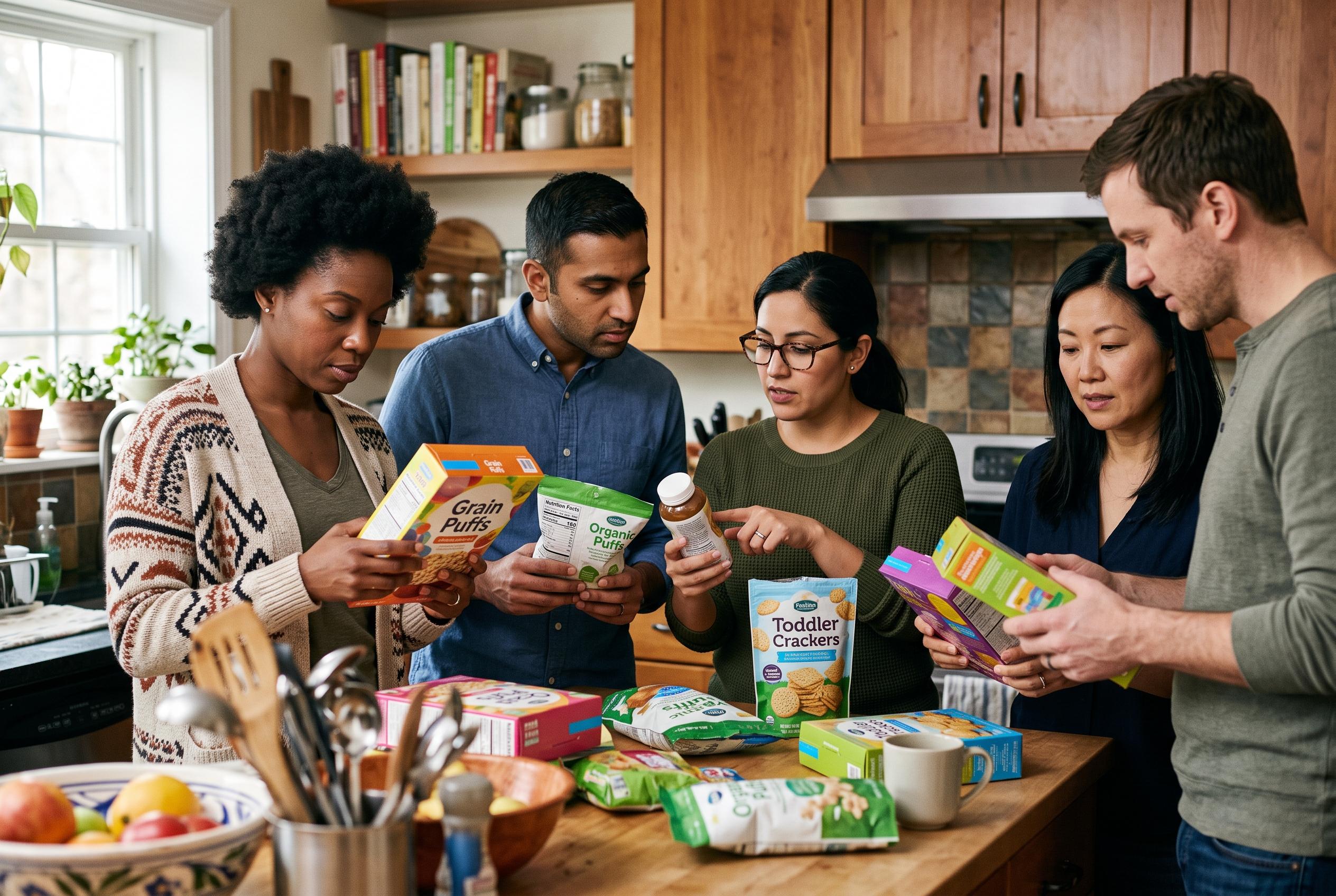

While infant puffs are a popular and practical snack, recent findings highlight the importance of careful ingredient selection and awareness of potential heavy-metal contamination and allergens to ensure safe feeding practices for young children.
Infant puffs have become a go-to snack for many families because they are easy to carry, quick to serve and simple for babies to grasp. For parents introducing solids, their appeal is obvious: they are light, dissolve quickly and can help infants practise the hand-to-mouth movements that support self-feeding. But the category is not as straightforward as the packaging may suggest. Ingredient quality, allergen content and contamination concerns all matter when choosing which puff snacks to put in a child’s bowl.
That caution is not misplaced. Consumer Reports has found that many baby and toddler foods contain detectable levels of heavy metals such as lead, arsenic, cadmium and mercury, and that rice-based products are among the most concerning. Its testing has also shown that homemade versions are not automatically safer than shop-bought foods. Another Consumer Reports review flagged rice puffs and similar crisped-rice snacks as particularly problematic, while Cleveland Clinic advises parents to reduce risk by varying a child’s diet rather than relying on the same snack every day.
The most sensible approach is to read labels closely. Parents looking for puff snacks often favour products built around shorter ingredient lists, with no added sugar and as few fillers as possible. Some brands market organic or grain-free options, and others emphasise transparency about sourcing and testing. But Olive App notes that an organic label alone does not guarantee a lower heavy-metal risk, particularly where rice is involved. In practice, the safest choice is usually the one that combines simple ingredients with a sensible mix of grains, vegetables or legumes, plus fortification where appropriate.
Allergen exposure is another factor families now weigh more carefully. Peanut-based puffs, for example, are sometimes used as an early way to introduce peanuts, which the American Academy of Paediatrics recommends doing with guidance from a paediatrician, especially for babies with eczema or other food allergies. Puffworks says its baby peanut puffs are made with organic peanuts and dissolve easily, but the broader point is that parents should treat allergen-containing snacks as part of a wider feeding plan, not as an afterthought.
Timing matters too. Most babies are not ready for puffs until they can sit upright, show interest in food and use their fingers to pick things up. Even then, puffs should be only one part of a varied diet that includes fruit, vegetables, protein and other textures. Used that way, they can be a helpful training food. Used on their own, they risk becoming a convenient habit that offers less nutrition than many parents assume.
Disclaimer: This content is for informational purposes only and is not intended to be a substitute for professional medical judgment, advice, diagnosis, or treatment.