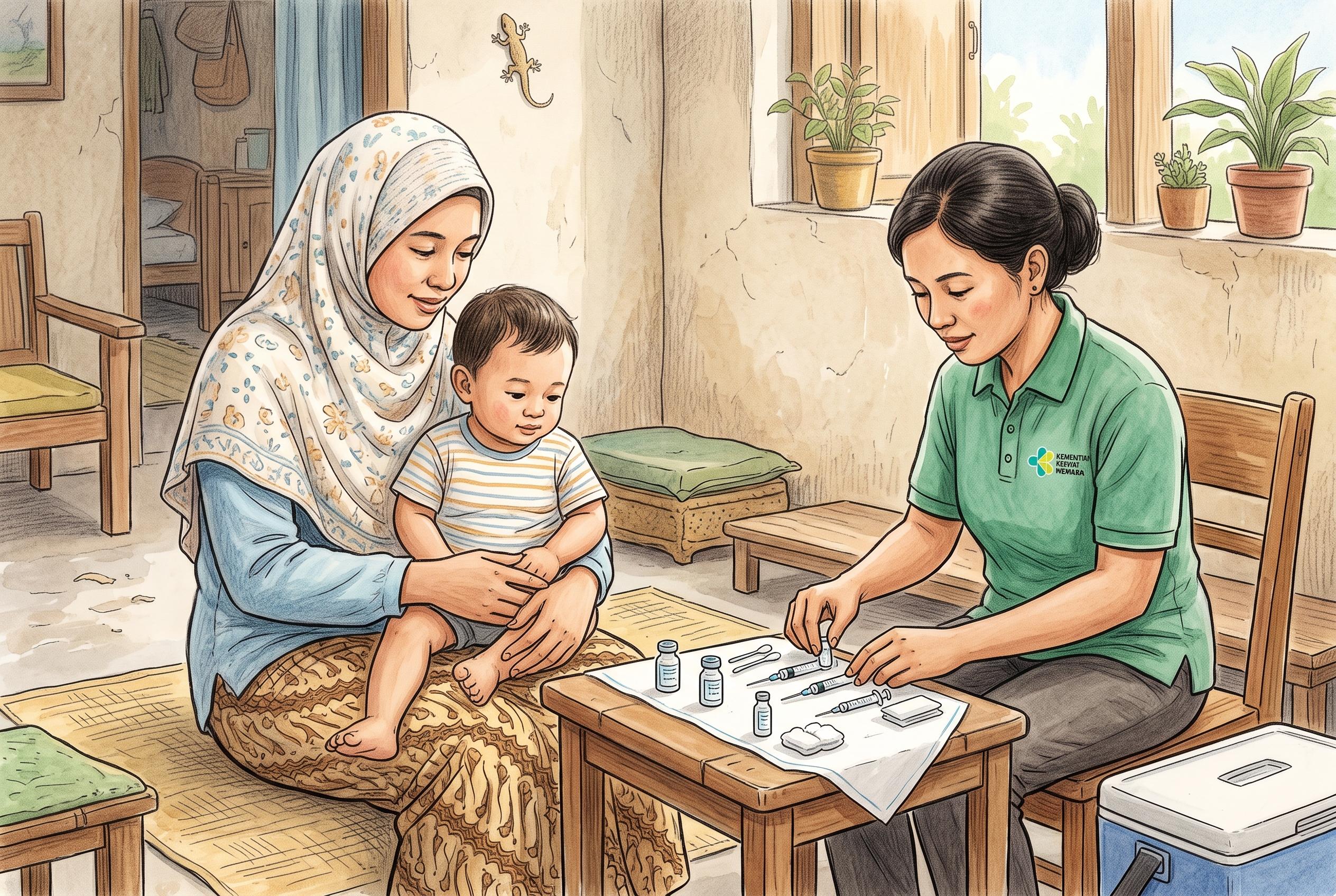

Despite improvements in Indonesia’s vaccination coverage, disparities across districts risk fuelling outbreaks of measles, rubella and other preventable diseases, prompting urgent calls for targeted efforts and community immunity strengthening.
Indonesia’s measles and rubella vaccination effort is improving, but the picture remains uneven, with national gains masking serious gaps in protection across districts and provinces. The World Health Organisation said in July 2026 that Indonesia raised coverage of key routine vaccines in 2025, including the third doses of diphtheria, tetanus and pertussis, and hepatitis B, both to 82% from 78% a year earlier. Even so, officials and health agencies continue to warn that measles, polio and pneumonia protection is still not reaching every child, leaving room for outbreaks to flare in under-vaccinated communities.
That warning is borne out by recent data. According to the WHO, 25 provinces and 252 regencies and cities were classified as high risk by June 2026. The gap between administrative coverage figures and household survey results suggests that some villages and districts remain vulnerable “pockets of low immunity”, where infection can spread quickly once it arrives. In 2025, those weaknesses coincided with 102 measles outbreaks, 11,094 laboratory-confirmed cases and 69 deaths, underscoring how quickly a preventable disease can regain ground when coverage is patchy.
The vaccination schedule also matters. Many parents still assume one dose is enough, but Indonesia’s programme calls for protection at three stages: the first measles-rubella dose at nine months, a follow-up dose at 18 months, and another through the school-based BIAS programme in first grade. A review by the Indonesian Technical Advisory Group on Immunisation has found antibody levels can begin to decline by around 18 months, which is why the later doses are considered essential rather than optional.
Rubella remains a particular concern for pregnant women and unborn babies. The infection is often mild in children, but if a woman catches it in the first trimester, the risk of transmission to the fetus can be very high. That can lead to congenital rubella syndrome, a condition associated with miscarriage, stillbirth and serious birth defects. Health experts say vaccination is not only about individual protection, but also about building enough community immunity to shield pregnant women from exposure.
The focus is widening beyond children as well. In 2026, Indonesia began prioritising measles-rubella vaccination for healthcare workers, including doctors, dentists and internship staff in 14 provinces, according to the information released with the campaign. For adults who never completed their vaccination course, two doses given 28 days apart are generally advised. UNICEF says catch-up and supplementary campaigns remain important, especially for groups that missed routine doses earlier in life.
A recent example from Sumenep in East Java shows how fast action can change the course of an outbreak. After a surge of suspected measles cases in August 2025, authorities strengthened surveillance and launched a large response immunisation drive, lifting coverage to 96.1% and helping break transmission. The lesson, health officials say, is that Indonesia’s progress will depend less on headline national averages than on whether every district reaches and sustains high coverage.
Disclaimer: This content is for informational purposes only and is not intended to be a substitute for professional medical judgment, advice, diagnosis, or treatment.