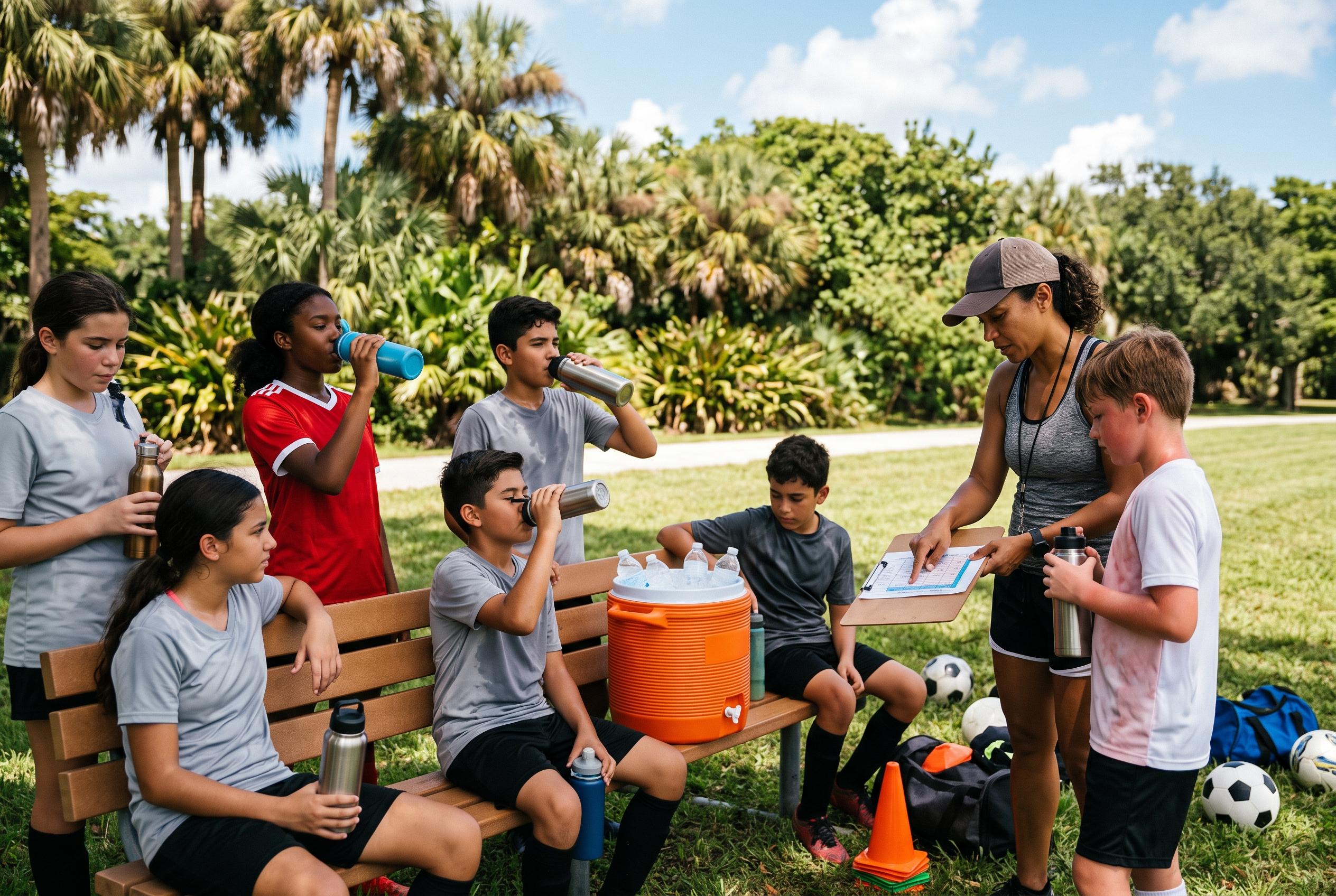

As South Florida experiences one of its hottest stretches of the year, families, coaches, and healthcare professionals stress the importance of proper hydration and vigilance to prevent heat-related illnesses among young athletes participating in outdoor sports.
South Florida families are being urged to take the heat seriously as high school sports move into one of the region’s hottest stretches of the year. With football, cross-country and other outdoor practices now in full swing, doctors say young athletes need to start hydrating well before they step on to the field.
Pediatric physician Sara Tano said the most effective protection begins long before the first whistle. She advised students to drink fluids throughout the day, especially if they are at school before heading straight to training or a game. The Centres for Disease Control and Prevention also recommends drinking water before, during and after exercise, along with limiting outdoor activity during the hottest part of the day when possible.
Experts say parents and coaches should also watch closely for warning signs of heat exhaustion, including nausea, dizziness, stomach pain and heavy sweating. Johns Hopkins Medicine says heat-related illness in young athletes can escalate quickly and that gradual heat acclimatisation over 10 to 14 days helps the body adjust. If symptoms worsen, doctors say the athlete should stop immediately and move somewhere cooler.
Tano said heat stroke is more serious and can include the symptoms of heat exhaustion plus changes in mental state, such as a young athlete not acting like themselves. That is a medical emergency. Johns Hopkins and University Hospitals Rainbow Babies & Children’s Hospital both note that thirst is not a reliable guide, because dehydration can already be under way by the time a child feels thirsty.
Water matters most, but it is not the only fluid lost during exercise. Sweat also carries sodium and other electrolytes, which can contribute to muscle cramps and nausea if they are not replaced. That is why some sports medicine experts recommend electrolyte drinks during longer sessions in hot weather, alongside regular water breaks and close attention from adults on the sidelines.
Tano said awareness has improved over the years, but vigilance still matters. She urged parents to check water bottles, ask children how they feel after practice and make sure coaches are building in breaks. In extreme heat, that simple routine can make the difference between a hard workout and a dangerous emergency.
Disclaimer: This content is for informational purposes only and is not intended to be a substitute for professional medical judgment, advice, diagnosis, or treatment.