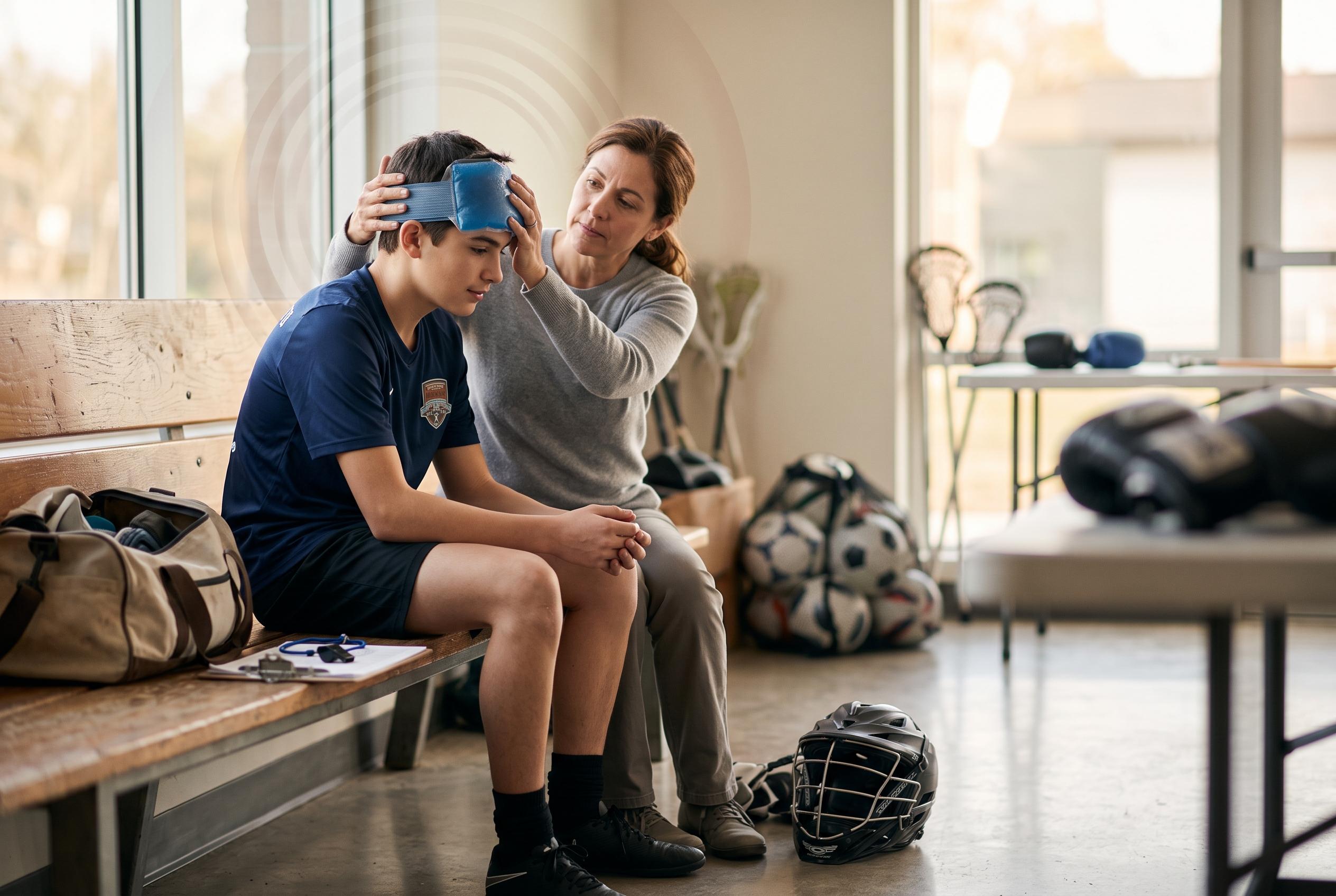

Emerging scientific evidence links repeated impacts in contact sports to long-term neurodegenerative risks, prompting calls for enhanced safety measures and revised concussion protocols for young athletes.
A growing body of research is making the risks of repeated head impacts harder for families to ignore, especially in youth contact sports. In a personal essay for Being Patient, Deborah Kan says the issue became more immediate when her son played rugby and she began reading more closely about concussions, chronic traumatic encephalopathy and the long-term effects of blows to the head. Her reflection comes at a moment when scientists are adding new evidence that even apparently routine impacts can leave traces in the brain.
Recent studies are helping to explain why concern has shifted beyond single concussions to the cumulative effect of repeated contact. One analysis in eClinicalMedicine followed nearly 20,000 former NFL players and found deaths from ALS, Parkinson’s disease and other neurodegenerative illnesses. Separately, researchers at Amsterdam University Medical Centre reported in JAMA Neurology that a single soccer header can temporarily raise blood markers linked to brain injury, although the levels usually fall back within a day or two. The finding does not prove that heading causes dementia, but it adds weight to the view that repeated exposure may matter more than any one incident.
Other research points in a similar direction. A clinicopathological study published by Springer described a former professional footballer who developed young-onset dementia in his mid-50s, while earlier work in the American journal Sports Medicine raised the possibility of chronic brain injury in elite soccer players exposed to repetitive heading. A separate review in the International Journal of Environmental Research and Public Health concluded that professional football is associated with higher odds of neurodegenerative disease, including dementia and motor neurone disease. Together, those findings suggest the question is no longer whether repetitive head impacts deserve attention, but how much damage they may be causing over time.
What to do after a concussion is also changing. According to experts cited by Being Patient, the old advice of prolonged rest is giving way to a more measured approach: brief rest at first, then gradual, symptom-guided activity. Light movement, such as walking or short sessions on a stationary bike, may be more helpful than staying in a dark room for days. Researchers and clinicians still disagree on the best pathway back to sport, but the direction of travel is towards careful monitoring rather than blanket inactivity.
For parents, the hardest part is that there is still no simple way to make contact sports safe. Some leagues use protective helmet add-ons, a few countries have restricted heading in youth football and Ontario’s Rowan’s Law requires concussion protocols before a child returns to play. Yet none of those steps eliminates risk. Kan’s conclusion is personal, but it reflects a wider shift in medical thinking: the more scientists learn about repeated head injury, the more difficult it becomes to dismiss it as part of the game.
Disclaimer: This content is for informational purposes only and is not intended to be a substitute for professional medical judgment, advice, diagnosis, or treatment.