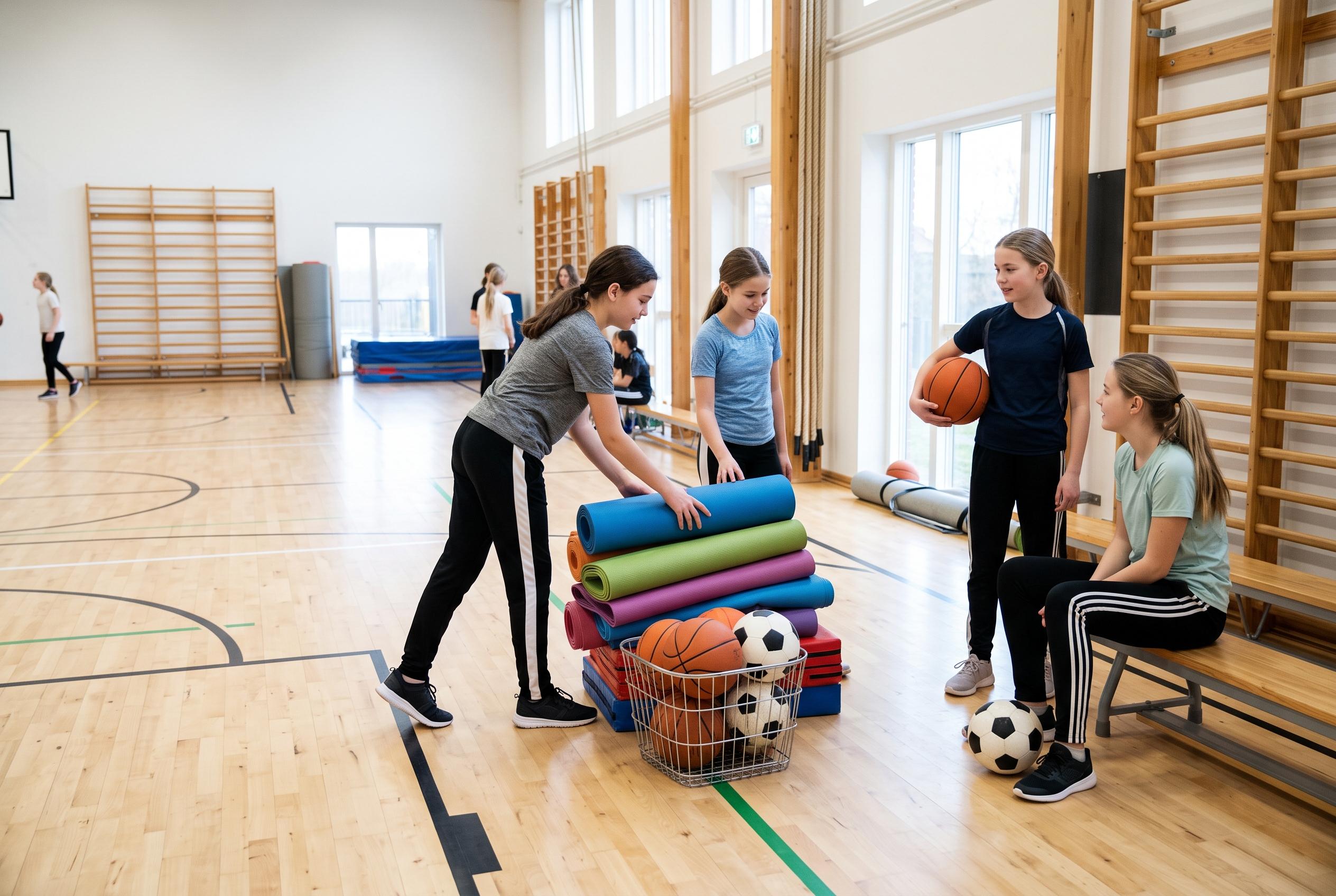

Figures from Denmark show a significant drop in girls’ interest in physical education as they reach puberty, highlighting the need for tailored school sport programmes to keep girls engaged and support their well-being.
Interest in school sport drops sharply for girls as they enter puberty, according to new Danish figures highlighted by Dansk Skoleidræt. Among girls aged 12 to 14, only about half view physical education positively, compared with 71.7% of boys in the same age group. By contrast, 74% of girls aged six to eight say they like the subject, suggesting a clear fall-off around adolescence.
Malene Vissing Tønder, chair of Dansk Skoleidræt’s subject committee and a physical education teacher for the past 12 years, said the pattern was familiar. She said it depends greatly on the children themselves and how active they are outside school, but added that puberty, body image and wider cultural expectations also play a part. Michael Lejbach Bertelsen, a researcher at the Centre for Research in Sport, Health and Civil Society at the University of Southern Denmark, said positive and negative experiences in childhood can shape how likely people are to stay physically active later in life.
The survey behind the figures was based on municipal reports from across Denmark and answers from almost 55,000 children aged three to 14. It found that nearly seven in ten pupils up to the age of 14 like physical education, while 6% say they do not like it and 2.5% call it their least favourite subject. Dansk Skoleidræt described those overall numbers as encouraging, but said teachers need to vary lessons carefully so they appeal to both girls and boys, with particular attention to keeping girls engaged.
That warning fits with broader research on adolescent activity. A study in Frontiers in Public Health found that a 12-week, game-based school programme improved the physical fitness of girls aged 12 to 14, while a systematic review in PLOS One reported steady gains in strength and endurance among team-sport athletes from ages 12 to 16. Other research has linked organised sport with better physical, psychological and social well-being in children, reinforcing the argument that keeping girls comfortable in sport at school may have effects well beyond the classroom.
Disclaimer: This content is for informational purposes only and is not intended to be a substitute for professional medical judgment, advice, diagnosis, or treatment.