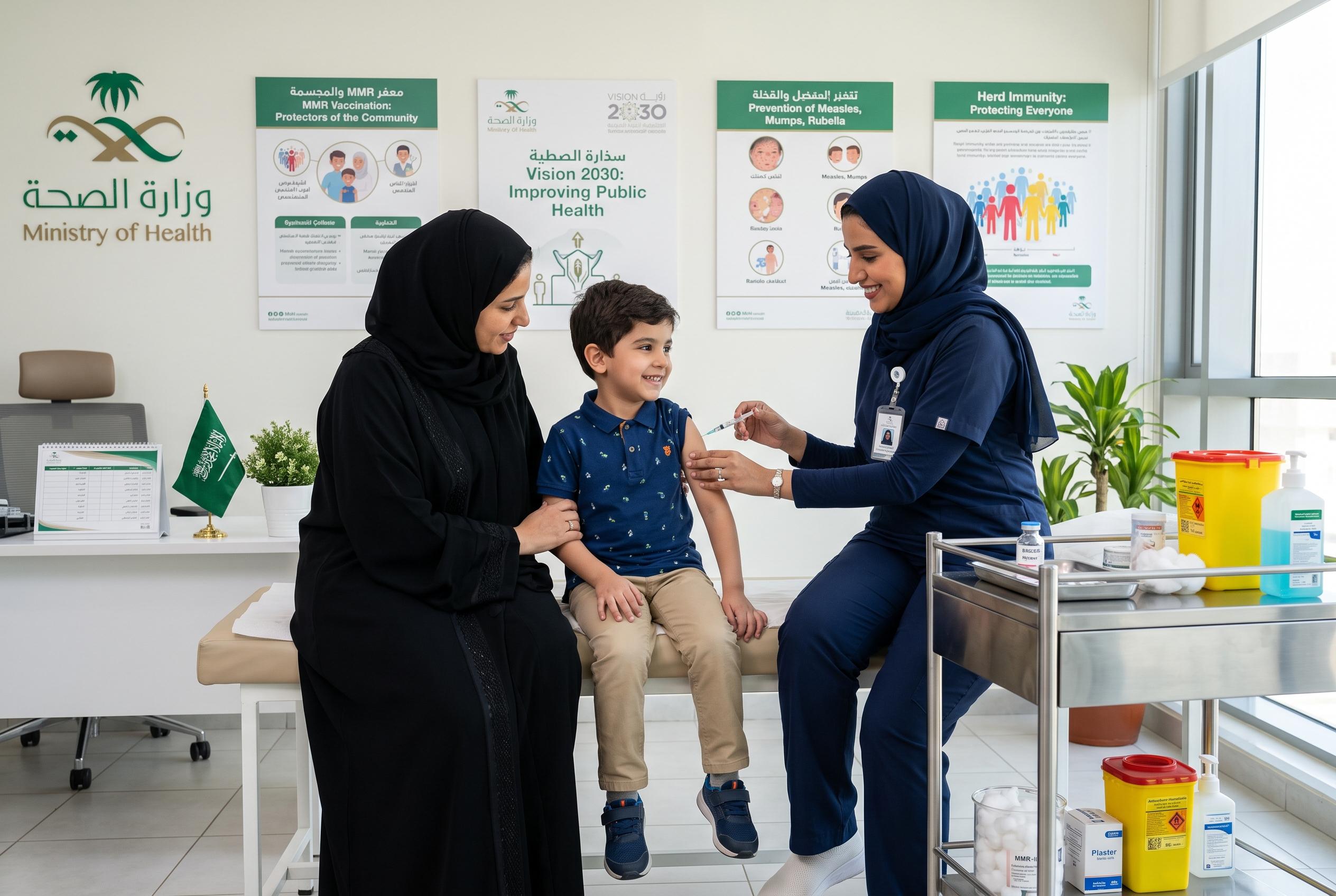

The Saudi Ministry of Health is rolling out a comprehensive immunisation campaign targeting children and teenagers to prevent measles, rubella, and mumps, aiming to boost herd immunity and support Vision 2030 health goals.
Saudi Arabia’s Ministry of Health is preparing to launch a nationwide immunisation campaign against measles, rubella and mumps using the MMR vaccine, with children and teenagers aged six months to 18 years among the target groups. The campaign is designed to reach every region of the kingdom and to widen protection against illnesses that spread easily in schools and other communal settings.
According to the ministry’s previous vaccination drive in November 2024, the aim is not only to reduce transmission but also to strengthen herd immunity and support the kingdom’s wider health transformation goals under Vision 2030. That earlier campaign was framed as part of a longer-term effort to eliminate measles and rubella by 2028, and the new initiative appears to extend that strategy with broader outreach and continued public health messaging.
The campaign is expected to run through health centres, schools, shopping centres and public parks, giving families more places to access the vaccine. The ministry has repeatedly emphasised that timely vaccination helps prevent outbreaks and protects children who are too young or otherwise unable to rely solely on natural immunity. Saudi health authorities also point to the national immunisation schedule, which is updated periodically and is intended to keep coverage high across childhood.
The Saudi Food and Drug Authority lists several MMR vaccines registered in the kingdom, including products from GlaxoSmithKline and Merck Sharp & Dohme, underscoring that the vaccine used in the campaign is already part of the country’s regulated immunisation supply. International guidance from the US Centers for Disease Control and Prevention says two doses of MMR offer the best protection against measles, mumps and rubella, with the first dose usually given in early childhood and the second later in childhood.
Disclaimer: This content is for informational purposes only and is not intended to be a substitute for professional medical judgment, advice, diagnosis, or treatment.