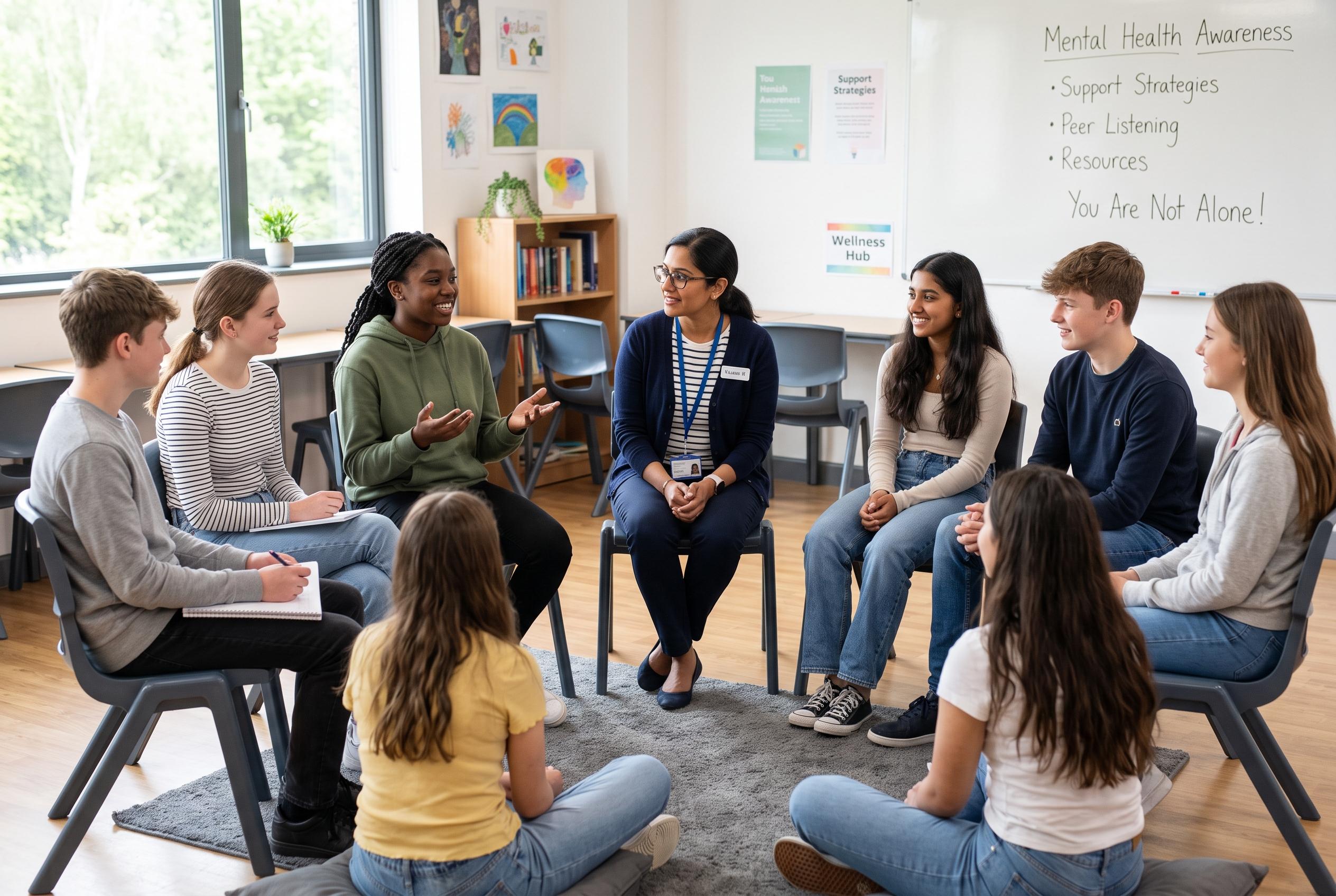

Many school districts now integrate student mental health, emotional support, and specialised services into their core missions, reflecting a shift towards holistic educational approaches amid rising social and emotional challenges faced by students.
Behind every bell schedule and homework sheet, schools are doing far more than teaching lessons. According to a recent article in CEO Today Magazine, many districts now see student support as part of the core mission, not an extra service, because anxiety, depression, family strain and uncertainty about the future can all get in the way of learning long before a child ever fails a test.
That shift has been accompanied by a more formal approach to hiring the adults who handle academic planning, emotional support and career guidance. Career guides note that school counsellors typically need a master’s degree, supervised clinical experience and a state-specific licence or certification before they can practise. A separate overview of school psychology says the same profession usually requires advanced graduate study, with exact requirements varying by state. The point, as education systems increasingly acknowledge, is that this is specialised work, not an informal add-on to teaching.
School psychologists sit at the centre of much of that effort. Baltimore County Public Schools describes them as members of school teams who help students learn and help teachers teach, using expertise in mental health, learning and behaviour. Maryland’s education department says their wider purpose is to improve students’ academic and social outcomes and help remove barriers that stand in the way of educational success. In practice, that often means assessment, consultation and coordination with families and staff, rather than long-term therapy delivered inside the school itself.
Other roles are aimed at the conditions around learning rather than the curriculum itself. School social workers often step in when housing instability, food insecurity, illness in the family or other pressures start to show up in attendance, conduct or academic performance. They connect families to community services, coordinate transport or agency support and keep track of students who begin to drift away from school life. Their work is usually quiet, but schools notice quickly when it is missing.
Support for children with specific learning needs runs in parallel. Speech and language therapy, reading intervention and specialised instruction are designed to target the barrier itself, whether that is a communication disorder or a processing difficulty. The most effective programmes are collaborative, with teachers, specialists and families working from the same plan and reviewing progress regularly. That kind of coordination matters because repeating standard instruction more slowly is rarely enough on its own.
The needs change as children get older. In primary school, support usually focuses on naming feelings, building routines and learning how to get along with other children. In middle school, the emphasis shifts to identity, belonging and the emotional turbulence of adolescence. By secondary school, students are dealing with course choices, exams, applications, financial aid and life after graduation, often at the same time. What links all of these stages is not a single programme, but a consistent message: students do better when schools help them develop the habits, confidence and relationships they will need long after they leave the classroom.
Disclaimer: This content is for informational purposes only and is not intended to be a substitute for professional medical judgment, advice, diagnosis, or treatment.