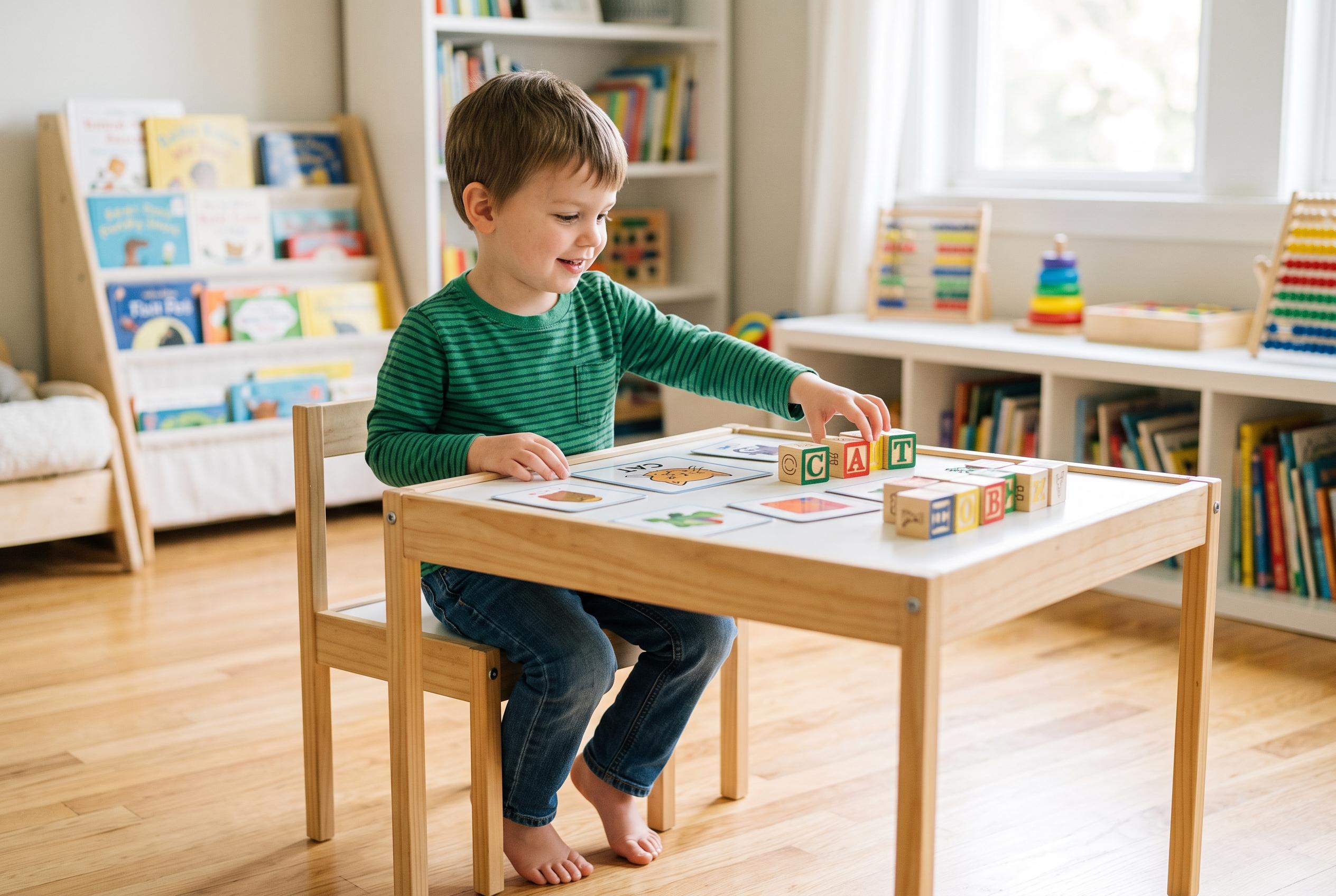

A new study reveals that preschool children with speech sound disorders face deficits in phonological awareness and verbal working memory, highlighting the need for comprehensive assessments and targeted interventions.
Children with speech sound disorders may face more than just trouble pronouncing words, according to a study published in Wiley’s journal. The research found that preschool children with speech sound disorders scored lower than typically developing peers on tasks measuring phonological awareness, which is the ability to notice and work with the sound structure of words, and on nonword repetition, a common test of verbal working memory.
The study followed 60 children aged four to six, split evenly between those with speech sound disorders and a comparison group. All had age-appropriate language skills and normal hearing, allowing the researchers to focus on speech and sound-processing abilities rather than broader language delay. Children with speech sound disorders performed worse across rhyme, word and phoneme awareness tasks, and they also repeated fewer nonwords correctly and produced fewer correct sounds overall. Those gaps remained even after researchers adjusted for expressive language differences.
The findings fit with earlier research suggesting that nonword repetition is sensitive to weaknesses in phonological processing, but the task is not a pure measure of memory alone. A 2021 study on persistent speech sound disorders found that children with these difficulties were less likely to repeat nonwords correctly, while a recent tutorial from the American Speech-Language-Hearing Association warned that production demands can complicate interpretation of such tests in preschool children. Another PubMed-indexed study published last year found that vowel error patterns in nonword repetition were similar across speech and language disorders, underlining the need for caution when using the task to distinguish between diagnoses.
Within the speech sound disorder group, the study found a specific link between word awareness and nonword repetition. In the typically developing group, rhyme awareness was more closely tied to nonword repetition, suggesting that the relationship between sound awareness and working memory may differ depending on a child’s speech profile. The authors said this points to the value of assessing children on more than one level, rather than relying only on speech accuracy.
For clinicians and parents, the practical message is that speech sound disorders may affect the systems that support language learning as well as speech output itself. The study argues for assessments that look at both production and underlying phonological skills, and for intervention plans that target those broader abilities too. The authors said future work should use larger samples, follow children over time and include tasks that place less pressure on speech production.
Disclaimer: This content is for informational purposes only and is not intended to be a substitute for professional medical judgment, advice, diagnosis, or treatment.