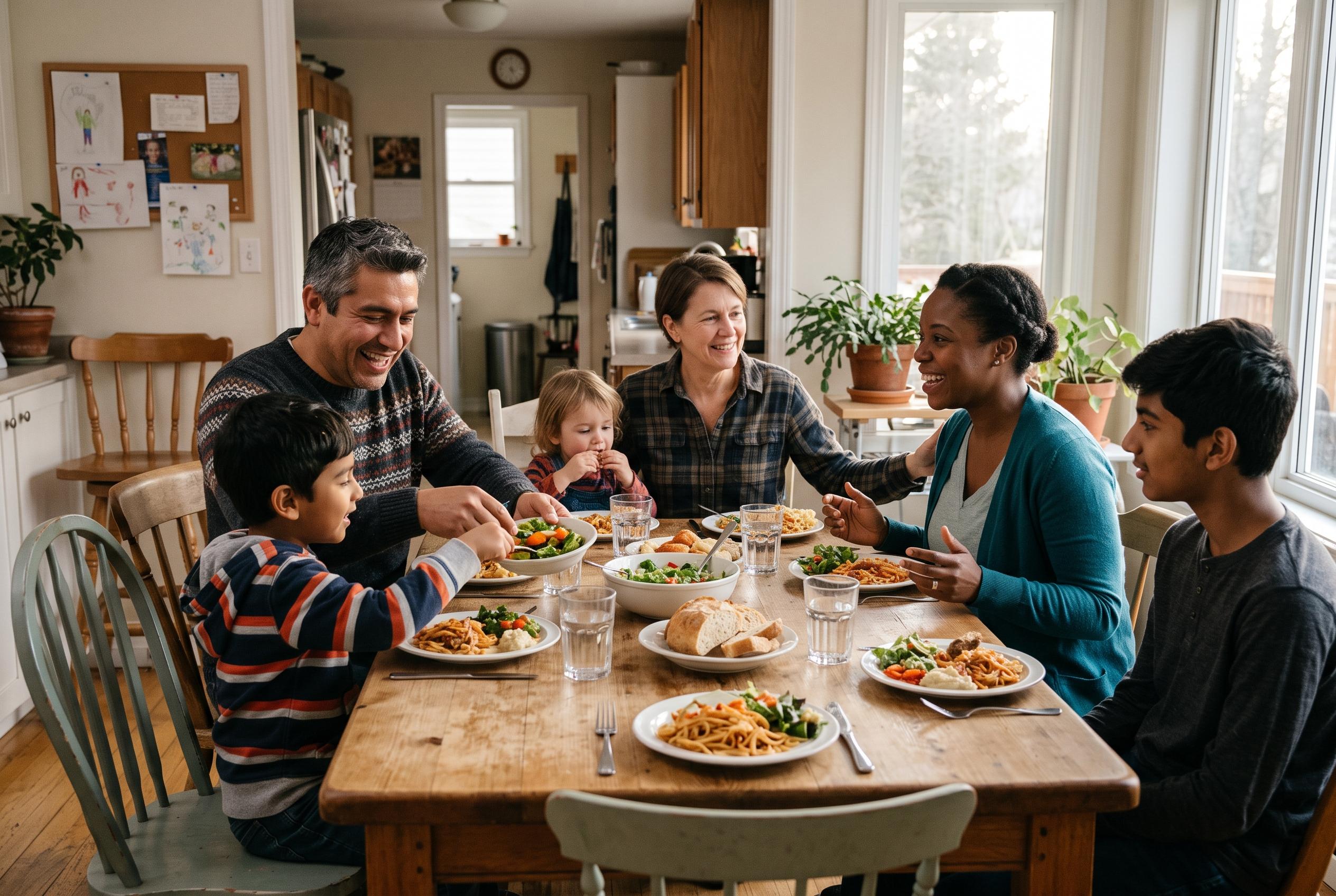

Dr Dana Bazemore-Jolly advocates for recognising diverse family forms based on their capacity to meet children’s needs, urging professionals to focus on relationships and support systems rather than traditional labels amid changing American family dynamics and mental health challenges.
A better way to think about family is not by whether it fits a neat label, but by whether it meets a child’s needs. In her essay, Dr Dana Bazemore-Jolly argues that households often described as “non-traditional” are, in reality, simply different forms of care, connection and responsibility. Her point is rooted in years of working with children and families in mental health settings, where the crucial question is rarely who is on a form, but who is actually present when a child needs help.
That broader view fits the reality of American family life. The U.S. Census Bureau says about 3.2 million children under 18 lived with cohabiting parents in 2023, up from 2.2 million in 2007. Child Trends, meanwhile, describes extended kin and social networks in Black families as a lasting cultural strength, offering emotional support, practical help and resources that help households cope with strain. Together, those sources underline a simple fact: many families are already organised around shared caregiving rather than a single, narrow model.
Bazemore-Jolly uses that lens to push back against assumptions that can shape schools, clinics and child welfare systems. She says practitioners should pay closer attention to who knows a child’s routines, who notices changes in mood or behaviour, and who steps in when a child is struggling. In her view, those relationships tell professionals far more about support and safety than a box-ticking exercise ever could.
The issue carries added urgency in mental health care. SAMHSA’s 2024 National Survey on Drug Use and Health found that an estimated 364,000 Black adolescents aged 12 to 17 experienced a major depressive episode in 2024, and only 44.7% received treatment. That leaves a significant share without care, reinforcing Bazemore-Jolly’s argument that the system should focus less on judging family form and more on removing barriers to access.
Her wider message is that stress does not automatically mean dysfunction, and imperfection does not mean failure. Families under pressure may be juggling work, transport, school demands, finances and caregiving all at once. What children need, she argues, is not a romanticised ideal of family life, but adults who listen, respond and build on the relationships already in place. For parents, carers, educators and clinicians, that means looking beyond labels and strengthening the village around the child.
Disclaimer: This content is for informational purposes only and is not intended to be a substitute for professional medical judgment, advice, diagnosis, or treatment.