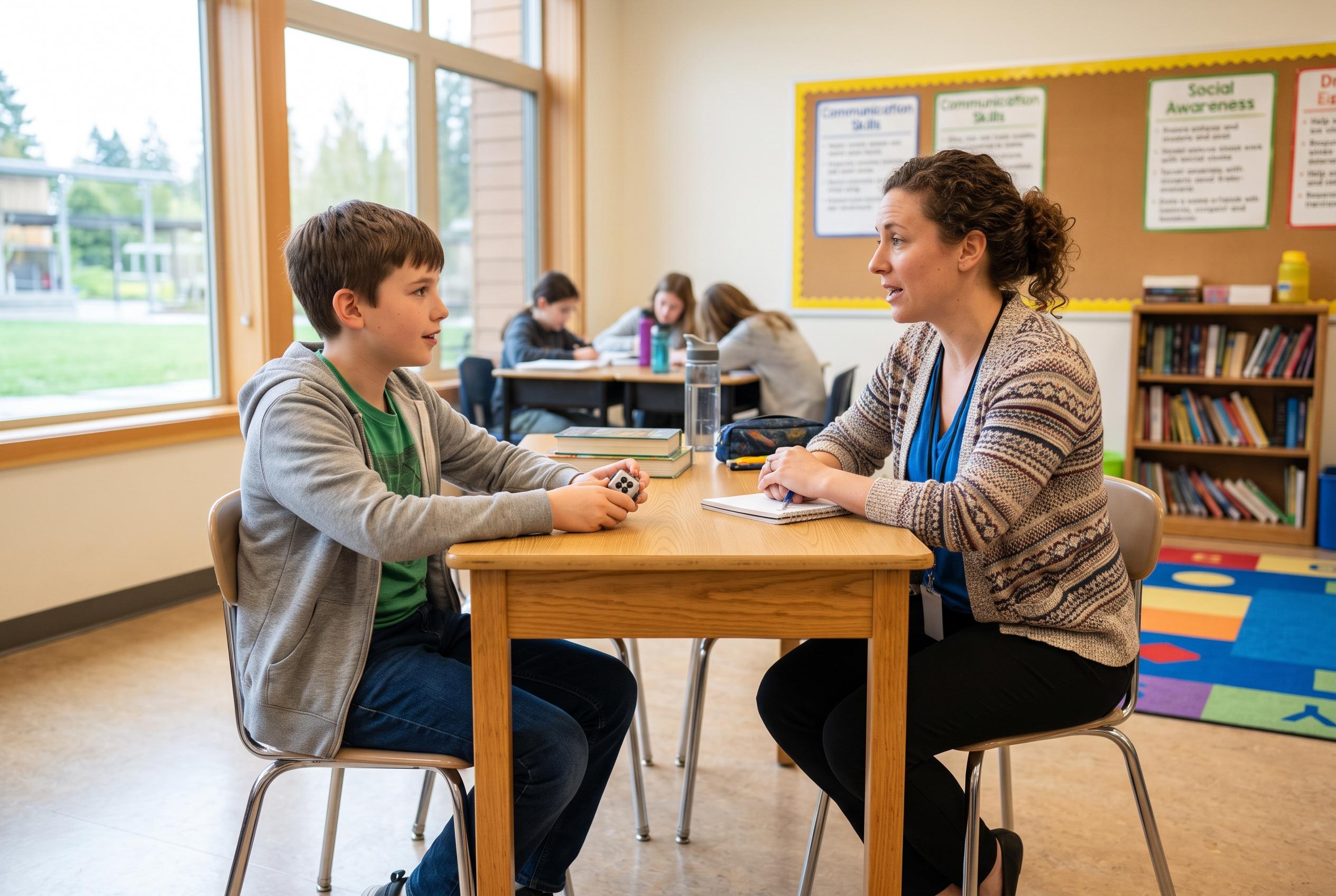

Child development experts emphasise the importance of honesty and clear communication in supporting neurodivergent children through the social and emotional challenges of middle school, highlighting the significance of understanding relationships and fostering authentic connections.
Middle school can feel like a sudden leap, but child development experts say it is usually a slow build: puberty, social awareness and emotional intensity tend to gather momentum long before the first day of sixth grade. Dr. Kim Pinckney, speaking on the Parenting ADHD and Autism podcast, argued that parents often see the changes first in small ways , a child outgrowing clothes, asking for more food, or becoming newly alert to peers and status. Understood says those years bring major physical, cognitive, language and social-emotional shifts, while RTI International notes that peer context and identity formation become especially powerful in early adolescence.
Pinckney’s central point was that honesty works better than blanket reassurance. She said children need adults to name relationships accurately, rather than calling every classmate or helper a “friend”. That distinction matters, because middle schoolers are learning the difference between friendship, acquaintance and simple politeness. GreatSchools says social skills in this age group support communication, cooperation and emotional management, while also helping children build self-esteem and avoid behaviour problems.
For neurodivergent children, Pinckney said, the stakes can be even higher because social cues are often harder to read. A child may interpret a brief conversation as a close bond, or miss signs that another child is pulling away. Guidance from K12 tutoring materials says emotional regulation is a learnable skill and that neurodivergent middle schoolers often benefit from calm-down routines, visual supports and advance planning for difficult moments. The same materials warn that sudden outbursts, peer conflict and difficult transitions are common pressure points.
Pinckney described having to deliver difficult truths to her own son when his view of a friendship did not match the evidence in front of him. She said that pain is part of growing up, but children cope better when an adult helps them read reality without humiliation. Informing Families, a relationship-focused resource on the middle school years, makes a similar case for open communication during puberty, arguing that parents should talk plainly about change rather than trying to cushion every hard lesson.
That realism, Pinckney said, should not be mistaken for pessimism. It is preparation. Children need to know that not everyone is a friend, but everyone still deserves respect. They also need room to discover where they truly fit. She and the podcast host described the relief that comes when a child eventually finds genuine belonging , a robotics club, a theatre group or another interest-based community where friendships are reciprocal and clear. In those settings, the child does not have to guess. They know who their people are.
Disclaimer: This content is for informational purposes only and is not intended to be a substitute for professional medical judgment, advice, diagnosis, or treatment.