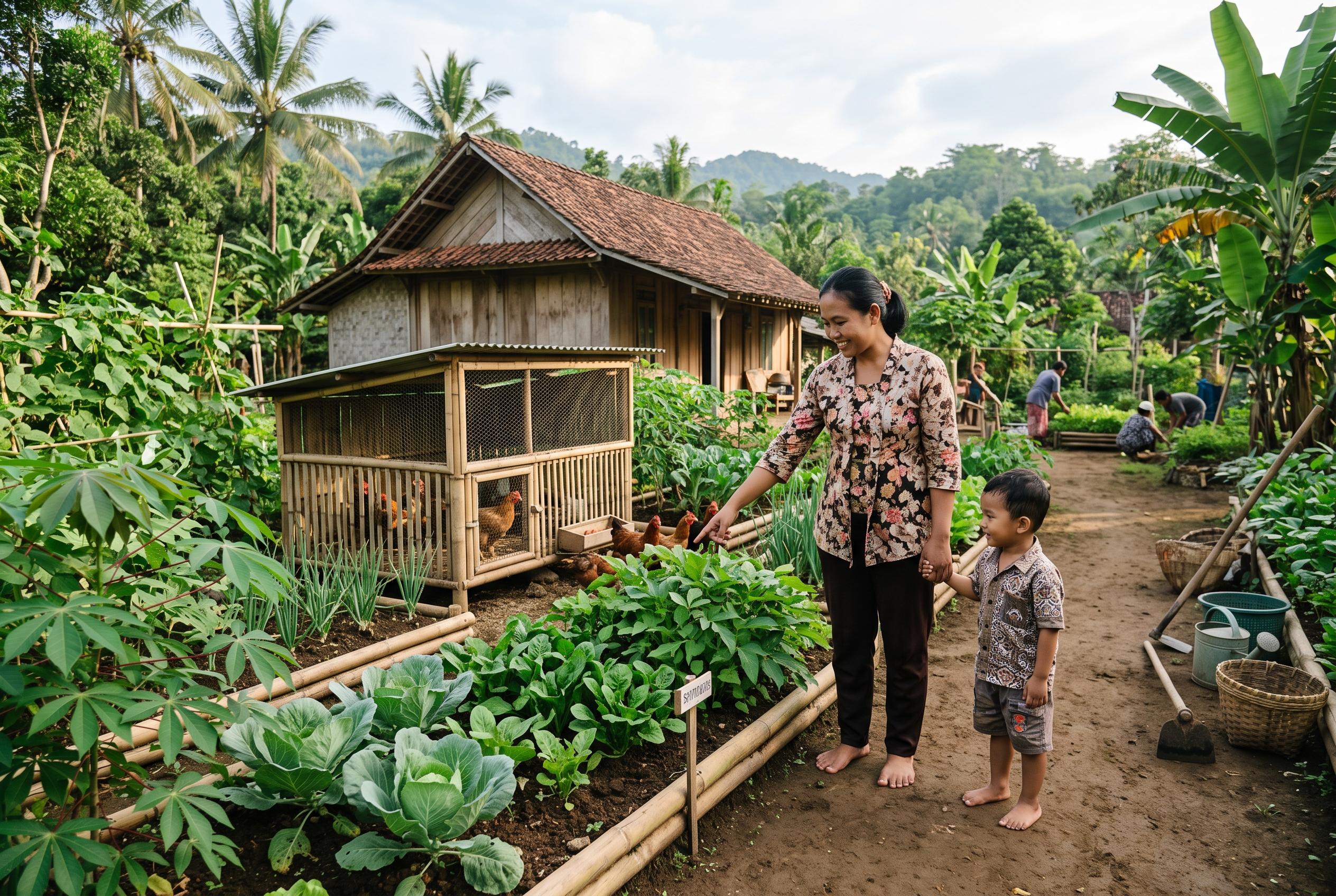

Lecturers from Universitas Siliwangi are empowering families in Cihonje to turn yards into sustainable food sources, using integrated farming methods to improve nutrition and reduce stunting, in a pioneering community-led initiative supported by the Indonesian government.
Lecturers from Universitas Siliwangi are helping families in Cihonje, a neighbourhood in Karanganyar, Tasikmalaya, turn their yards into a source of food and income as part of a community farming programme aimed at reducing stunting. The project focuses on households considered at risk and encourages them to grow vegetables and fruit, raise laying hens and keep catfish in small-scale backyard systems.
According to Republika, the initiative is being carried out with Posyandu Melati and is supported by a BIMA grant from the Ministry of Education, Technology and Higher Education. Team leader Iseu Siti Aisyah said the idea is to help families use their land more sustainably by combining poultry, fish, crops and fruit in one integrated house-food area model.
The programme also includes practical training. Residents have been taught how to care for chickens and fish, how to cultivate plants, and how to convert household organic waste into alternative animal feed and fertiliser. The team has also shown families how to process catfish into products such as nuggets and sausages, so that harvests can be used more efficiently and with less waste.
Early results are already visible. Vegetables grown in the yards are being harvested for daily meals, while the laying hens have started producing eggs. For families facing limited access to affordable protein, these gains can help improve household nutrition and cut spending on purchased food. Posyandu Melati chair Dede Oting said local families were beginning to see the benefits in their daily diets.
The effort comes against a wider backdrop of persistent stunting concerns in Tasikmalaya. Previous community studies in the area have highlighted the value of local cadres and household-level nutrition work, while regional authorities have continued to review the use of government funds for stunting reduction. The Unsil team hopes the backyard farming model will strengthen food security in Cihonje and support the national target of bringing stunting prevalence below 14%.
Disclaimer: This content is for informational purposes only and is not intended to be a substitute for professional medical judgment, advice, diagnosis, or treatment.