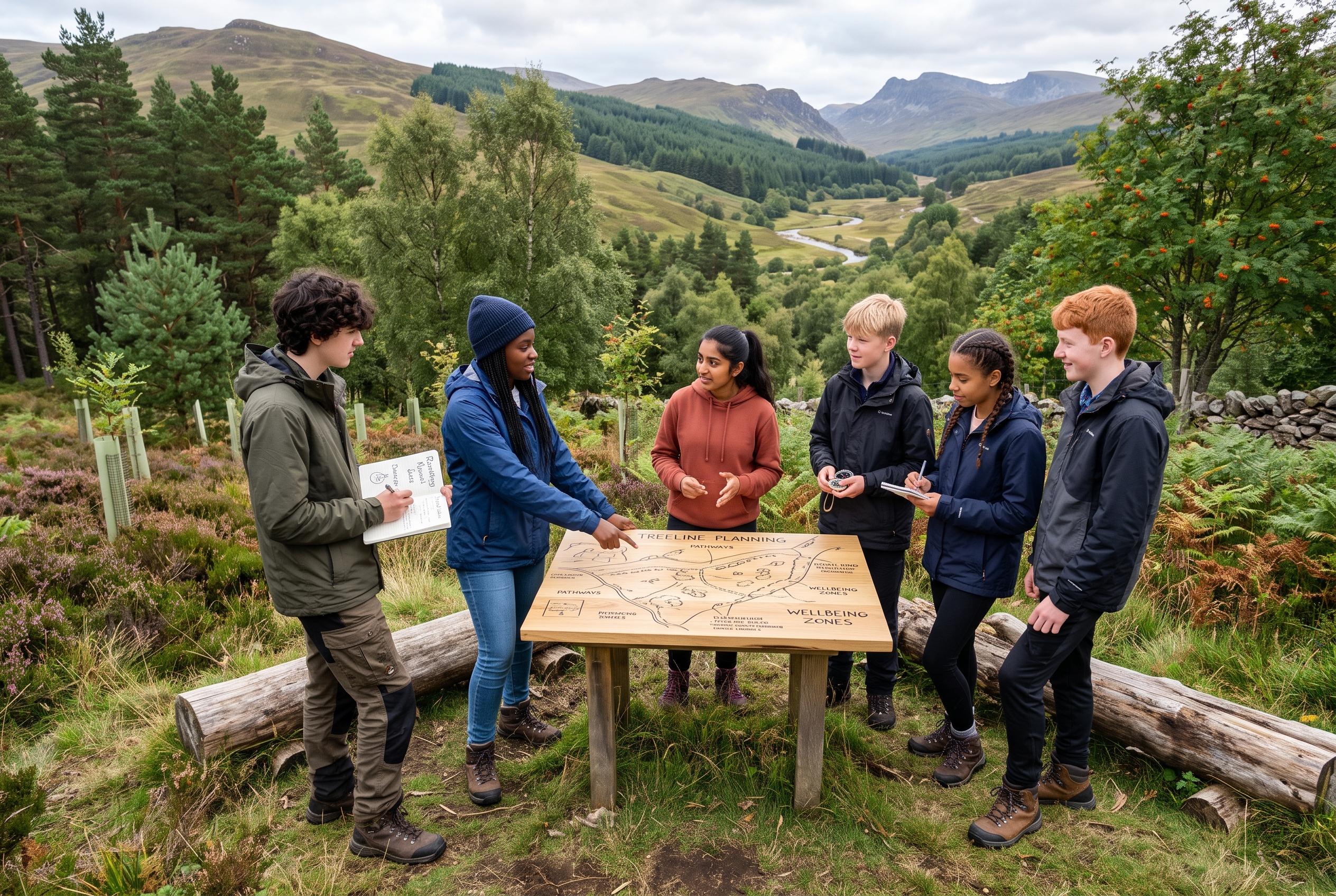

A rewilding estate in the Scottish Highlands hosts a mental health project empowering teenagers to explore nature-based activities designed to boost resilience and wellbeing, with pupils contributing ideas for outdoor interventions.
A rewilding estate in the Scottish Highlands has become a classroom for a mental health project that asks teenagers what nature can do for their wellbeing. Healthy Young Minds, led by the University of South Wales with the University of the Highlands and Islands and the University of Dundee, is working with rural pupils aged 11 to 14 to design outdoor activities that could support resilience, reduce anxiety and improve mental health.
This spring, pupils from Farr High School and Kinlochleven High School visited Trees for Life’s Dundreggan Rewilding Centre in Glenmoriston, where they joined a guided walk, pond dipping and lessons in tree identification, bannock making and traditional fire lighting. The centre, opened in April 2023, sits on the 4,000-hectare Dundreggan estate, which Trees for Life has been restoring since 2008 as part of wider efforts to bring back the Caledonian forest.
During workshops run with Ewen’s Room, a Highland mental health charity, the teenagers came up with ideas including camping, outdoor cafés, hill walking, wild swimming, beach combing, board games, sports and natural crafts. Their suggestions were then reviewed by other young people and specialists in green health and youth mental health before the pupils refined the list and voted for their preferred activities.
Researchers said the exercise is built around the five ways to wellbeing: connecting with other people, learning new skills, giving to others, being physically active and taking notice of small things. According to the University of South Wales project summary, the aim is to tackle some of the problems rural pupils face, including isolation and limited access to services, by co-producing practical interventions with the young people themselves.
Franny Schlicke, visitor experience and operations supervisor at Dundreggan, said it was encouraging to see the students engaging with the landscape and the activities. Dr Sara Bradley, senior research fellow at the University of South Wales, said the project showed how young people can develop their own ideas about the links between nature, health and wellbeing. She added that co-creation is an effective way to involve them in preventative approaches to mental health by getting them outdoors.
The team is now preparing two academic papers and seeking further funding, while keeping in contact with the schools about how to develop and test the activities the pupils designed. Dundreggan is home to more than 4,000 species of plants and animals, including many that are rare or protected, and the rewilding centre offers trails, events, bushcraft-style activities, a café and accommodation for visitors.
Disclaimer: This content is for informational purposes only and is not intended to be a substitute for professional medical judgment, advice, diagnosis, or treatment.