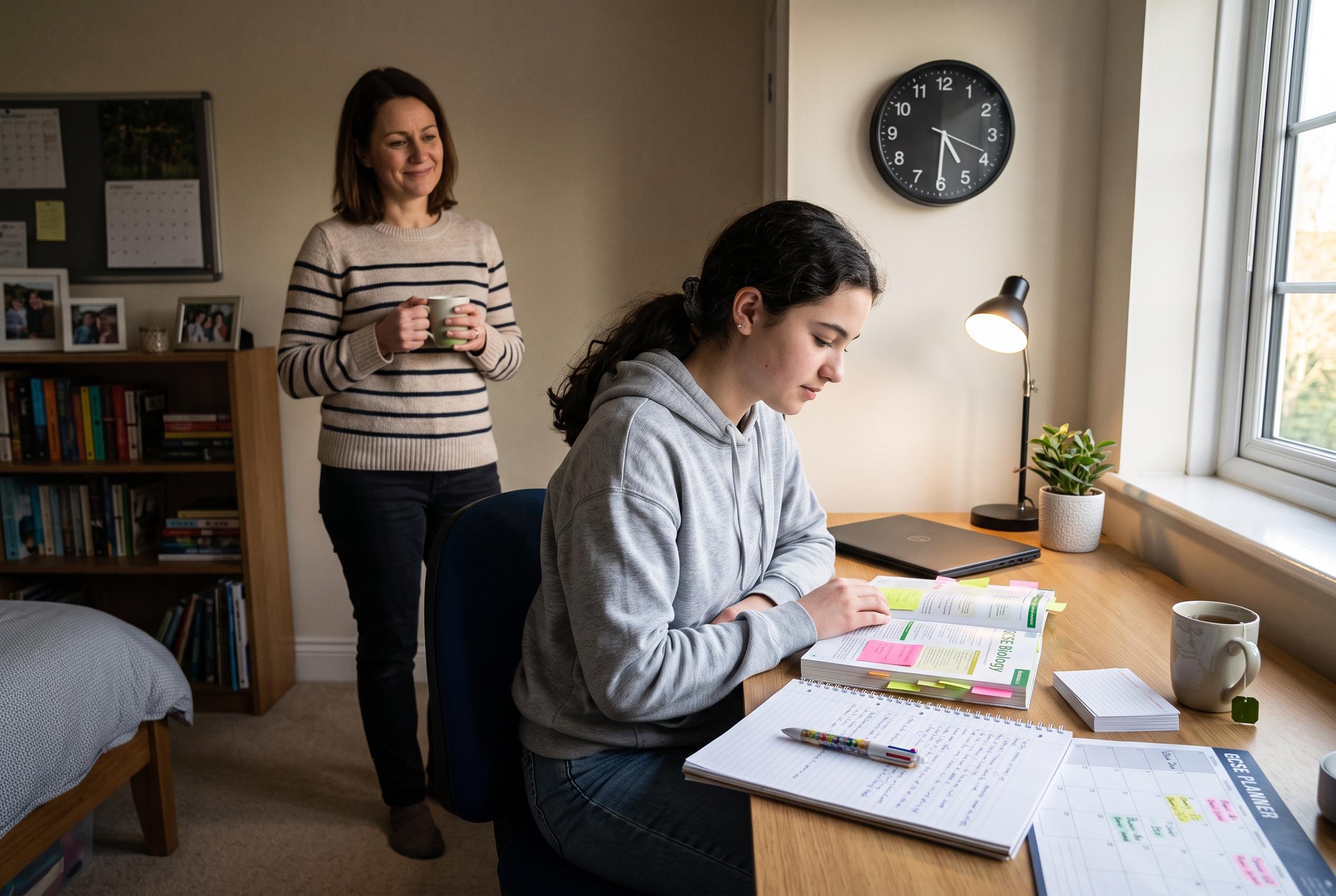

As GCSEs and A-levels approach, parents can help teens succeed by creating a supportive study environment, planning effectively, and prioritising wellbeing amid the exam pressure.
Exam season can put pressure on the whole household, not just the student. As GCSEs and A-levels approach, parents often want to help but are unsure how to do so without adding to the strain. The most useful support is usually practical, steady and calm: creating space for revision, helping with planning and keeping the atmosphere at home as even as possible. According to the NHS, realistic preparation and regular breaks can make studying feel more manageable, while the British Council says organised notes and regular review help students retain information more effectively.
A good place to start is the study environment. The NHS advises choosing a revision style that suits the individual, and Birmingham City University recommends showing interest in revision while helping to keep track of key dates. In practice, that means a quiet, tidy and well-lit space, fewer interruptions and simple comforts such as water and healthy snacks. Even small changes can help teenagers settle long enough to concentrate, especially when they are juggling school, sport and family commitments.
Planning matters just as much as the study space. A realistic timetable can stop revision from becoming overwhelming, and both the NHS and Birmingham City University stress the value of breaking work into smaller, organised sessions. Short, focused blocks of study with breaks in between are generally more effective than marathon cramming sessions. The same advice from College Raptor points to spaced revision over several days, rather than trying to absorb everything at once.
How students revise also makes a difference. The NHS recommends finding a method that works for the individual, reviewing past papers and checking understanding rather than simply re-reading notes. The British Council suggests keeping notes tidy, divided into sections and regularly summarised, while using colour can help make key points easier to remember. Active methods such as flashcards, practice tests and explaining topics aloud are more effective than passive reading and can give teenagers a clearer sense of progress.
Wellbeing should stay part of the plan throughout exam season. The NHS advises protecting sleep, eating well, staying active and asking for help when stress builds. Sleep is especially important, with consistent bedtimes, less caffeine and a calming wind-down routine all helping to improve rest, according to Tom’s Guide. Parents can also do a great deal simply by listening more than they advise, keeping their expectations grounded and reminding teenagers that effort matters, not just grades.
Disclaimer: This content is for informational purposes only and is not intended to be a substitute for professional medical judgment, advice, diagnosis, or treatment.