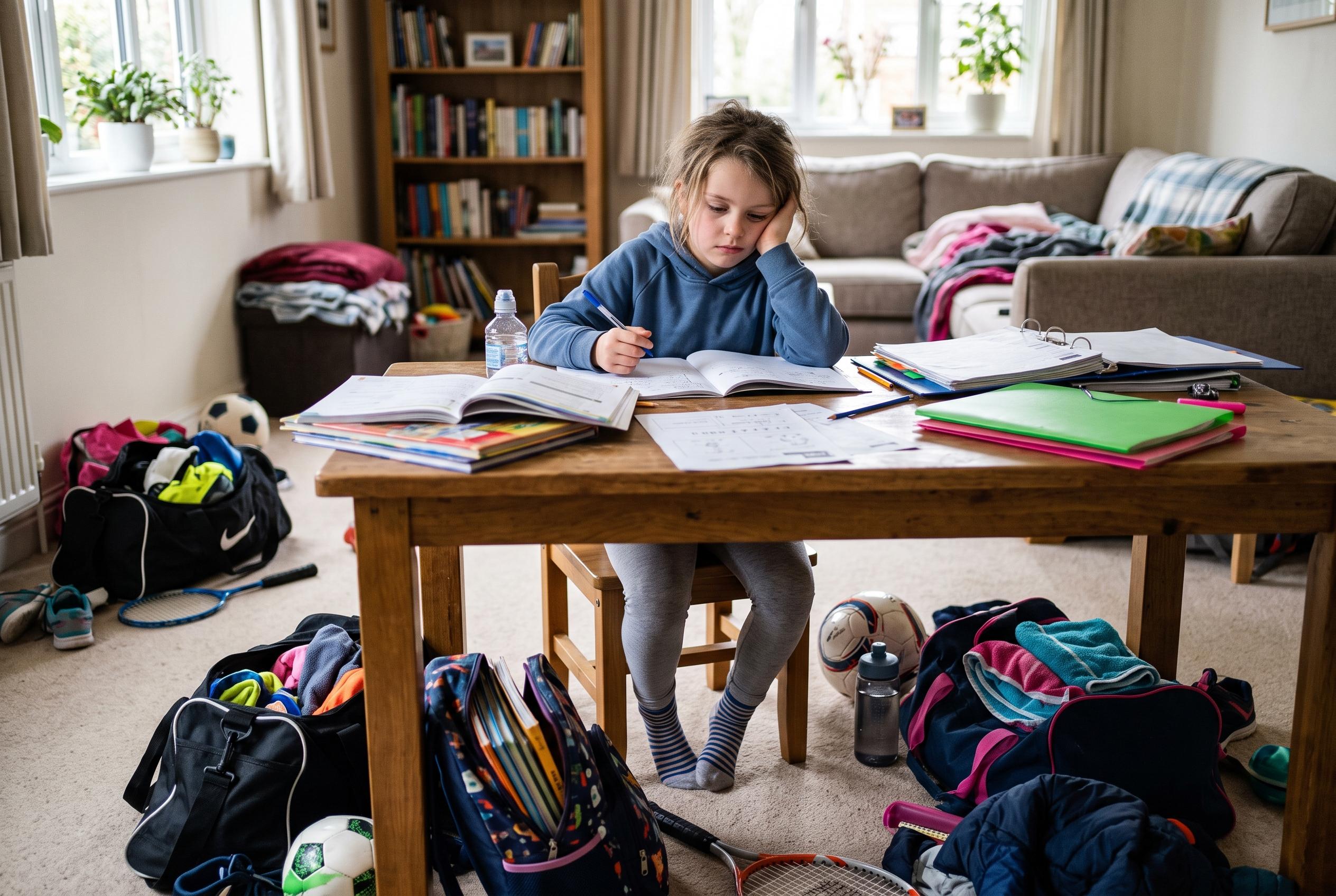

A 2024 study warns that excessive homework and extracurriculars can harm children’s well-being, urging parents to prioritise balanced routines and open conversations about stress and overload.
A new school year often brings renewed routines, but it can also tip family life into a pace that leaves children stretched too thin. Parents who worry their child is taking on too much may want to look beyond grades and sports results and consider the wider effect on sleep, mood and enjoyment of learning. A 2024 study in Economics of Education Review found that piling homework and enrichment activities on to students’ schedules may do little to improve cognitive skills while adding pressure that can damage mental well-being.
One useful way to avoid overload is to match activities to a child’s age and stage. Childhood development specialists say organised activities are generally less suitable for very young children than for older pupils, who may be better able to benefit from structure and skill-building. For children under six or seven, the priority should be free play, exploration and social time, with any organised activity kept light and enjoyable rather than performance-driven. As children move through primary school, parents can begin involving them in decisions about which activities matter most.
Open conversation is equally important. The American Academy of Child and Adolescent Psychiatry advises parents to keep talking with children about how their schedules feel and to make clear that stepping back from an activity is not a failure. That can be especially important because children may not always admit they are struggling. Signs that a child is overscheduled can include repeated reluctance to attend an activity, tiredness, poor sleep, trouble with organisation, falling grades, headaches or stomach aches, and rising anxiety. The Mayo Clinic and the American Psychiatric Association both note that changes in sleep, appetite, mood and social withdrawal can also be warning signs that deserve attention.
Homework can add another layer of strain, particularly for children who need more family support to stay on track. A systematic review in the journal Children found that the nature and level of parental involvement in homework can affect emotional well-being, especially for children with neurodevelopmental conditions such as ADHD or dyslexia. That does not mean parents should step away altogether; rather, they should aim to support without taking over. In practice, the healthiest school-year schedule is usually the one that leaves room for rest, unstructured play and time to simply be a child.
Disclaimer: This content is for informational purposes only and is not intended to be a substitute for professional medical judgment, advice, diagnosis, or treatment.