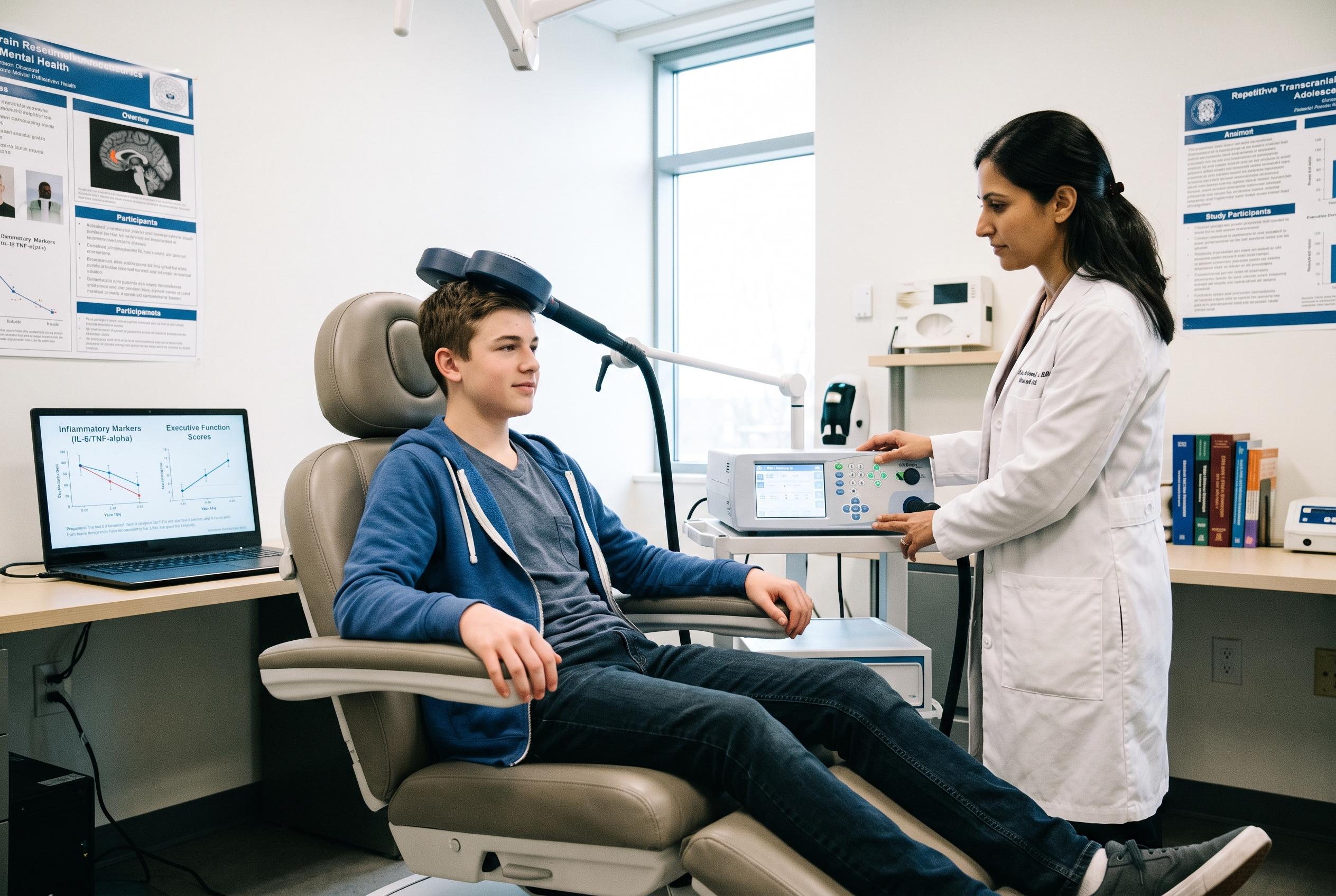

A recent study suggests that adding bilateral repetitive transcranial magnetic stimulation to fluoxetine may enhance treatment outcomes for adolescents suffering from depression marked by severe anhedonia, with observed reductions in inflammatory markers and improvements in executive function, though further research is needed.
A new Frontiers in Psychiatry study suggests that adding sequential bilateral repetitive transcranial magnetic stimulation to fluoxetine may improve treatment outcomes for adolescents with depression marked by severe anhedonia, or loss of pleasure. In a single-centre, four-week randomised trial in China, researchers reported greater reductions in anhedonia and overall depressive symptoms among the combined-treatment group than among those given fluoxetine with sham stimulation. The study also found larger improvements in executive function and sharper falls in three inflammatory markers: interleukin-1β, interleukin-6 and tumour necrosis factor alpha. According to the authors, the pattern points to a possible link between symptom relief and reduced systemic inflammation, although the findings are preliminary and limited by the trial’s short duration and modest size. Side effects were mild and transient in both groups, with no statistically significant difference in overall adverse events.
The trial enrolled 86 Han Chinese adolescents aged 13 to 18 years with major depression and prominent anhedonia, of whom 81 completed treatment. Participants were already taking fluoxetine at a fixed 20 mg dose; one group also received active bilateral rTMS over the dorsolateral prefrontal cortex, while the control group received sham stimulation. After baseline adjustment, the combined-treatment arm showed better outcomes on the Chinese Anhedonia Scale for Adolescents, the Hamilton Depression Rating Scale and the Wisconsin Card Sorting Test, a standard measure of executive function. The authors said the results support the idea that anhedonic depression may respond better when medication is paired with brain stimulation that targets reward-related circuits and may help temper inflammatory activity.
Still, the researchers warned that the study leaves important questions unanswered. The sham setup may not have fully blinded participants because active stimulation can produce more noticeable scalp sensations. The trial also lasted just four weeks, did not include long-term follow-up and measured only a narrow set of blood biomarkers. Even so, the findings add to growing evidence that anhedonia in young people may reflect more than serotonin imbalance alone, and that inflammation could be one biologically relevant treatment target.
Disclaimer: This content is for informational purposes only and is not intended to be a substitute for professional medical judgment, advice, diagnosis, or treatment.