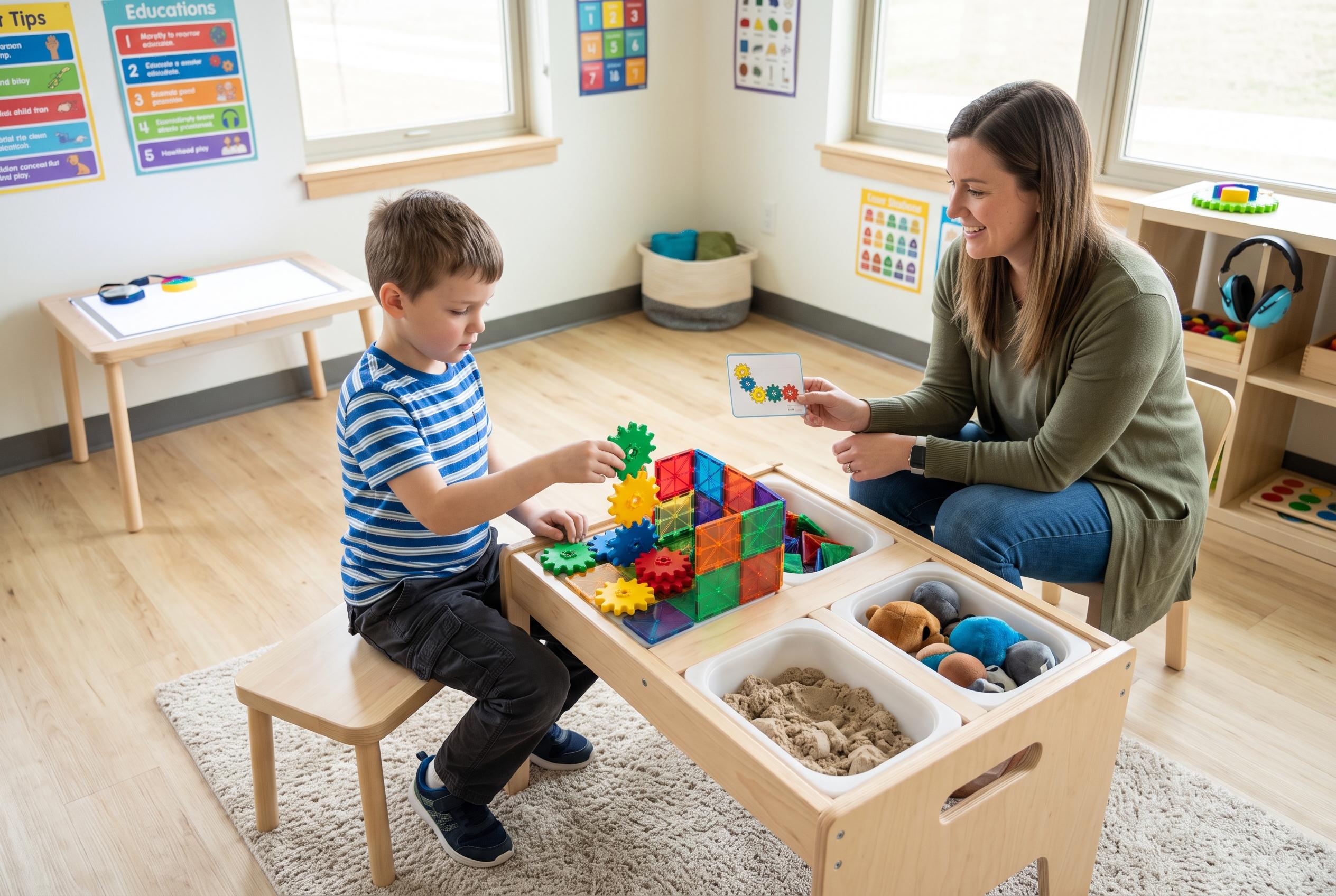

New insights into the importance of play reveal tailored strategies that enhance learning and social skills in children with autism, emphasising personalised and inclusive play environments.
Play is one of the earliest ways children make sense of the world, and child development experts say it does far more than keep them occupied. According to the American Academy of Pediatrics, play helps build creativity, imagination, dexterity and physical, cognitive and emotional strength, while also teaching children how to cooperate, share and resolve conflict. Healthline similarly notes that play supports brain development, problem-solving and social learning.
That makes play especially important in the early years, when children are learning through touch, sound, movement and repetition. A baby repeating a sound, exploring a toy in different ways or engaging in simple back-and-forth games with a parent is already building the foundations for later language and social skills. As children grow, pretend play, role-play and group games add further benefits by encouraging negotiation, turn-taking and communication.
Experts also stress that there is no single “right” way to play. Some children prefer active movement, while others spend longer with puzzles, blocks, books or make-believe stories. These differences are not automatically a cause for concern; they often reflect temperament, age and developmental stage. Psychology Today reported in 2026 that free play has become less common, even though research continues to link it with social, emotional and neurological development.
For children with autism spectrum disorder, play can look different again. The US Centers for Disease Control and Prevention says signs of autism may include differences in social communication, such as limited gestures, less sharing of interests or not engaging in simple interactive games at expected ages. It also notes that restricted or repetitive behaviours are part of the picture. In practice, that means play patterns should be understood in the context of the child’s overall communication, interests and daily functioning, rather than judged in isolation.
For families, the practical lesson is to use play as both a learning tool and a window into the child’s needs. Building on a child’s interests, rather than forcing one style of play, can make learning more effective and less stressful. Reading, storytelling and everyday routines can all be turned into playful activities that support language and understanding.
Books on child development and autism can also help parents and educators choose approaches that are more informed and consistent. The most useful ones combine theory with practical ideas for play-based learning, communication and sensory differences. Used well, they can help adults recognise strengths, support growth and create play environments that are safe, engaging and better matched to the child.
Disclaimer: This content is for informational purposes only and is not intended to be a substitute for professional medical judgment, advice, diagnosis, or treatment.