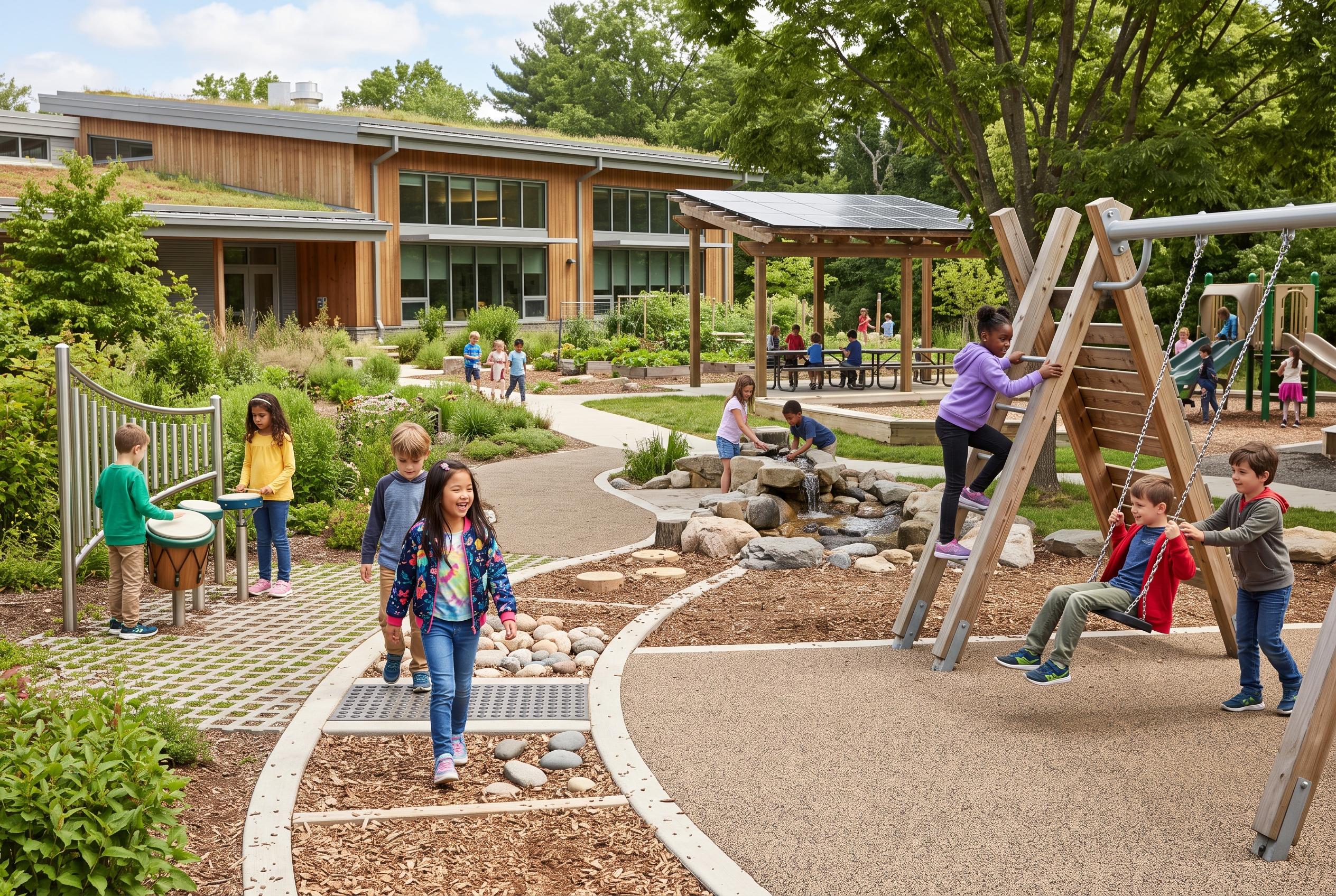

Schools are transforming playgrounds from simple play areas into inclusive, multisensory spaces that support physical activity, social development, and environmental comfort, reflecting evolving understanding of children’s diverse needs.
School playgrounds are moving well beyond the old formula of swings and slides. According to May Recreation, schools are now thinking about outdoor spaces as places that can support movement, social development, sensory regulation and even classroom learning, not simply breaktime activity. That shift matters because the Centres for Disease Control and Prevention says children aged six to 17 should get at least 60 minutes of moderate-to-vigorous physical activity a day, and it has also linked recess with better memory, attention, classroom behaviour and social-emotional development.
A more modern playground starts with inclusion. Guidance from Playground Authority, HAGS and Inclusive Play all stresses that basic accessibility is not the same as inclusive design. The aim is not just to let children enter the play area, but to help them use it together, whether they have physical, sensory or developmental differences. That can mean ground-level equipment, ramps, smooth circulation routes, transfer points, accessible surfacing and spaces where children can play side by side rather than in separate zones.
Variety in movement is another hallmark of a better-designed school playground. May Recreation says traditional favourites still matter, but schools can add climbing systems, balance features and obstacle-style challenges that build strength, coordination and endurance. HAGS also argues that playgrounds should offer age- and developmentally appropriate opportunities, along with multi-sensory elements and shared play experiences that encourage interaction rather than passive use.
The best current designs also make room for children who need either stimulation or a quieter reset. HAGS and Inclusive Play both highlight the value of sensory-rich features as well as calmer retreat areas, particularly as playground design becomes more attuned to neurodiversity and invisible disabilities. In practice, that can mean tactile panels, sound and texture elements, and quiet spaces where a child can step away from noise before rejoining the group.
Heat and surfacing are just as important as the equipment itself, especially in warmer states such as Texas. May Recreation says shaded areas can be substantially cooler than direct sun, and recommends canopies, trees, shaded rest areas and careful equipment placement to reduce heat exposure. It also points to surfacing as a core part of the playground, not an afterthought. Accessible, durable materials such as artificial turf can support safer movement, while also helping schools create clear paths, play zones and gathering areas that make the ground itself part of the experience. Inclusive Play and AP Playgrounds add that well-planned surfaces and wider routes can also make maintenance easier and encourage broader use by families and communities.
Disclaimer: This content is for informational purposes only and is not intended to be a substitute for professional medical judgment, advice, diagnosis, or treatment.