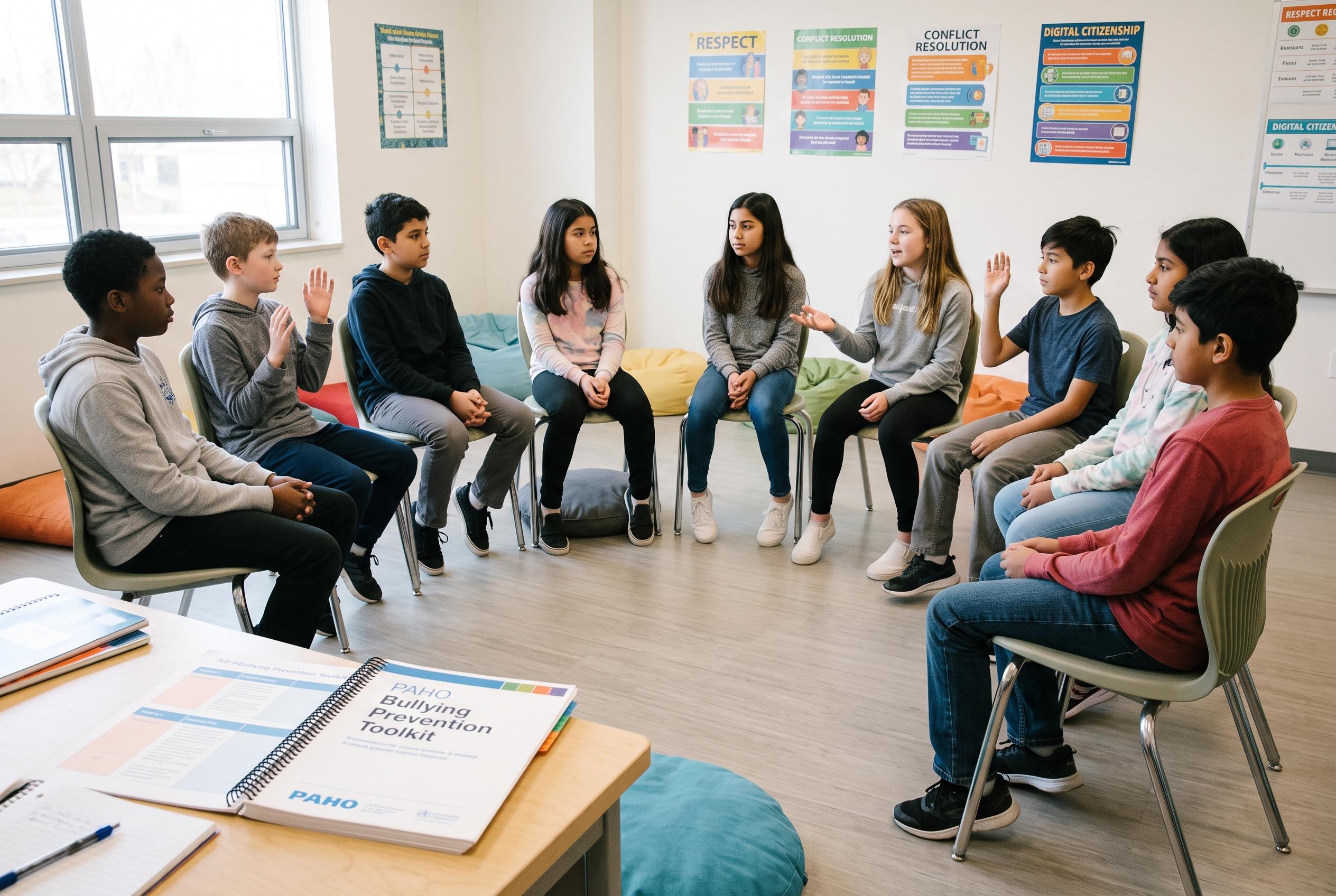

The Pan American Health Organization introduces a comprehensive guide to help countries in the Americas prevent and respond to peer violence affecting millions of children and adolescents, amid rising concerns over mental health impacts and online abuse.
The Pan American Health Organization has published a new toolkit aimed at helping countries in the Americas tackle bullying and cyberbullying among children and adolescents, as the agency warns that peer violence is affecting millions of young people across the region.
The guide, What Works to Prevent Bullying and Cyberbullying of Children and Adolescents in the Americas, brings together evidence, policy advice and practical steps for governments, schools, health services and families. PAHO says the publication is designed to help decision-makers and front-line workers identify risk earlier, respond more effectively and strengthen prevention across health, education and social protection systems.
According to PAHO, about one in four adolescents aged 13 to 17 in Latin America and the Caribbean says they experienced bullying at school in the previous month, with figures varying by country and subregion. The toolkit also says cyberbullying affects a significant share of children and adolescents in some countries, and that girls report higher rates than boys. PAHO says the online version of abuse can spread quickly, be harder to contain and often overlaps with offline violence in schools and communities.
Britta Baer, a PAHO regional adviser on violence and injury prevention and co-author of the toolkit, said bullying during childhood and adolescence can damage physical, sexual, mental and emotional health. She said the evidence shows prevention is possible and that the new resource is intended to make proven approaches easier to use. The organisation also points to its wider violence-prevention work, including the INSPIRE framework, which sets out seven evidence-based strategies for ending violence against children.
PAHO says bullying is linked to depression, anxiety, traumatic stress, loneliness, sleep problems, self-harm and suicidal thoughts, as well as setbacks in learning and social development. It urges health workers to ask about school and online life during routine consultations, watch for warning signs such as withdrawal or sudden changes in behaviour, and work with families and schools when concerns arise. The agency also says young people should be involved in shaping responses, alongside parents, caregivers and digital platforms.
Disclaimer: This content is for informational purposes only and is not intended to be a substitute for professional medical judgment, advice, diagnosis, or treatment.