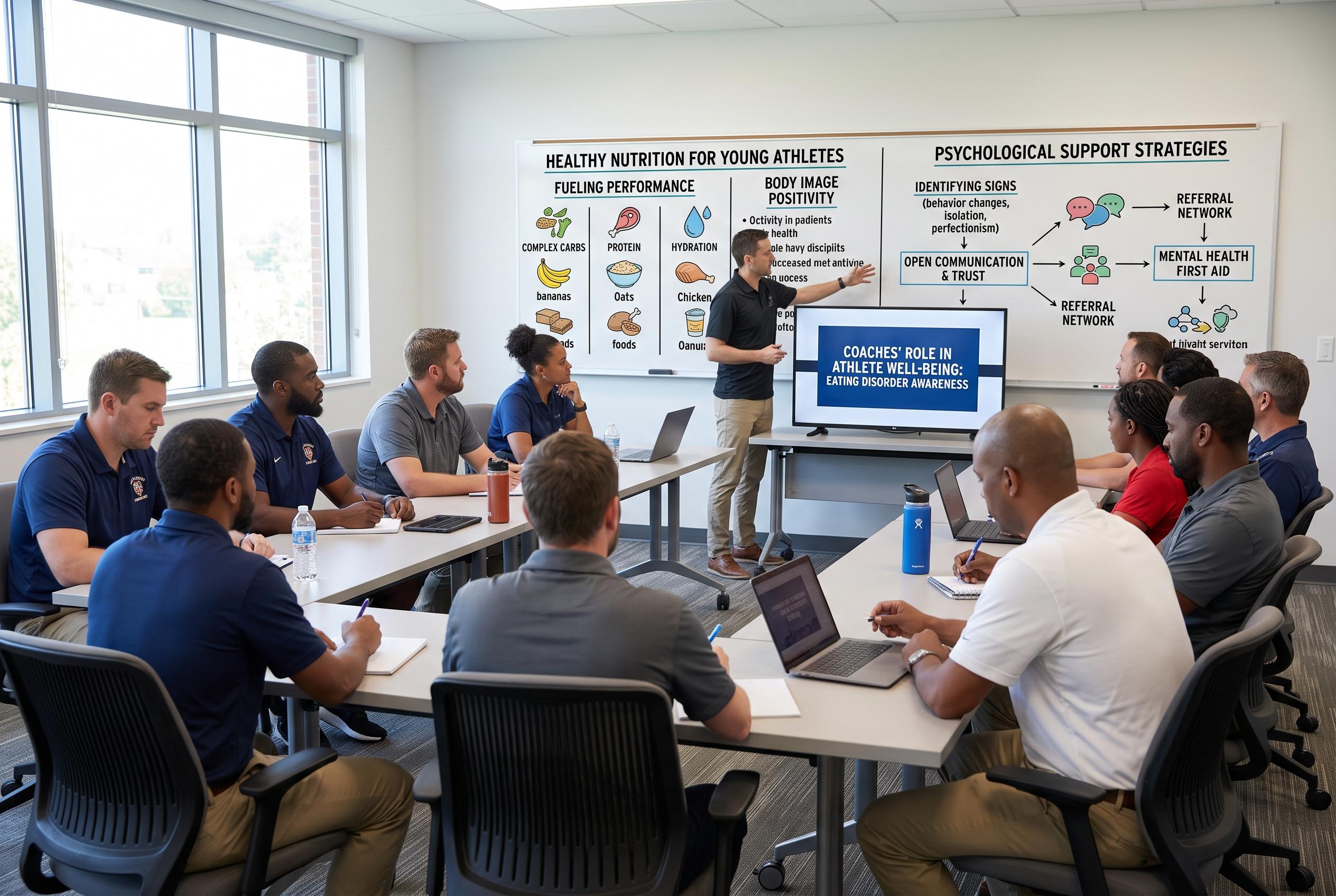

Colorado’s new legislation expanding coach training on youth mental health potentially addresses a hidden risk factor among athlete populations, with calls to include eating disorder awareness in the curriculum amidst rising concerns over their impact on young athletes’ wellbeing.
Colorado’s new push to train school coaches on youth mental health could have a wider reach than lawmakers first described, according to The Conversation, with eating disorders emerging as a gap in the state’s approach to athlete wellbeing. The legislation, Alyssa’s Youth Concussion and Mental Health Protection Act, already requires coaches in public and private middle, junior high and high schools to complete training on concussion-related mental health concerns, including anxiety, depression and suicide prevention. Advocates now argue that eating disorder awareness should be folded into that curriculum as well.
The law was named for Alyssa Peterson, a 13-year-old athlete who died by suicide after suffering multiple concussions. CBS Colorado reported that the measure also requires coaches to tell parents about possible post-concussion mental health changes, such as mood swings, irritability, depression, anxiety, post-traumatic stress disorder and suicidal thoughts. The legislation, Senate Bill 26-060, goes further by mandating a biennial course on the impact coaches can have on young athletes’ mental health, along with a broader wellness framework, mental health disorders, trauma, substance use and suicide prevention, according to the Colorado General Assembly.
That broader remit matters because eating disorders are a serious and often hidden problem among athletes, the clinicians and researchers quoted by The Conversation said. Harvard’s Strategic Training Initiative for the Prevention of Eating Disorders estimates that about 9% of Coloradans, or 501,370 people, will experience an eating disorder in their lifetime. The article says the condition costs the state an estimated US$1.1 billion a year in healthcare, lost productivity and informal care, and is linked to hundreds of emergency visits and hospital admissions. Nationally, one person dies every 52 minutes from an eating disorder, according to the same source.
The risks can be especially sharp in sport. The Conversation cited research showing that dieting pressure, weight cycling and praise for weight loss from adults around young athletes can all increase vulnerability. It also pointed to evidence that some sports and environments are more protective than others: team sports that do not focus heavily on body size tend to lower risk, while sports such as gymnastics, wrestling and distance running can intensify it. Higher levels of competition can bring added strain, particularly for girls and women, and young athletes who are under pressure from coaches or family about weight may be especially exposed.
One reason the issue is missed, the article argues, is that eating disorders do not always look the way people expect. Only a small minority of sufferers are medically underweight, which means many families, coaches and even clinicians may overlook warning signs. That makes school-based education potentially valuable, especially if coaches are taught to watch for symptoms, avoid weight-focused language and refer athletes early for help. Colorado already has laws aimed at improving access to youth mental health treatment and limiting the use of body mass index in eating-disorder coverage decisions, suggesting the state has begun to build a broader policy framework around the issue.
Disclaimer: This content is for informational purposes only and is not intended to be a substitute for professional medical judgment, advice, diagnosis, or treatment.