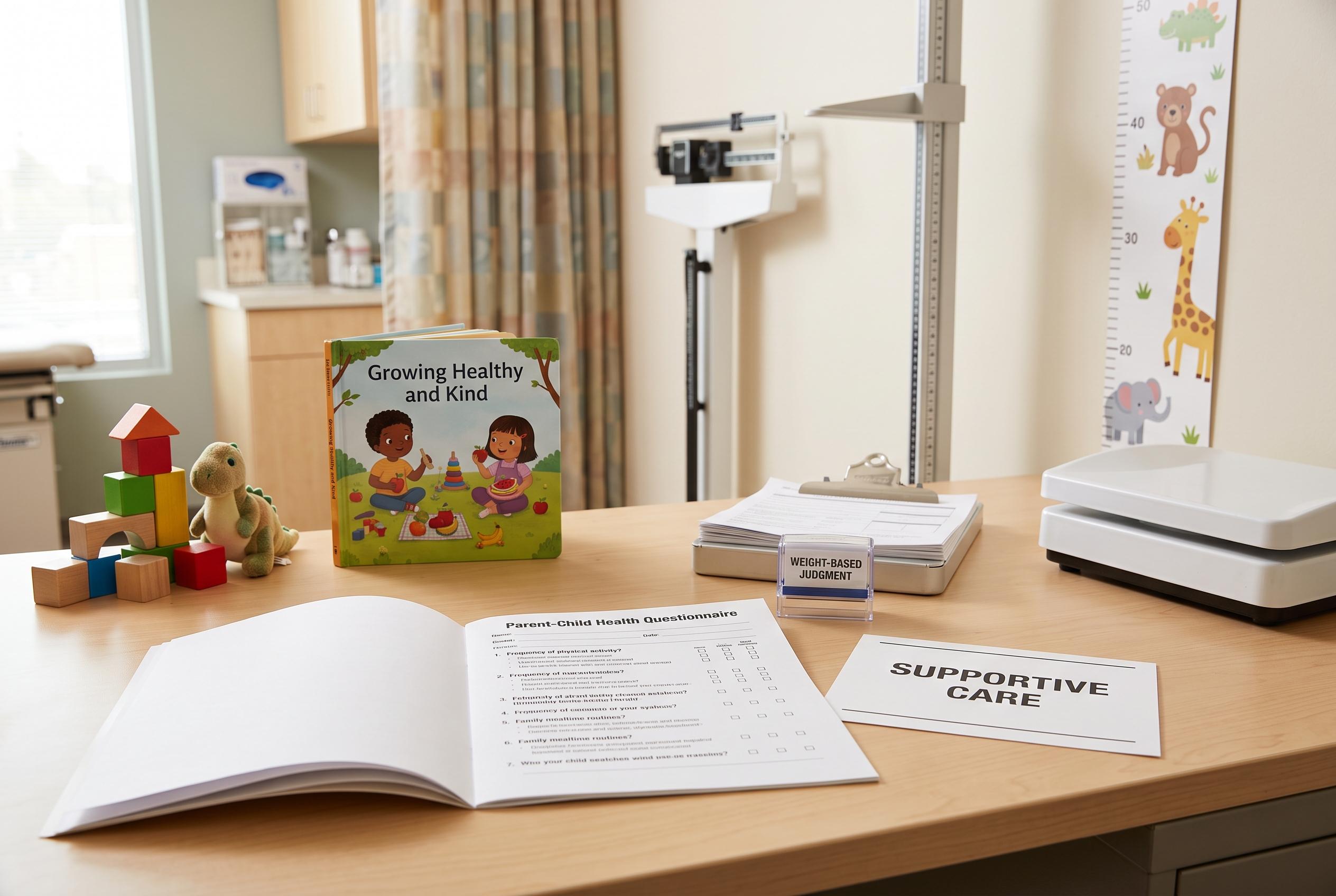

A recent study published in Academic Pediatrics highlights concerning biases in assessing parental effectiveness based on weight, revealing that stigma attached to obesity extends beyond children to their parents, with potential implications for family dynamics and support.
A study published in Academic Pediatrics has added fresh evidence to a worrying pattern in childhood obesity research: parents can be judged not only for their own body size, but also for their child’s. The trial, described by the authors as a large, community-based experiment, tested both direct weight stigma and “weight stigma by association” in parent-child relationships. Its central finding was stark: parents of children with obesity were rated as less effective than parents of children without obesity, and parents with obesity were rated as less effective than parents without obesity.
That distinction matters because the study suggests the criticism is not limited to a child’s weight alone. According to the paper, parents of children with obesity may experience stigma because of their child’s size, with possible consequences for the parents, the children and the relationship between them. The researchers also reported that when evaluators viewed parents as having obesity themselves, they tended to judge those parents as less effective and less helpful, reinforcing the idea that bias can attach to adults and children alike.
The findings fit with other work in the field. Research published in Childhood Obesity has shown that mothers of children with overweight or obesity report stigma by association, and that this can shape how they see themselves and how they interact with their children. Separate research in Body Image found that teenagers have specific preferences for how parents talk about weight, and that conversations that miss those preferences can backfire. Another study in the same journal found that adults’ visual attention and anti-fat bias can influence how they judge a child’s weight, underlining how easily prejudice can enter supposedly neutral assessments.
The broader concern is that blame does not necessarily improve a child’s health. The Academic Pediatrics study used parenting scenarios modelled on American Academy of Pediatrics guidance, meaning the parents depicted were already following professional recommendations. Even so, they were still judged through the lens of weight bias. For families already trying to manage health, that can mean more shame, less confidence and a greater risk that parents will internalise criticism rather than receive practical support.
Disclaimer: This content is for informational purposes only and is not intended to be a substitute for professional medical judgment, advice, diagnosis, or treatment.