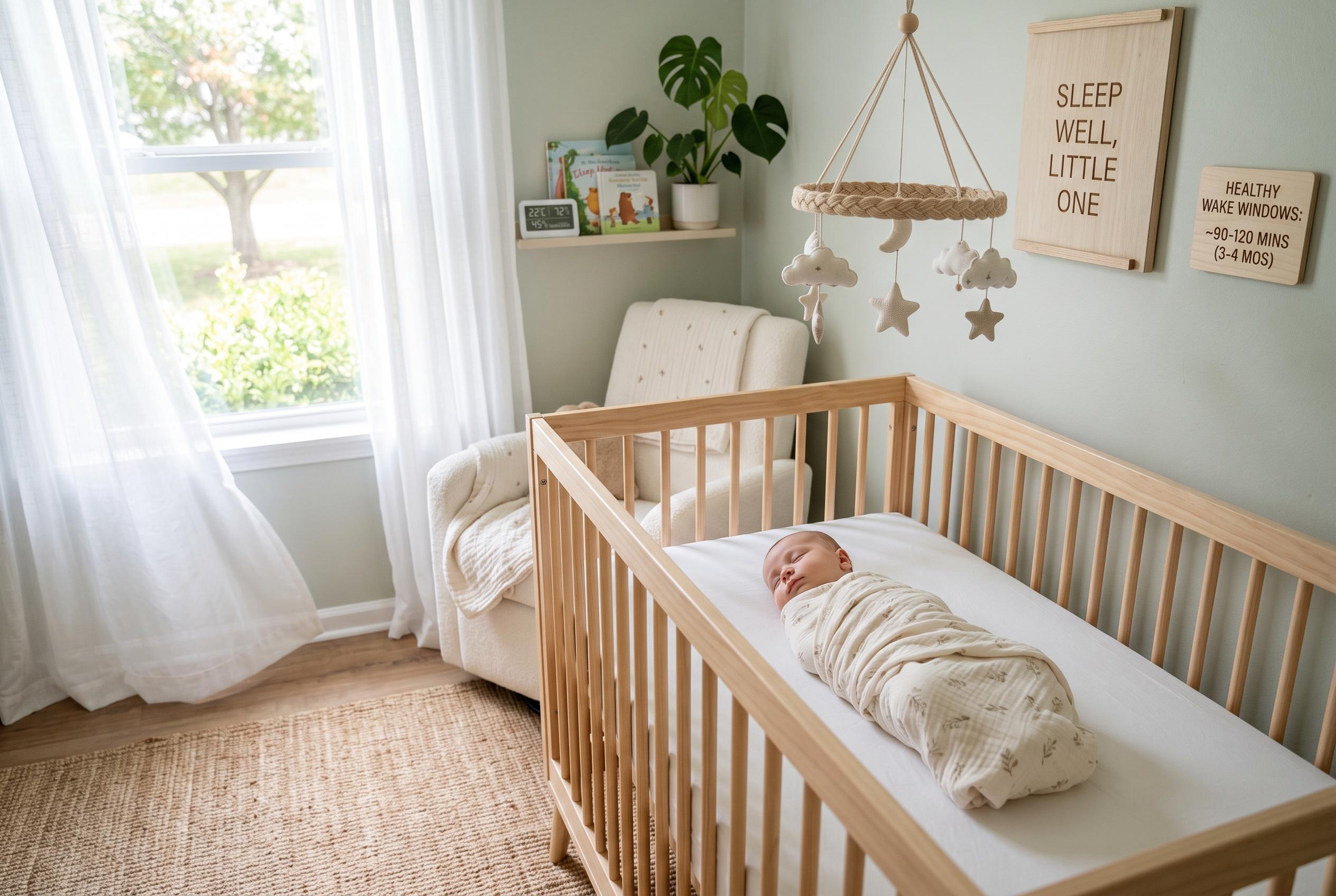

A sleep expert highlights the importance of recognising healthy awake periods in infants, offering relief for parents struggling with sleepless nights during hot weather, and emphasising personalised sleep cues over strict schedules.
Getting a newborn to sleep can feel exhausting, especially when warm weather makes bedrooms sticky and uncomfortable. One sleep expert says the key is not chasing a rigid timetable, but understanding how long a baby can stay awake before needing rest again.
Heidi Skudder, founder of Positively Parenthood, says so-called awake windows may be the most useful tool for parents trying to improve sleep. In practical terms, this means watching the stretches between naps rather than focusing only on bedtime. According to Skudder, babies settle more easily when they are not kept awake for too long, because overtired infants often become harder to soothe.
The idea is backed by baby sleep guidance from the Sleep Foundation, which explains that wake windows are the periods a baby can comfortably stay awake between sleeps. Kirkland Newborn Medicine and The Bump both note that these windows are not fixed for every child, but they do tend to lengthen as babies grow. Pebbi adds that paying attention to early sleep cues can help parents avoid pushing babies past the point where they become overstimulated and difficult to settle.
Skudder says parents do not need to build a strict schedule in the earliest months. She told Irish Mirror that at around three months, a baby’s awake window is about an hour and a half, with roughly 15 minutes added for each month after that until the child is one year old. She said that staying close to those time frames can help babies fall asleep more easily and stay asleep for longer, while also reducing pressure on parents to get everything exactly right.
Heat can make the challenge worse. The Lullaby Trust advises easing sleep in hot weather by reducing layers, keeping air moving safely through the room, closing curtains during the day and using a fan without pointing it directly at the baby. In Ireland, the HSE says newborns up to three months typically sleep between nine and 18 hours in 24 hours, while older babies need less daytime sleep and more structured naps as they grow. If sleep problems continue, the HSE advises parents to seek guidance from a health professional.
Disclaimer: This content is for informational purposes only and is not intended to be a substitute for professional medical judgment, advice, diagnosis, or treatment.