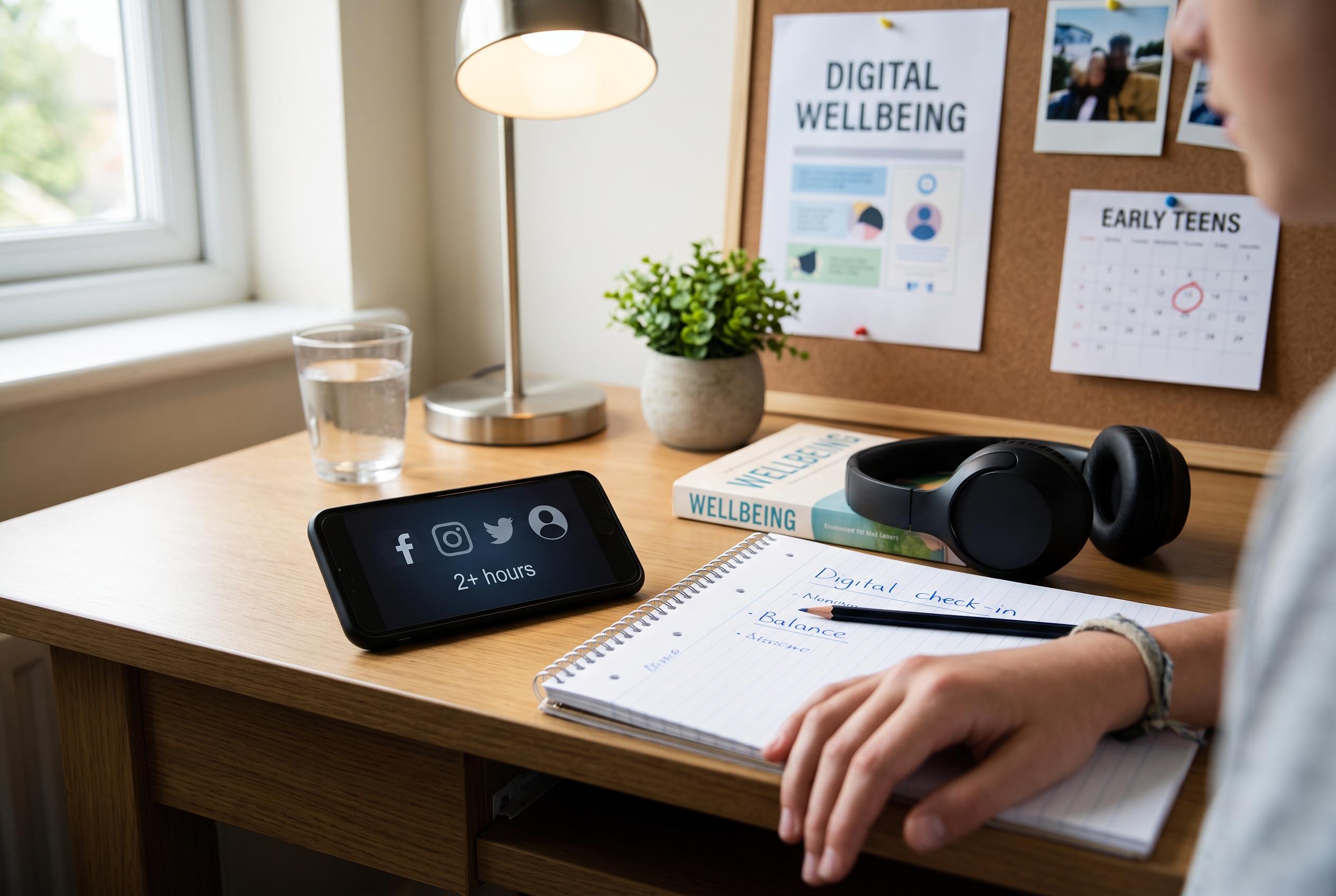

A decade-long Australian study reveals that social media use above two hours daily may modestly increase mental health risks in teenagers, with early adolescence identified as a sensitive period requiring balanced guidance.
Social media is now part of daily life for many teenagers, offering connection, creativity and community, but also exposing them to comparison, bullying and disruption to sleep and exercise. A long-term Australian study suggests the picture is more nuanced than simple warnings about screen time: heavier use was linked to a modest rise in later mental health problems, with the strongest effects seen in early adolescence.
The research followed nearly 1,200 children and adolescents for close to a decade, tracking how much time they spent on social platforms and whether they later developed symptoms of depression, anxiety, poorer well-being or self-harm. According to the study, the clearest pattern emerged when daily use climbed above two hours. At that level, teenagers were slightly more likely to report mental health difficulties a year later, although most heavy users did not go on to develop serious problems.
The findings were most pronounced among 12- and 13-year-olds. In that age group, the study found that even one to two hours a day could be linked to worse outcomes, particularly for girls, who showed higher rates of depressive symptoms and lower well-being. Boys in the same age group were more likely to show anxiety and self-harm risk. Experts say early adolescence may be a sensitive period because emotional, social and impulse-control systems in the brain are still maturing.
The numbers matter, but so do the limits. Social media use was self-reported, which means children may have undercounted their actual time online. The study also could not measure what they were doing on each platform, whether they were being bullied, or whether they were spending that time chatting with friends or scrolling through harmful content. That makes it hard to prove social media itself caused the problems, especially since young people already struggling emotionally may spend more time online.
Still, the broader evidence points to a consistent message: social media can be both helpful and harmful, depending on the child, the content and the context. Recent polling by Pew Research Centre found that many teenagers feel more connected through social media, yet a meaningful minority say it worsens their mental health. For parents and schools, that means limiting screen time is only part of the answer. Guidance, digital literacy, emotional support and stronger safety settings may matter just as much as the clock.
Disclaimer: This content is for informational purposes only and is not intended to be a substitute for professional medical judgment, advice, diagnosis, or treatment.