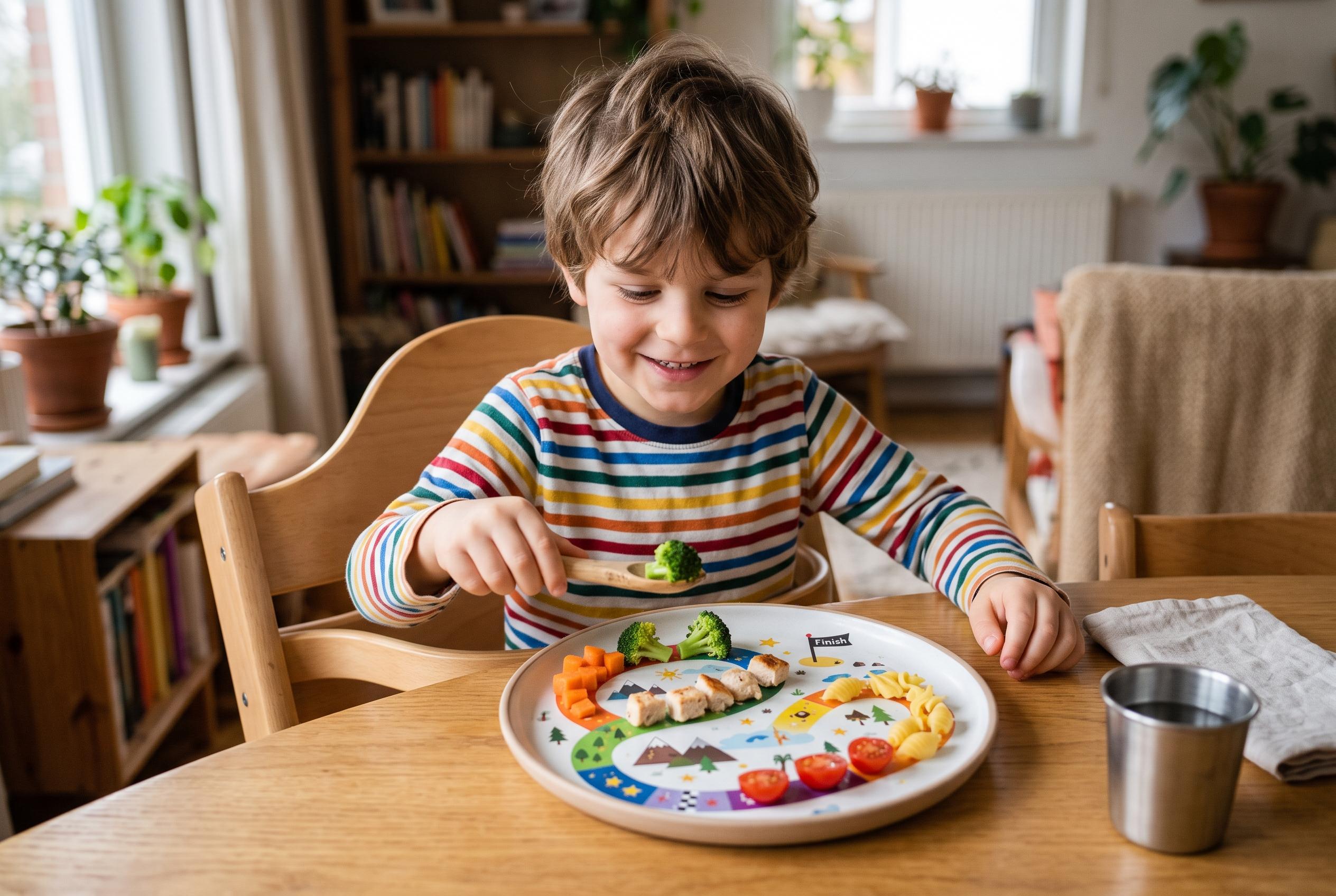

A new Kickstarter project, Playte, transforms mealtime struggles into engaging games, aiming to improve children’s eating habits through playful plates that turn bites into board game moves, sparking interest and longer table engagement.
Playte is trying to turn one of the most fraught parts of family life into a game. The Kickstarter project centres on a specially designed plate that turns bites of food into moves across a board, with the aim of making children more willing to sit down, stay engaged and try what is in front of them. The creators say the idea grew out of their own efforts to get their children to eat, after conventional tactics such as stories and shaped food failed to help.
The product comes in a range of themed plates aimed at different ages and abilities. According to the campaign, Adventure Playte is pitched at children aged four to eight, Memory Game Playte at three- to eight-year-olds, Tiny Tots Playte at two- to four-year-olds, and Battle of the Bites at children aged seven and above. The line-up also includes a large die and simple movement rules, with the basic format designed to be easy enough for very young children to follow.
The campaign says the point is not pressure, but participation. In its own materials, Playte presents testimonials from parents and feeding specialists who describe children showing more interest in food, remaining at the table for longer and, in some cases, tasting vegetables they had previously refused. A report from Parenting also describes similar anecdotes from families and professionals, while a study highlighted by the American Academy of Pediatrics says the concept may improve food acceptance and reduce resistance at mealtimes.
Playte has also been promoted as an innovation in children’s products, with the campaign citing a 2026 Global Recognition Award for innovation. Coverage from CNN and NPR has framed the project as part of a broader conversation about how play can be used to support healthier eating habits, although, as with any crowdfunding product, much of the evidence so far comes from the company’s own claims and early user accounts rather than long-term independent research. The Kickstarter is being offered with a funding goal of $10,000, and pledges will only be charged if the project is successfully financed.
Disclaimer: This content is for informational purposes only and is not intended to be a substitute for professional medical judgment, advice, diagnosis, or treatment.