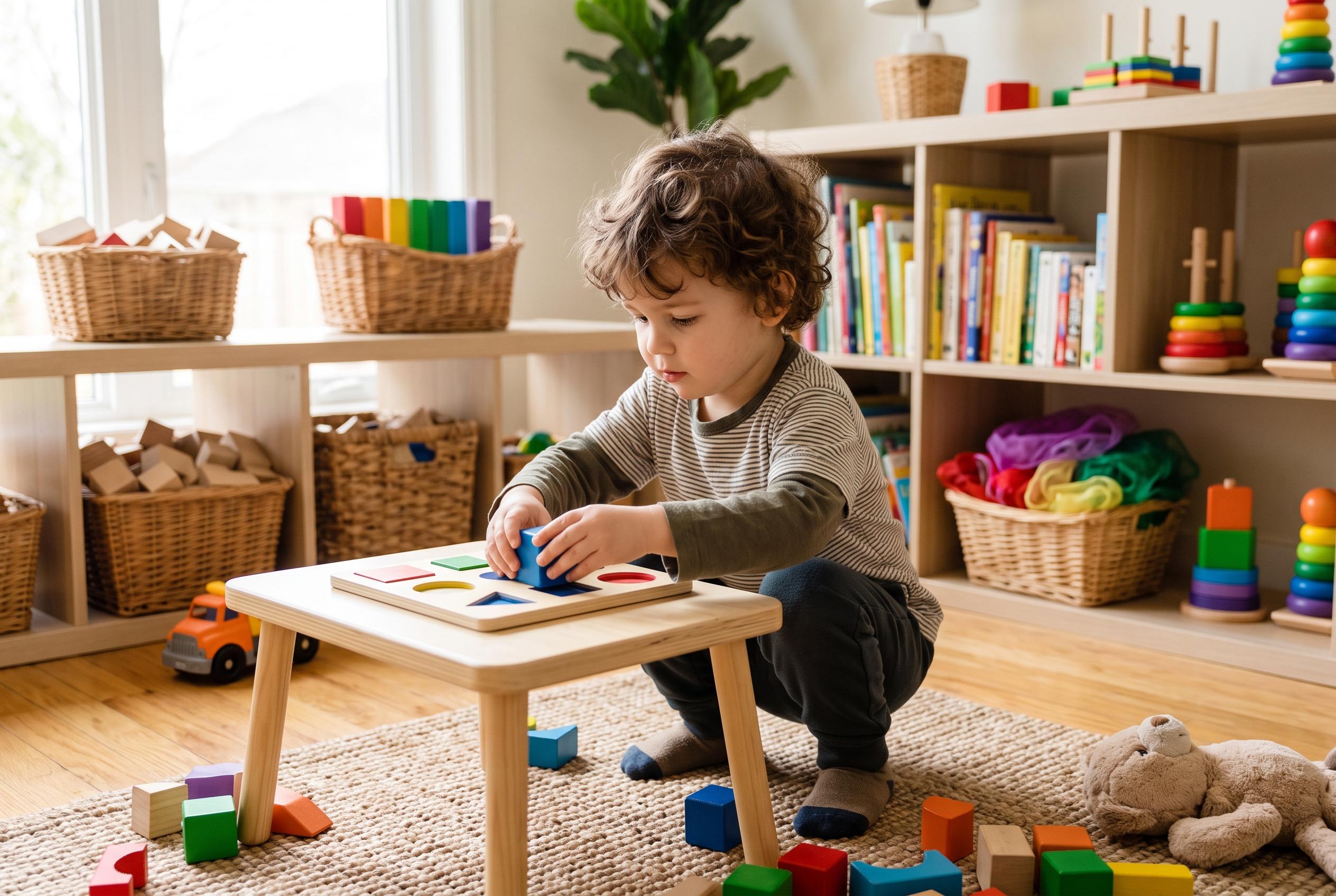

Manisa-based educator Dr Servet Yalçınkaya calls on parents to allow children to face challenges, learn from failure, and develop critical life skills by prioritising unstructured play and problem-solving over constant academic pressure.
Manisa-based educator Dr Servet Yalçınkaya has urged parents to stop clearing every obstacle from their children’s path and instead raise youngsters who can cope with difficulty. In comments reported by Ihlas News Agency, he argued that children should be allowed to encounter age-appropriate setbacks, try again after failure and learn how to solve problems for themselves.
Yalçınkaya said academic achievement alone is not enough to prepare children for adulthood. He said parents often focus too heavily on early reading, packed activity schedules and constant comparison with other children, even when those pressures are driven by good intentions. What matters more, he said, is raising children who are curious, thoughtful, communicative, responsible and able to recover when things go wrong.
He pointed to international education models as evidence that children work best when they are active participants in learning. In his remarks, he cited Finland’s emphasis on play and participation, Reggio Emilia’s focus on curiosity, projects and different forms of expression, Montessori’s stress on independence and self-regulation, and Japanese education culture’s attention to daily life skills, responsibility and group behaviour. That view aligns with education research showing that Montessori and Reggio Emilia both treat children as capable learners rather than passive recipients, while Finnish early education also places the child at the centre of the learning process.
The educator also warned against equating learning with memorisation. He said children should not only learn numbers, words, science and nature, but should do so by exploring, touching, questioning and making sense of what they see. Research on Montessori education similarly highlights self-directed learning, specially designed materials and the teacher as a guide rather than a lecturer.
Yalçınkaya said parents can unintentionally weaken independence by stepping in too quickly. He argued that a child who is always dressed, fed and rescued by adults is given little chance to build confidence through practice. Constant praise, he added, is not the same as genuine self-belief; children gain stronger confidence when they complete tasks, struggle with problems and eventually work out solutions for themselves.
Technology, he said, is not the real issue. The more important question is what it replaces: play with friends, conversation with parents, movement, sleep or contact with nature. He urged families to protect unstructured time, which can help children invent games, think independently and use their imagination. He also stressed that the most valuable investment is not a new toy or course, but undivided parental attention.
Yalçınkaya’s central message was that childhood should not be turned into a race. Education, he said, should not be limited to producing high-scoring students, but should help raise people who can think, create, form relationships and rise again after setbacks. According to the report by Ihlas News Agency, his advice to parents was simple: stop comparing children, give them responsibilities they can handle and make room for them to grow through everyday life.
Disclaimer: This content is for informational purposes only and is not intended to be a substitute for professional medical judgment, advice, diagnosis, or treatment.