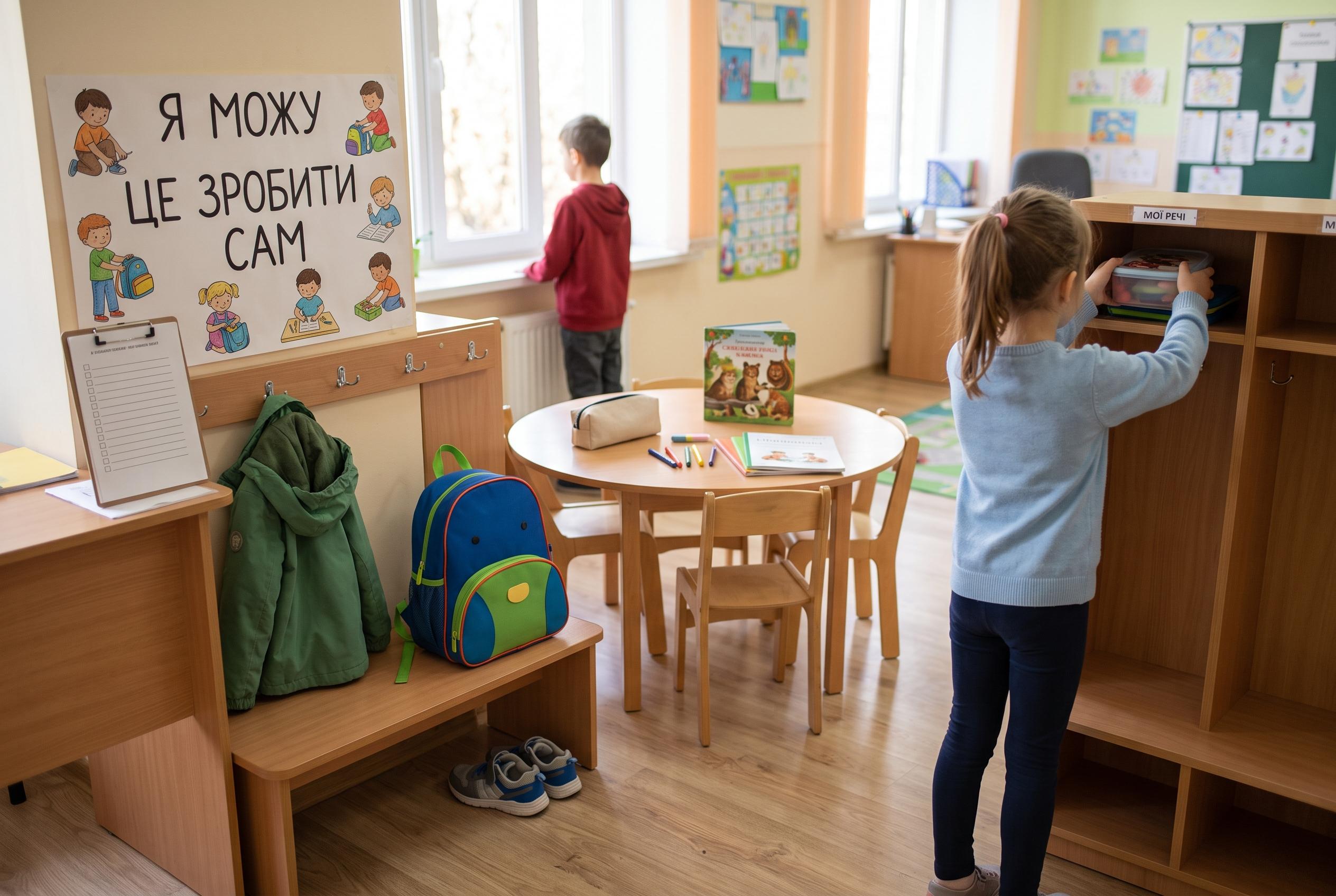

As Ukrainian children prepare for their first day at school, educators emphasise the importance of readiness and independence over early syllabus mastery, marking a significant shift towards a more flexible and child-centred approach to primary education.
As children across Ukraine prepare to start primary school, teachers are urging parents not to turn the months before September into a race through the syllabus. Speaking to Vchysia.Media, primary teacher Yuliana Dovhopol said the bigger priority is not early academic drilling but basic independence, the ability to listen, and following simple instructions. That advice reflects a wider shift in primary education: the Ministry of Education and Science has been updating the state standard and the model curriculum for grades 1 to 4, with a stronger emphasis on flexible learning and the early-adaptation stage of school life.
For most first-formers, the timetable still centres on a familiar set of subjects. Children usually study Ukrainian language and reading, where they learn letters, sounds, simple words and early writing; mathematics, which begins with counting and basic shapes; and an integrated course often translated as “I explore the world”, combining nature, society, safety and health. Schools also commonly offer a foreign language, art, design and technology, and physical education, although the exact hours and subject mix can vary from school to school under its own educational plan.
Dovhopol’s point is that children do not need to arrive knowing the whole first-grade curriculum. In her view, over-preparation can make lessons dull and reduce curiosity once school begins. What helps more is whether a child can recognise numbers to 10, read short words by syllable, name colours, hold a pencil properly, use scissors safely, say their full name and address, ask an adult for help, dress themselves, pack their belongings, use the toilet independently and stay attentive for 10 to 15 minutes.
The Ministry’s current work on the standard programme also shows why parents are being encouraged to focus on readiness rather than acceleration. According to materials published by the ministry and education outlets, the revised approach is designed around two cycles, with the first years of school seen as an adaptation period rather than a time for heavy academic pressure. For families of children entering first grade in 2026, the state’s “Paket shkoliara” support programme remains available as well, offering 5,000 hryvnias in targeted aid for school-related purchases such as stationery, books, clothes and shoes. In practice, the best preparation for school is not a head start on the second grade, but confidence, routine and the independence to cope with a new day.
Disclaimer: This content is for informational purposes only and is not intended to be a substitute for professional medical judgment, advice, diagnosis, or treatment.