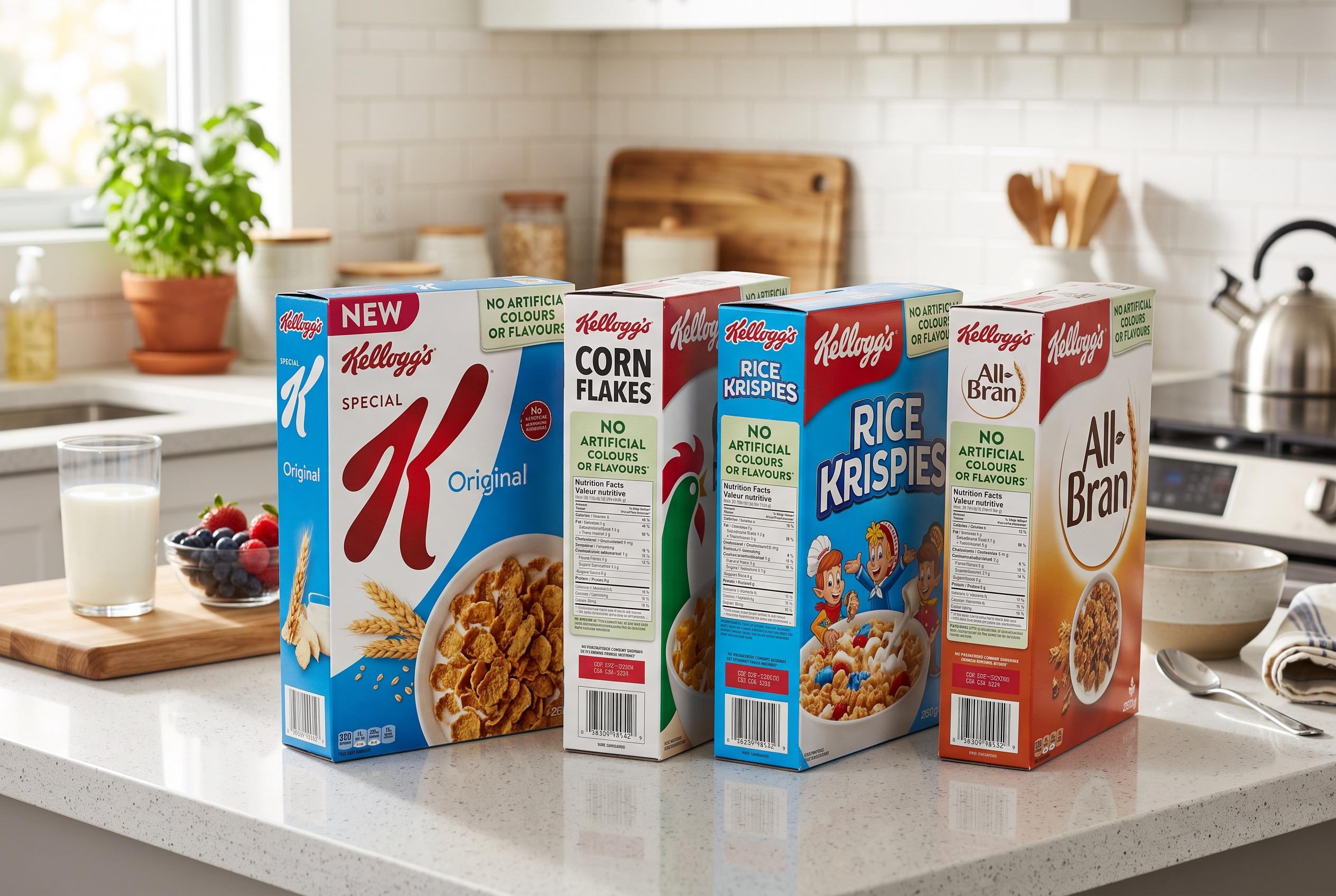

Kellogg has announced it will complete the removal of artificial colours from its US cereal range a year earlier than planned, amid industry-wide shifts and consumer pressure, with reformulations beginning later this year.
WK Kellogg has accelerated the removal of artificial colours from its US cereal range, saying the transition will now be completed by the end of 2026, a year earlier than planned. The change will affect some of the company’s best-known brands, including Froot Loops and Apple Jacks, as the Battle Creek, Michigan-based maker shifts to colours derived from fruit and vegetable juices and other plant-based ingredients.
Production of reformulated cereals is expected to begin later this year, with shipments to retailers due before the end of the year. According to the company, the work goes well beyond swapping one ingredient for another: colour reformulation can affect sourcing, processing, shelf life and the look consumers expect from long-established products. That challenge is especially acute for Froot Loops, whose multicoloured pieces are part of its brand identity.
WK Kellogg said it has invested heavily in its manufacturing sites to support the change, although it has not disclosed the size of that spending. The company also said it has carried out extensive consumer testing to preserve the cereal’s familiar taste and appearance, while removing the preservative BHT from the small share of packaging where it is still used. School-supplied products have already been reformulated without artificial colours, and the company stopped launching new products with those colours in January.
The move places WK Kellogg within a wider shift across the packaged food industry. General Mills has said it will remove certified colours from its US cereals by summer 2026 and from its broader US retail portfolio by the end of 2027. Target has also said its entire cereal range will be free of certified synthetic colours by the end of May 2026, while Walmart has set January 2027 as the deadline for synthetic dyes in its US private-label food products. Federal regulators have meanwhile been moving to widen the range of natural alternatives, with the Food and Drug Administration approving several new colour additives in May 2025, including Galdieria extract blue and an expanded use for butterfly pea flower extract.
The policy backdrop has intensified the pressure on manufacturers. In April 2025, the FDA and the Department of Health and Human Services announced an initiative aimed at moving the food industry away from petroleum-based synthetic dyes. Public pressure has also played a role: AP reported that protesters delivered petitions with 400,000 signatures to Kellogg’s headquarters in 2024, urging the company to drop artificial dyes and BHT. WK Kellogg later reached an agreement with Texas Attorney General Ken Paxton over removing the dyes by the end of 2027, a timetable the company has now brought forward.
Disclaimer: This content is for informational purposes only and is not intended to be a substitute for professional medical judgment, advice, diagnosis, or treatment.