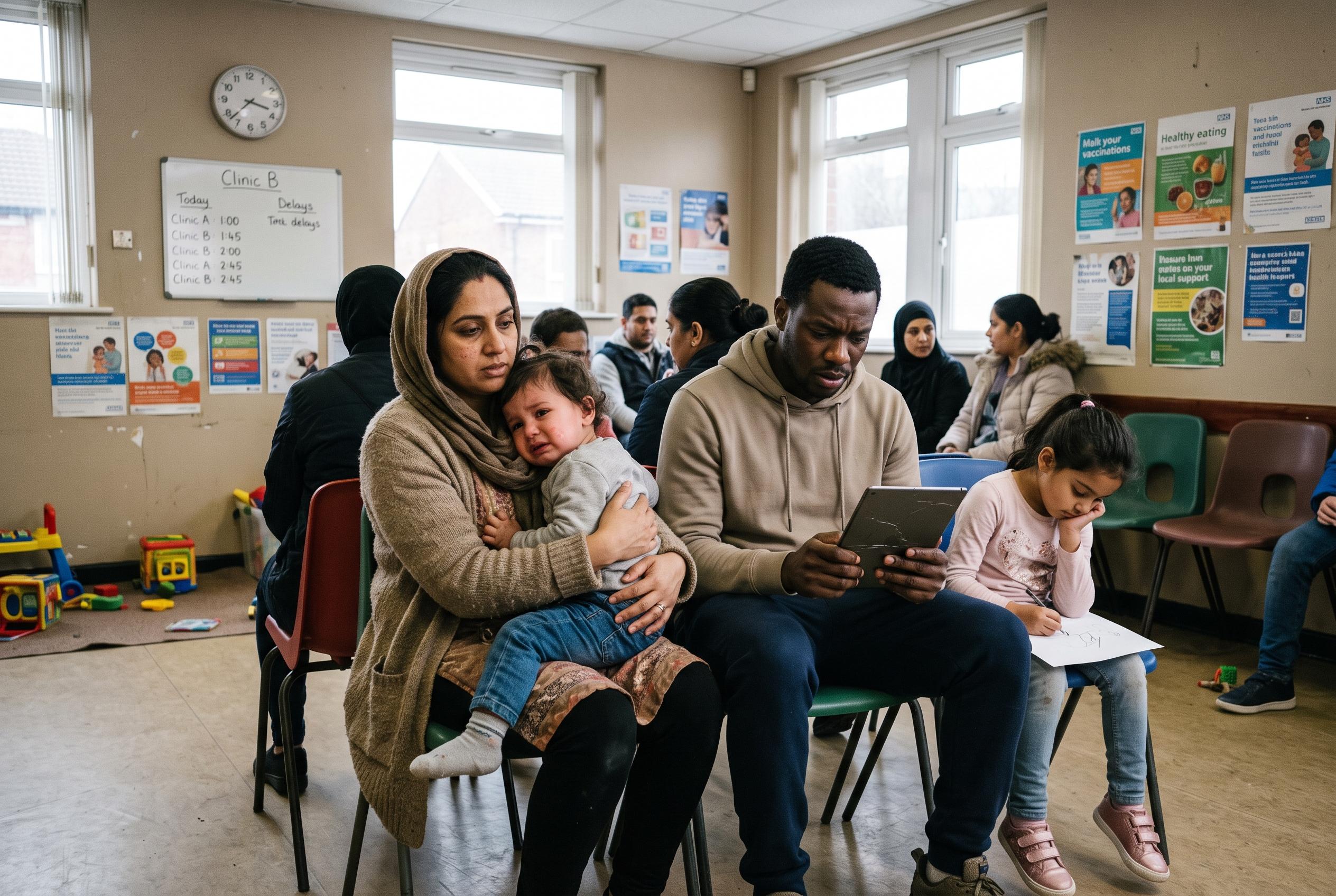

A year after warnings of neglect, the NHS faces a widening backlog in community child health services, with long waits for assessments and stark inequalities impacting vulnerable children and families.
A year after the Royal College of Paediatrics and Child Health warned that community child health services were being overlooked, the scale of the backlog remains stark. In a blog marking the anniversary of its Collaborative Healthcare in England report, the college said families are still facing lengthy waits for autism and ADHD assessments, with some children spending crucial years without the support they need.
The case it highlights is familiar: one mother told the college that her son had been waiting for an autism and ADHD assessment since the age of seven and was now ten. In that time, he had moved through primary school with only limited support, while another child in a different area, referred through another pathway, was seen much sooner. The college said such differences are not unusual and reflect persistent inequalities in community services. NHS England has now introduced a new waiting-time target for community health services, under which at least 78% of activity should happen within 18 weeks by March 2027.
Community child health is the largest paediatric specialty, covering children with complex health needs, developmental and neurodevelopmental conditions, and safeguarding concerns. The Royal College says rising referrals, greater safeguarding awareness and expanding statutory duties have all added pressure. Its recent State of Child Health report also found worsening outcomes for children, with the greatest burden falling on deprived communities and ethnic minority groups.
The latest NHS England data show how wide the gap remains. In June 2026, 327,411 children and young people were on community health waiting lists, compared with 906,987 adults. Only 49% of children and young people were waiting within the 18-week standard, versus 85% of adults. Almost 15% of children were waiting more than a year, and 11% had been waiting longer than two years. Within community services, speech and language therapy, occupational therapy and physiotherapy account for large waiting lists, while community paediatrics has the biggest single backlog, with almost 180,000 children and young people waiting to be seen.
NHS England has published guidance to help systems meet the new target, including advice on waiting-list management and reducing inequalities. The Royal College says that is welcome, but argues that children need a distinct approach, including better prioritisation, a child health investment standard, a stronger workforce plan and services designed around children rather than simply adapted from adult models. It also wants faster access to neurodevelopmental assessment and support. For families already caught in the system, the message is clear: without sustained investment, the waits are likely to remain far too long.
Disclaimer: This content is for informational purposes only and is not intended to be a substitute for professional medical judgment, advice, diagnosis, or treatment.