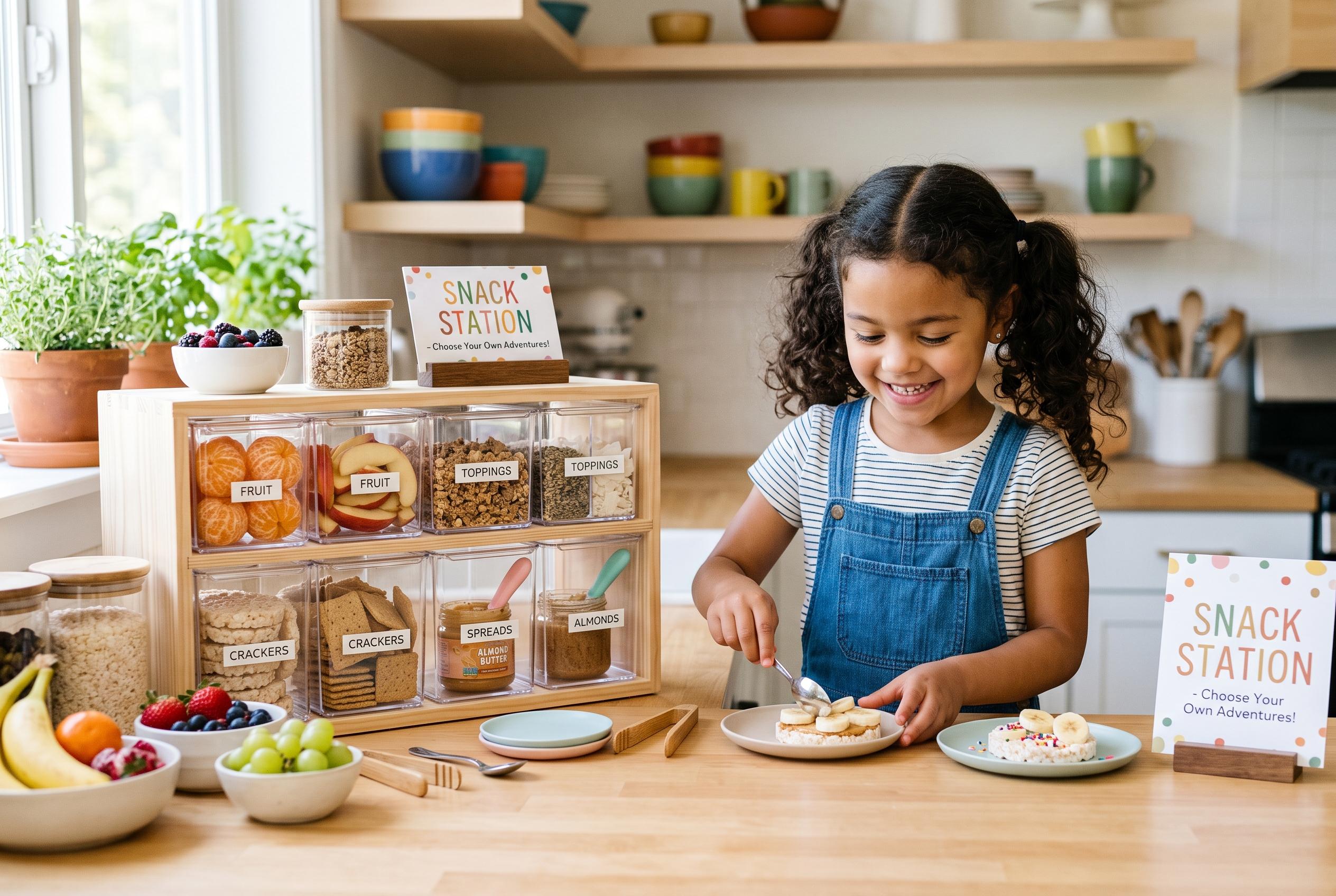

Setting up safe, structured snack stations for children not only eases daily interruptions but also fosters practical skills and confidence in the kitchen, from peeling fruit to assembling simple, no-cook treats.
Teaching children to assemble their own snacks without turning on the hob can do more than ease the constant chorus of “I’m hungry”. It can also give parents a practical way to reduce interruptions, keep food preparation manageable and build everyday independence in the kitchen. The idea, outlined by Jojoebi, is to create a child-height snack station with simple tools and pre-portioned ingredients so children can serve themselves safely and confidently.
The approach works best when it is structured. A good snack station usually includes a chopping board, a plate or bowl, a cup, a napkin and a cloth for spills, with food stored where children can reach it easily. Jojoebi recommends keeping portions controlled, especially for younger children, and closing the station before meals if snacks risk spoiling lunch or dinner. The aim is not unlimited grazing, but a clear routine that helps children learn to choose, prepare and clear away their own food.
That routine can also support practical learning. Jojoebi says tasks such as peeling fruit, spreading soft toppings, pouring drinks and using child-safe knives help strengthen fine motor control, sequencing and basic decision-making. Other parenting and cooking resources make similar points, suggesting that no-cook snacks are a good entry point for children who are learning to assemble simple foods with little supervision. The result is a small amount of independence that can grow into broader kitchen confidence over time.
The snack ideas themselves do not need to be complicated. Across the related guides, common options include apple slices with nut or seed butter, fruit skewers, yoghurt parfaits, crackers with cheese or spread, hummus with vegetable sticks, sandwiches, wraps, trail mix and simple mini-meals built from leftovers. One food site also recommends combining fruit, yoghurt, whole-grain crackers, cheese or vegetables to create snacks that are more balanced and filling. For older children, no-bake items such as energy bites or frozen yoghurt treats can add variety without requiring cooking.
Age matters, though. Several of the guides note that toddlers can begin with basic jobs such as rinsing berries, peeling bananas or pouring pre-measured cereal, while older children can handle more steps, including slicing softer fruit or layering ingredients. Safety still comes first: whole nuts and grapes can be choking hazards for younger children, and small children should be nearby an adult even when they are eating independently. The broader message is simple: start small, keep the choices limited and let children practise.
Used well, a snack station can do more than stop mid-afternoon chaos. It can shift snack time from a parent-managed chore into a calm, repeatable routine that teaches children how to feed themselves, tidy up and take pride in doing things on their own.
Disclaimer: This content is for informational purposes only and is not intended to be a substitute for professional medical judgment, advice, diagnosis, or treatment.