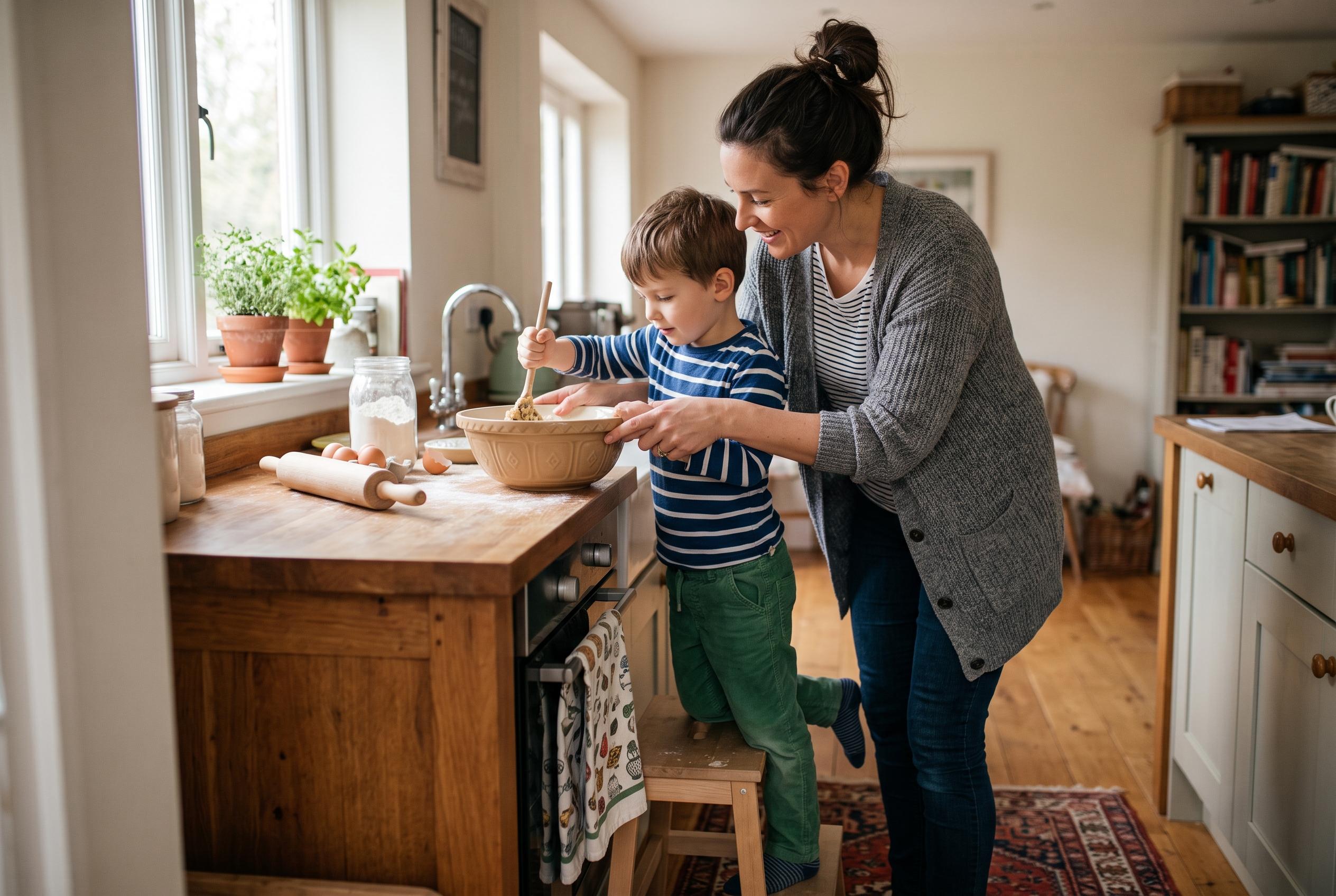

A few minutes of colouring or baking with children can do more than produce a picture or biscuit , it builds trust, confidence, and vital connections, experts highlight new insights into the value of shared play.
A few minutes spent colouring, fitting puzzle pieces or baking biscuits with a child can carry more weight than many adults realise. Bill Corbett argues that the real value lies not in the activity itself, but in the message it sends: that a child matters enough for an adult to step into their world and stay there for a while.
Corbett says children are usually less interested in polished results than in shared attention. By sitting alongside them, adults become companions rather than critics, which can make the activity feel lighter, warmer and more open to conversation. UNICEF says similar shared play can support children’s emotional wellbeing, strengthen parent-child bonds and help reduce stress and difficult feelings.
That ease matters when children are reluctant to talk directly. A side-by-side task can lower the pressure of a serious question and create room for the sort of casual, unforced conversation that often reveals what is really on a child’s mind. HealthyChildren.org, the parenting site of the American Academy of Pediatrics, says children learn a great deal through play with others, including how to build relationships and work through disagreements.
Corbett also points out that adults do not need to turn every shared moment into a lesson. A simple comment about effort, patience or a bold colour choice can help a child feel noticed without being judged. That kind of encouragement, he says, can build confidence by showing children that creativity is personal and that there is more than one right way to complete a task. UNICEF likewise notes that play can help children solve problems, try new ideas and gain a sense of competence.
There is another lesson in the process: children watch how adults handle mistakes, frustration and uncertainty. If an adult shrugs off a wobble, changes a colour or keeps going after a small error, the child sees that imperfection is manageable. Playworks says shared play helps build trust, empathy and connection, while also giving children a sense of belonging within a relationship or group.
That is the thinking behind Color Together: 25 Matching Coloring Pairs, Corbett’s book pairing simpler pages for children with more detailed versions for older participants. The idea is to let both people create at their own level without waiting, competing or trying to produce the same result. Scholastic says cooperation and shared activity help children learn respect, self-control and the social habits that underpin meaningful relationships.
Corbett’s wider point is straightforward: connection does not need to be elaborate. A table, some crayons and a little uninterrupted time may be enough. For parents and carers, that can be a useful reminder that what children often keep is not the finished picture, but the feeling of being chosen, included and enjoyed. Centerstone says group activities offer more than entertainment, helping children develop social skills, resilience and a sense of shared purpose.
Disclaimer: This content is for informational purposes only and is not intended to be a substitute for professional medical judgment, advice, diagnosis, or treatment.