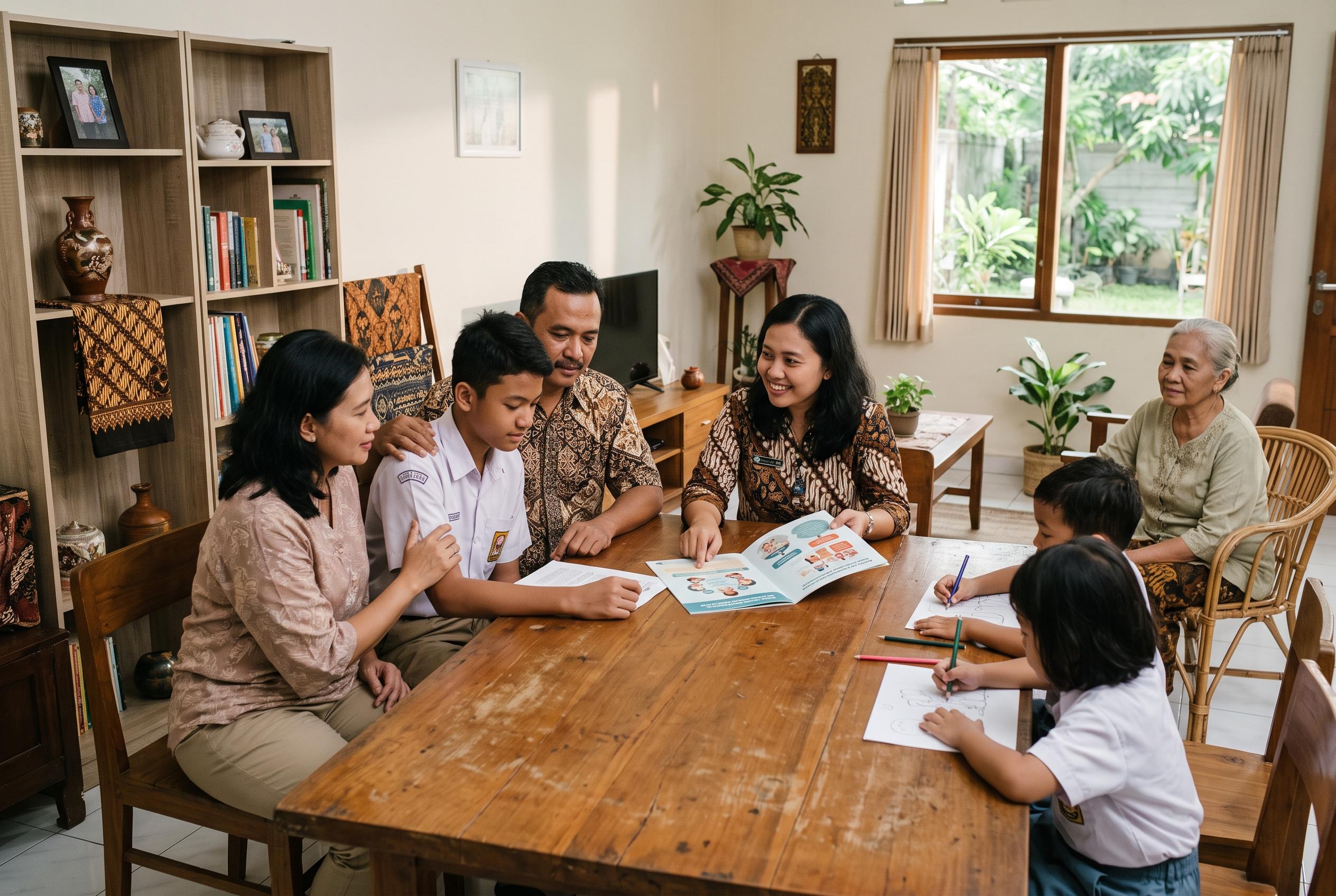

A new Indonesian study advocates a family-focused approach to prevent mental health issues among teenagers, aiming to complement current health policies and improve early intervention strategies.
Adolescence is a period of rapid physical, emotional and social change, and it is also a time when many mental health problems first appear. The World Health Organization says one in seven people aged 10 to 19 lives with a mental disorder, and recent global studies have placed the overall prevalence at roughly 15.2% in this age group. Anxiety is the most common diagnosis, followed by conduct disorder, attention-deficit hyperactivity disorder and depression. That burden makes prevention especially important, because problems that begin in the teenage years can shape adult health, education and life chances.
In Indonesia, the need is especially acute. The study behind this article draws on national survey data showing that about one in three Indonesian adolescents experiences a mental health problem, yet only a small fraction receives counselling or other mental health support. Against that backdrop, the researchers set out to build a prevention model that places the family at the centre of action, while still linking households to schools, primary care, communities and policy systems. Their argument is that prevention cannot depend on families alone, but family life is the most immediate setting in which young people experience support, supervision and emotional safety.
The model was developed through an exploratory mixed-methods design in Yogyakarta between October 2024 and July 2025. First, the team conducted interviews and focus groups with adolescents, parents, school counsellors, health workers and policy stakeholders to identify the most important influences on teenage mental health. They then used a three-round Delphi process with 14 experts from clinical, education and government backgrounds to test whether the proposed model was relevant and workable. The final framework was built around five ecological levels: individual, family, organisational, community and policy.
Across the qualitative work, six family themes stood out repeatedly: attachment, supervision, communication, parenting practices, family relationships and family support. Adolescents described the value of shared time, parental affection and being listened to, while parents and professionals stressed that monitoring should be firm but not authoritarian. The study also found that supportive parenting works best when it is paired with open conversation and practical help, not merely financial provision. In other words, the family functions as both an emotional buffer and an early-warning system for distress.
The Delphi panel reached consensus on the model’s main elements, reinforcing the view that the family should be treated as a central preventive hub rather than a standalone solution. The researchers say the framework fits Indonesia’s health reform agenda, which emphasises prevention, but they also note that current policy documents do not clearly spell out how families should be involved. They argue that schools, community health centres and local authorities could all play a role through parent education, screening, counselling and referral pathways.
Even so, the study stops short of proving that the model improves outcomes in practice. It offers conceptual and expert consensus validation, not evidence of effectiveness. The authors say the next step is pilot testing in different regions and among different socioeconomic groups to see whether the approach can strengthen family engagement, improve help-seeking and reduce risk behaviours. For now, the main contribution is a culturally grounded framework that turns family participation from a broad aspiration into a more structured public health strategy.
Disclaimer: This content is for informational purposes only and is not intended to be a substitute for professional medical judgment, advice, diagnosis, or treatment.