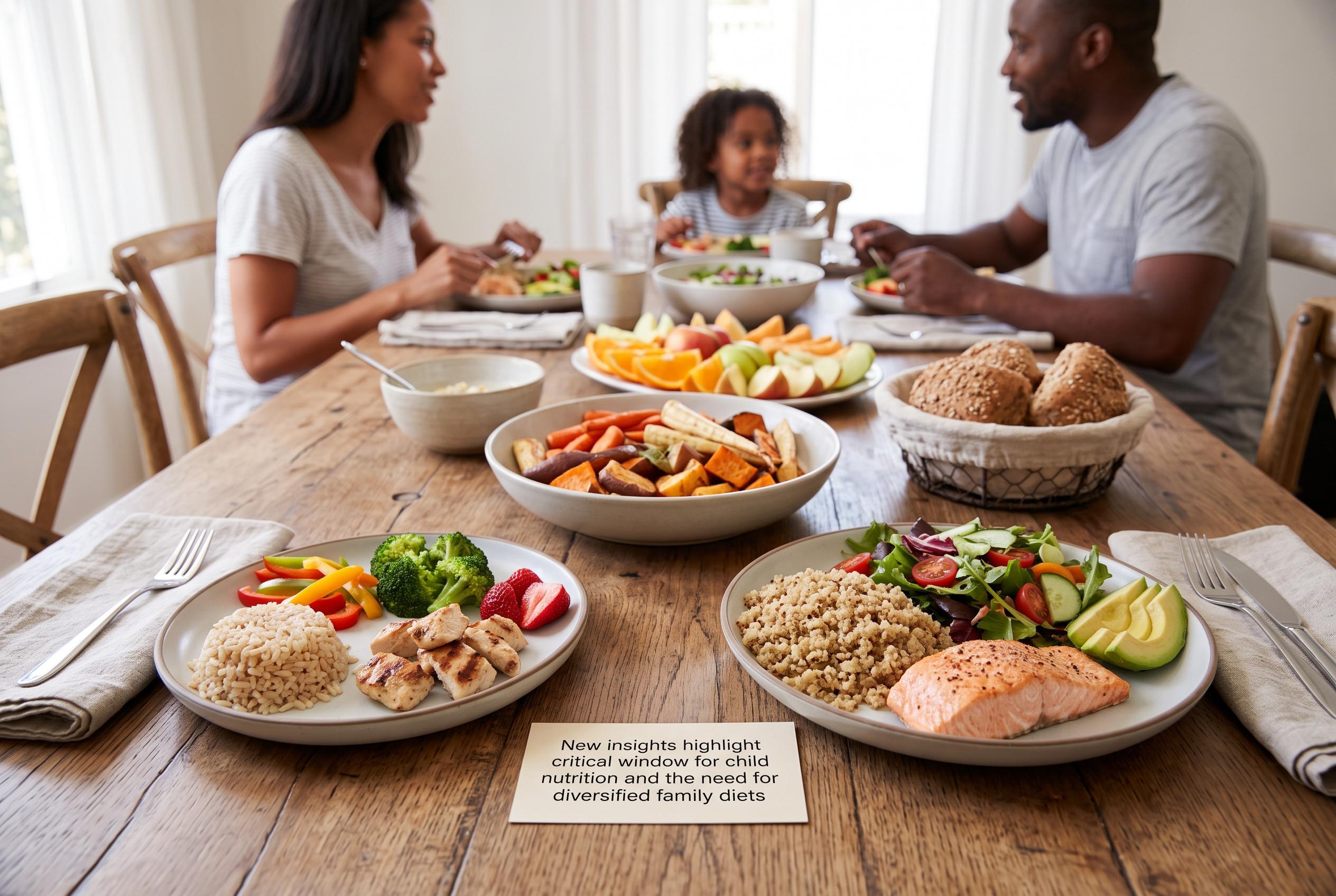

As global health authorities emphasise the importance of early childhood nutrition, experts stress that household dietary patterns and balanced family meals are vital for a child’s growth, brain development, and long-term health during the first 1,000 days.
From birth through the move to family meals, a child’s nutrition is shaped as much by what the household eats as by what is put on the plate, according to health guidance from the World Health Organization and UNICEF. Exclusive breastfeeding is recommended for the first six months, after which gradual complementary feeding should begin with safe, varied foods that become richer in texture and diversity as the child grows.
That transition matters because the first three years of life are a critical window for growth, brain development and long-term health, the WHO says. UNICEF’s nutrition work in Togo also stresses the importance of the first 1,000 days, from conception to a child’s second birthday, as a period when poor diets can contribute to chronic malnutrition and weaker development.
Reine Dossou, vice-president of the academic network for nutrition in Togo, argues that children’s meals often mirror the limitations of the wider family diet. Speaking at a regional colloquium on changing diets and nutrition in West Africa, Dossou said households that rely on a narrow range of foods, including one-dish meals with little variety, make it harder for young children to receive the balance of proteins, vegetables and micronutrients they need.
She also challenged a common belief that adults should automatically receive the largest share of meat or fish. In reality, children need proportionately more protein and other nutrients relative to their body weight during growth, she said, adding that family diets should include both animal and plant sources such as eggs, meat, beans and other legumes.
The WHO’s guidance on complementary feeding says those foods should be introduced at about six months, then increased gradually in consistency, frequency and variety while breastfeeding continues. It also advises families to limit free sugars, salt, saturated fat and trans fats, and to focus instead on foods that are fresh, diverse and nutrient-dense. For households, the message is straightforward: once a child joins the family table, the meal should be balanced enough for adults and suitable enough for the child.
Disclaimer: This content is for informational purposes only and is not intended to be a substitute for professional medical judgment, advice, diagnosis, or treatment.