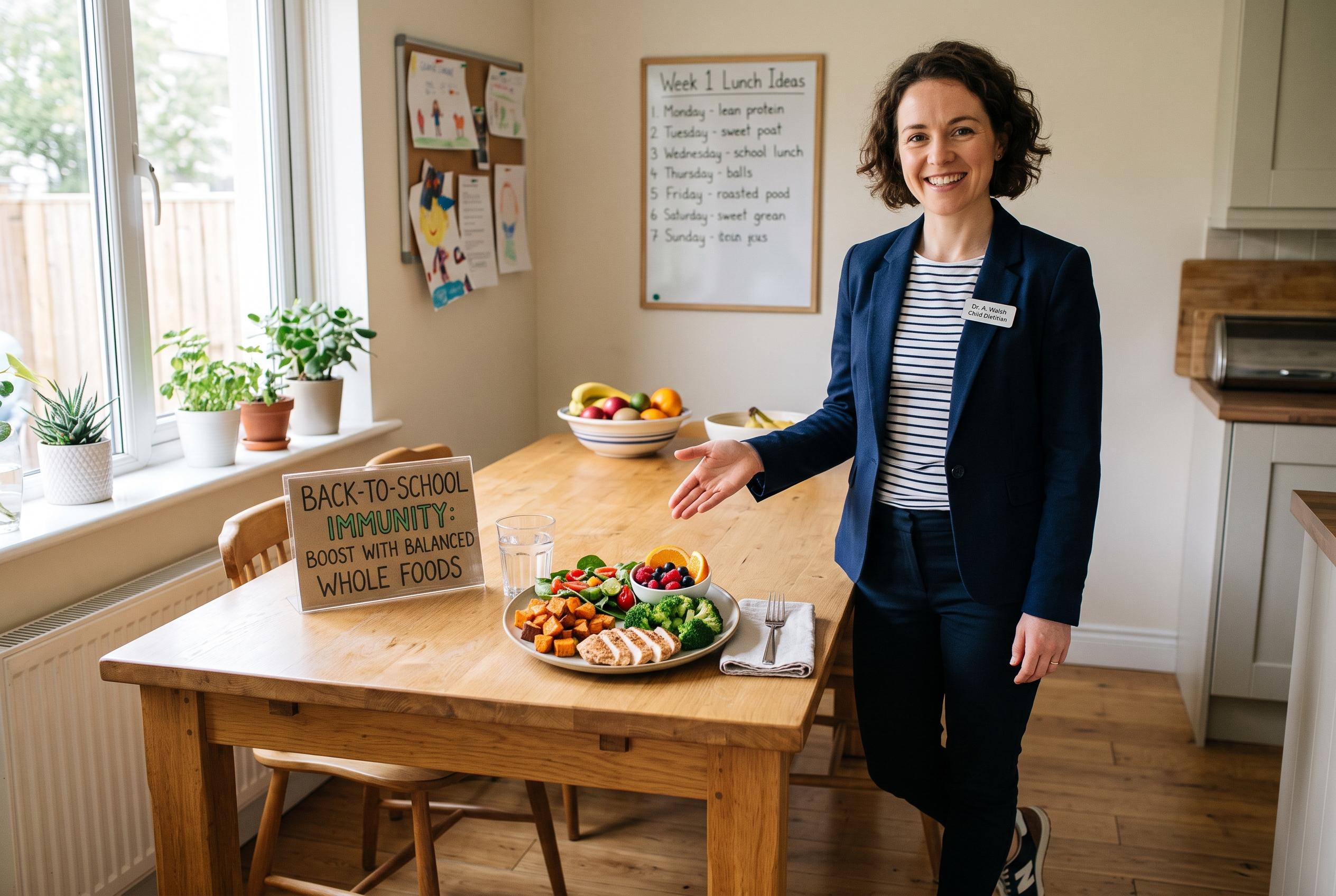

A child dietitian emphasises the importance of balanced nutrition and consistent eating habits over supplements and shortcuts to bolster children’s immunity as they return to school, highlighting practical advice for parents navigating busy routines.
Back-to-school season often brings a familiar pattern: new routines, crowded classrooms and the first wave of sniffles. But, as Sarah Remmer explains in a sponsored post for Hiya, there is no single food, vitamin or shortcut that can stop children from getting ill. The goal is simpler and more realistic: give children steady nourishment so their bodies can do what they are built to do.
That starts with regular meals and snacks. Remmer, a registered dietitian and mother of three, says many school-age children do best with three meals and one to three snacks a day, even if the timing is irregular. A child who barely touches lunch, she notes, may simply make up for it later with an after-school snack or a bigger dinner. In practice, that could mean cereal and milk, yoghurt and fruit, toast with nut butter, hummus with pita, or leftovers from the night before.
Variety matters more than perfection. Children do not need every food group at every meal, and a lunchbox that comes home half full is not a sign of failure. Remmer argues that families should think across the day, or even the week, rather than expecting each meal to be nutritionally complete. She also makes the point that processed food is not automatically poor quality; many convenient options, from crackers to granola bars, can still play a useful role in family eating.
Her advice also includes pairing foods in simple ways that provide energy, protein and key vitamins and minerals. That might be a sandwich with fruit, yoghurt with granola, or pasta with meatballs and vegetables. She says the immune system relies on enough total food, plus nutrients such as iron, zinc and vitamins A, C, D and E, but that more is not always better once a child is already adequately fed.
Remmer also turns to gut health, since the digestive system and immune system are closely linked. She recommends fibre from fruit, vegetables, whole grains, beans and seeds, plus fluids such as water and milk. Fermented foods, including some yoghurts, kefir and miso, can help, but she says children do not need to eat strongly flavoured probiotic foods to have a healthy diet. On supplements, she takes a cautious line: probiotics may have a role in specific cases, but their effects are strain-specific, and parents should seek medical advice before starting one. Healthline, in a separate explainer, likewise says probiotics can support digestive and immune health in children and should be discussed with a paediatrician first.
The same measured approach applies to multivitamins. Remmer says they can sometimes help as a nutritional back-up when diets are limited, but they are not insurance against colds or flu. She describes Hiya’s chewable probiotic and multivitamin products as convenient, though she stresses that no supplement replaces a varied diet, sleep, handwashing, vaccination and routine medical care. The broader message is plain: the aim is not to raise a child who never gets sick, but to support their growth with consistent, low-pressure habits that parents can actually maintain.
Disclaimer: This content is for informational purposes only and is not intended to be a substitute for professional medical judgment, advice, diagnosis, or treatment.