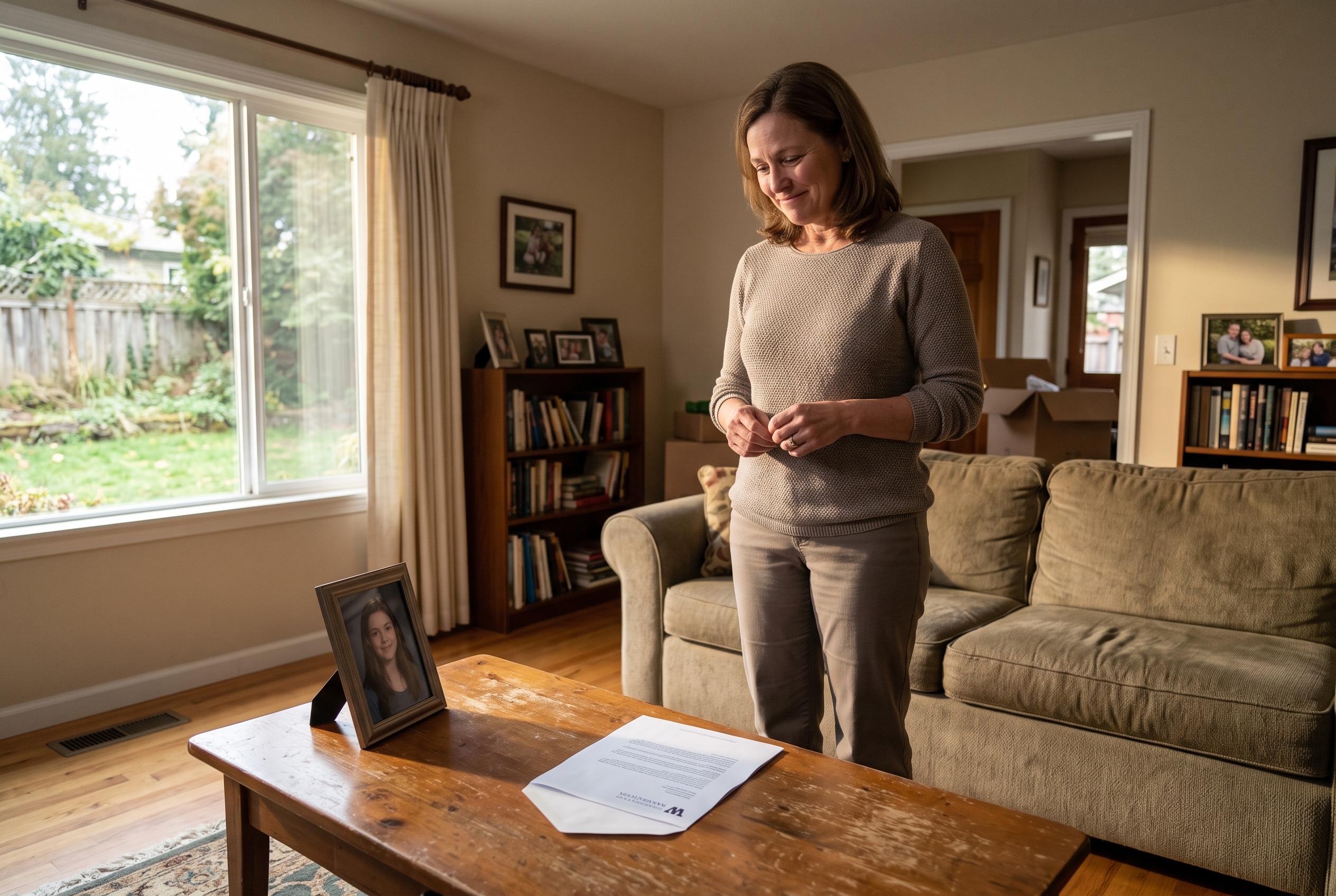

As children leave home for college or work, parents experience a complex mix of pride and grief, prompting a redefinition of their identity and relationship with their young adults, according to psychological experts.
Parents often expect to feel proud when a child leaves home for college or work, and many do. But Psychology Today notes that the same milestone can also bring grief, loneliness and a sense of dislocation, even when the departure is welcome and the young adult is ready. That mixed response is common enough to be recognised in advice from Healthline, Cleveland Clinic, GoodRx and Psych Central, all of which describe so-called empty nest syndrome as a real emotional adjustment rather than a sign that something is wrong.
The article argues that the hardest part is not the departure itself but the change in the parent-child relationship. A home that once revolved around daily routines, noise and constant contact can suddenly feel unfamiliar. Psychology Today says parents should give themselves permission to feel sad instead of rushing to perform happiness for others. That point matches guidance from Cleveland Clinic and Healthline, which both say the transition can bring sadness, worry and loss alongside pride.
The piece also urges parents not to turn anxiety into over-involvement. Respecting a young adult’s boundaries, allowing them to solve problems and trusting the preparation that went into raising them are presented as part of the next stage of parenting. Other health resources make a similar case, recommending open communication, but also space for independence. The message is that parenting does not stop; it simply changes shape.
Psychology Today further suggests that the adjustment can become an opportunity to rebuild a fuller personal life. That may mean reconnecting with friends, finding new interests, seeking support or talking to a therapist if the sadness does not ease. GoodRx and Psych Central both frame this period as one in which identity, relationships and purpose may need to be revisited. The article’s underlying message is practical and reassuring: feeling loss does not mean a parent is failing. It can simply mean that a major family chapter has ended and a new one is beginning.
Disclaimer: This content is for informational purposes only and is not intended to be a substitute for professional medical judgment, advice, diagnosis, or treatment.