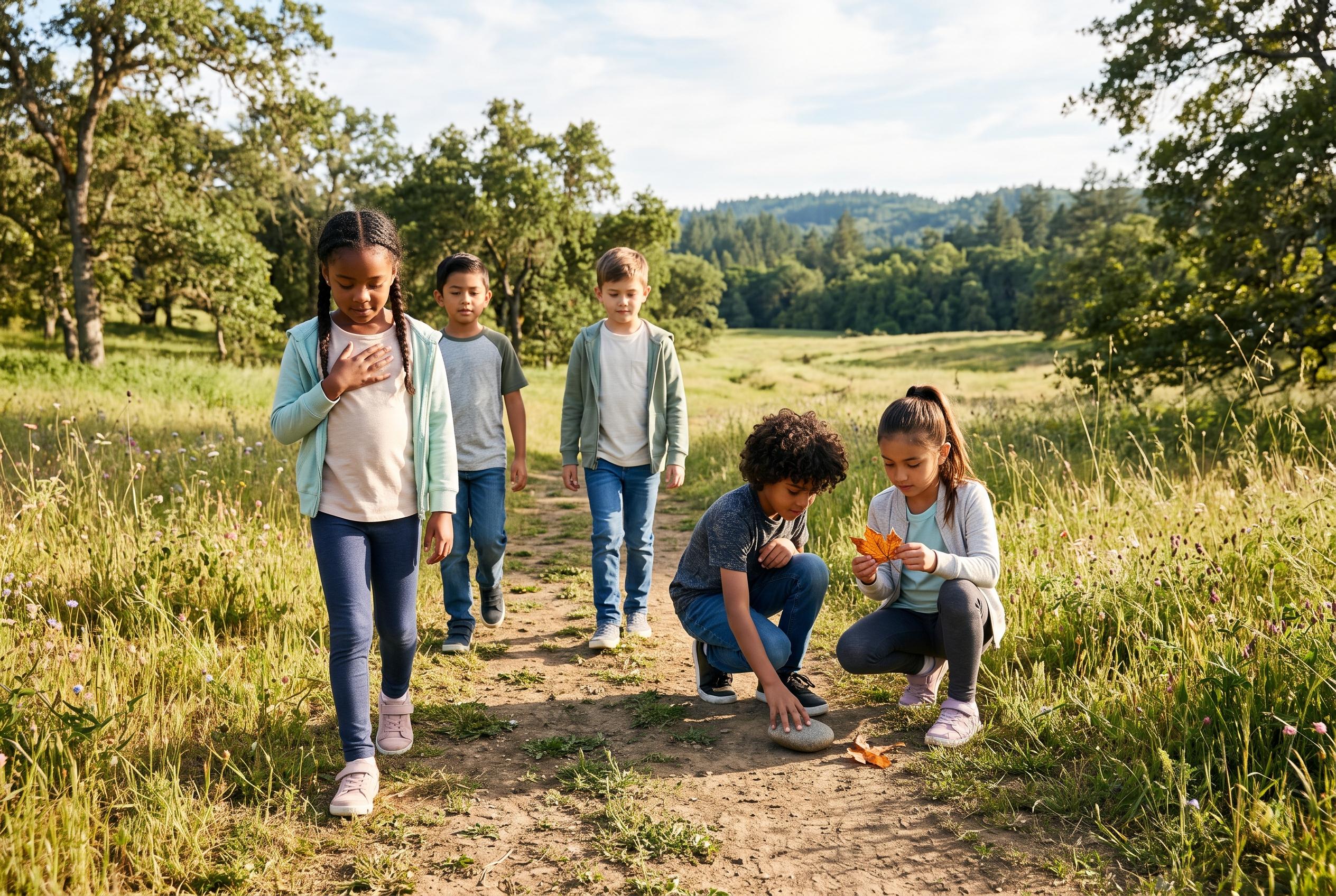

Simple outdoor practices such as mindful walks, sensory games, and gratitude journaling are helping children develop emotional resilience and focus by turning mindfulness into a tangible, natural experience, according to recent guidance from Kids Yoga Stories and health experts.
Taking children outside can turn mindfulness from an abstract idea into something immediate and tangible. According to Kids Yoga Stories, simple outdoor practices such as mindful walking, cloud watching, gratitude journalling and sensory games can help pupils slow down, notice more and settle into the present moment. That approach aligns with child-focused mindfulness guidance from Healthline, which says such exercises can support emotional recognition, attention and stress relief.
One of the simplest starting points is a mindful nature walk. Children are asked to notice what they can see, hear and smell, rather than rushing from one point to the next. Some educators add a short listening pause, or turn the walk into an “I spy” game with colours, shapes or seasonal changes. Nurture Store’s guidance on sit-spot practice makes a similar case for regular observation outdoors, arguing that repeated time in the same place can deepen children’s awareness and connection to the natural world.
Nature-based art is another easy option. Children can gather leaves, stones, twigs and petals to make temporary patterns, collages or sculptures on the ground. Leaf and bark rubbings offer a quieter, keepable version of the same idea. Kids Mental Health says this kind of hands-on creative activity can support both calm and emotional resilience, while also strengthening attention.
The same principle underpins a scavenger hunt, where children are invited to search for textures, colours, sounds or seasonal details. Rather than competing to finish quickly, the point is to look closely and move more slowly. Similar activities featured by Reality Pathing and COOL show how sensory tasks can build focus and regulation without feeling like formal instruction.
For a calmer reset, cloud watching can be especially effective. Children lie back, breathe slowly and simply watch shapes drift across the sky. Families and teachers who use nature-based mindfulness routines often begin with a safe outdoor space, a timer and a single natural object to observe, before ending with a short sharing conversation, according to Mindtastik. These steps make the activity easy to adapt for different ages.
Gratitude journalling outdoors adds another layer. Children can write or draw about something they appreciate in nature, such as sunlight, flowers or birdsong. The act of noticing the object first, then responding to it, helps turn gratitude into a lived experience rather than a lesson on paper. That is one reason many mindfulness educators recommend pairing reflection with sensory contact.
The most playful option may be a nature orchestra or a texture walk. In one, children create sounds inspired by the outdoors and take turns leading the group; in the other, they walk barefoot across grass, soil, moss or stones and pay attention to how each surface feels. Supporters of these activities say they can help children feel grounded and more regulated, while giving them a direct, memorable connection to the environment.
Disclaimer: This content is for informational purposes only and is not intended to be a substitute for professional medical judgment, advice, diagnosis, or treatment.