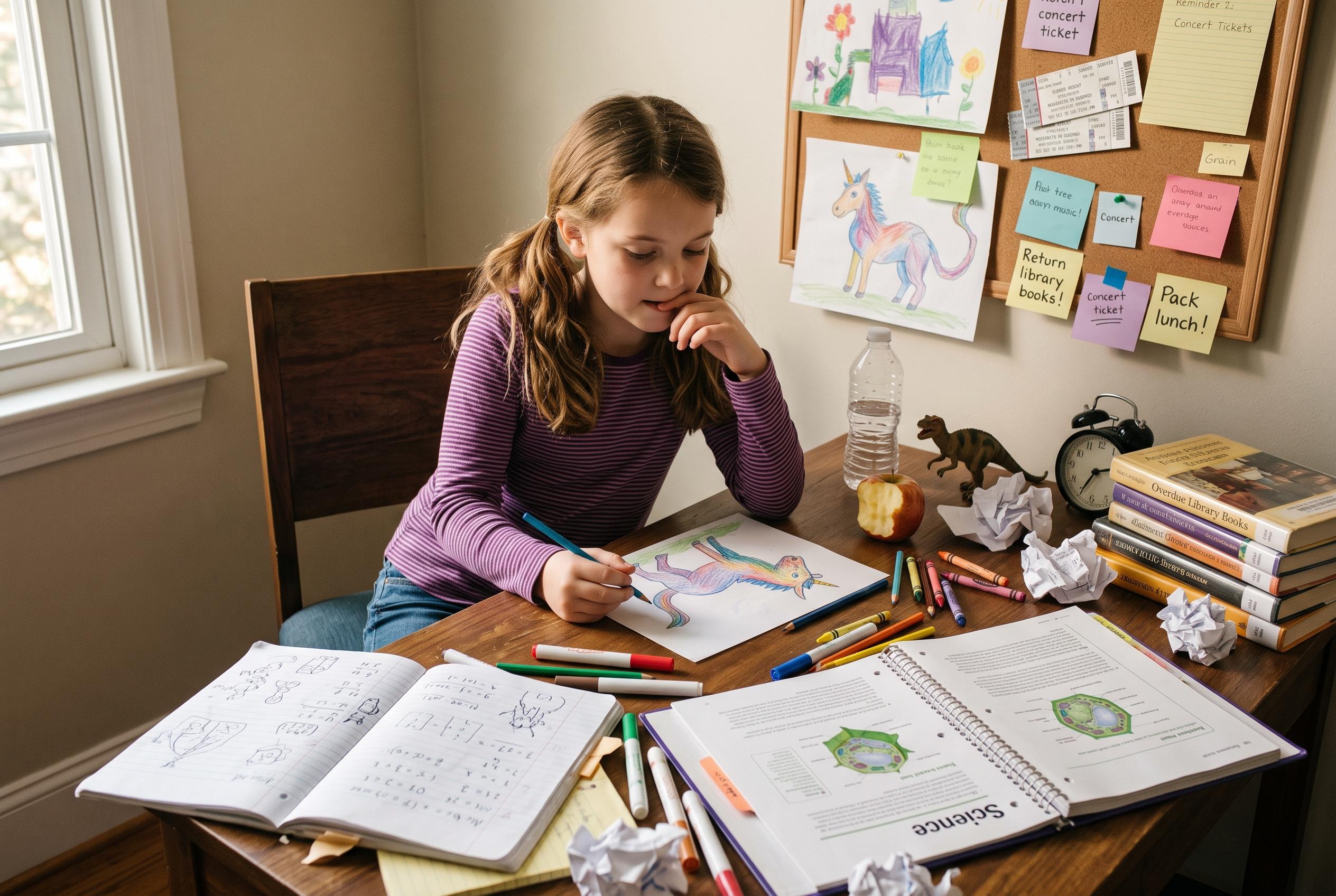

ADHD symptoms in girls often go unnoticed due to subtler signs like inattention and forgetfulness, prompting calls for increased awareness and early diagnosis to support affected children’s development and wellbeing.
Attention-deficit/hyperactivity disorder does not always look like constant restlessness or disruptive behaviour. In many children, especially girls, the clearer signs are inattention, forgetfulness, difficulty following instructions and trouble finishing tasks. Because those problems can be mistaken for daydreaming, shyness or lack of interest, families and teachers may miss them until they begin to affect schoolwork, relationships and daily routines.
The US Centres for Disease Control and Prevention says ADHD can present as predominantly inattentive, predominantly hyperactive-impulsive or a combination of both. Its guidance lists common signs including frequent daydreaming, poor organisation, fidgeting, excessive talking and difficulty sticking to instructions. The agency also notes that symptoms can change over time and may continue into adulthood.
That broader picture helps explain why girls are often identified later than boys. The CDC says 13% of boys have received an ADHD diagnosis, compared with 7% of girls, although that gap alone does not prove underdiagnosis. Still, clinicians say less obvious symptoms can be overlooked when a child is quiet, compliant or simply perceived as disorganised.
In Peru, the Health Ministry recorded 25,010 ADHD-related appointments between January and June 2025, with 80% involving children, according to figures cited in the report. Those numbers reflect health-service visits rather than prevalence, but they suggest the condition is an important issue for families and schools. The CDC also warns that anxiety, depression, learning difficulties and other conditions can produce similar signs, which is why a full assessment matters.
Specialists advise parents to look for patterns that persist across settings, such as home and school, and that interfere with learning, social life or everyday tasks. A child who repeatedly loses focus, interrupts others, struggles to wait their turn or cannot regulate behaviour may need professional evaluation. Early recognition can lead to behavioural support, family guidance, school adjustments and, when appropriate, medication.
Disclaimer: This content is for informational purposes only and is not intended to be a substitute for professional medical judgment, advice, diagnosis, or treatment.