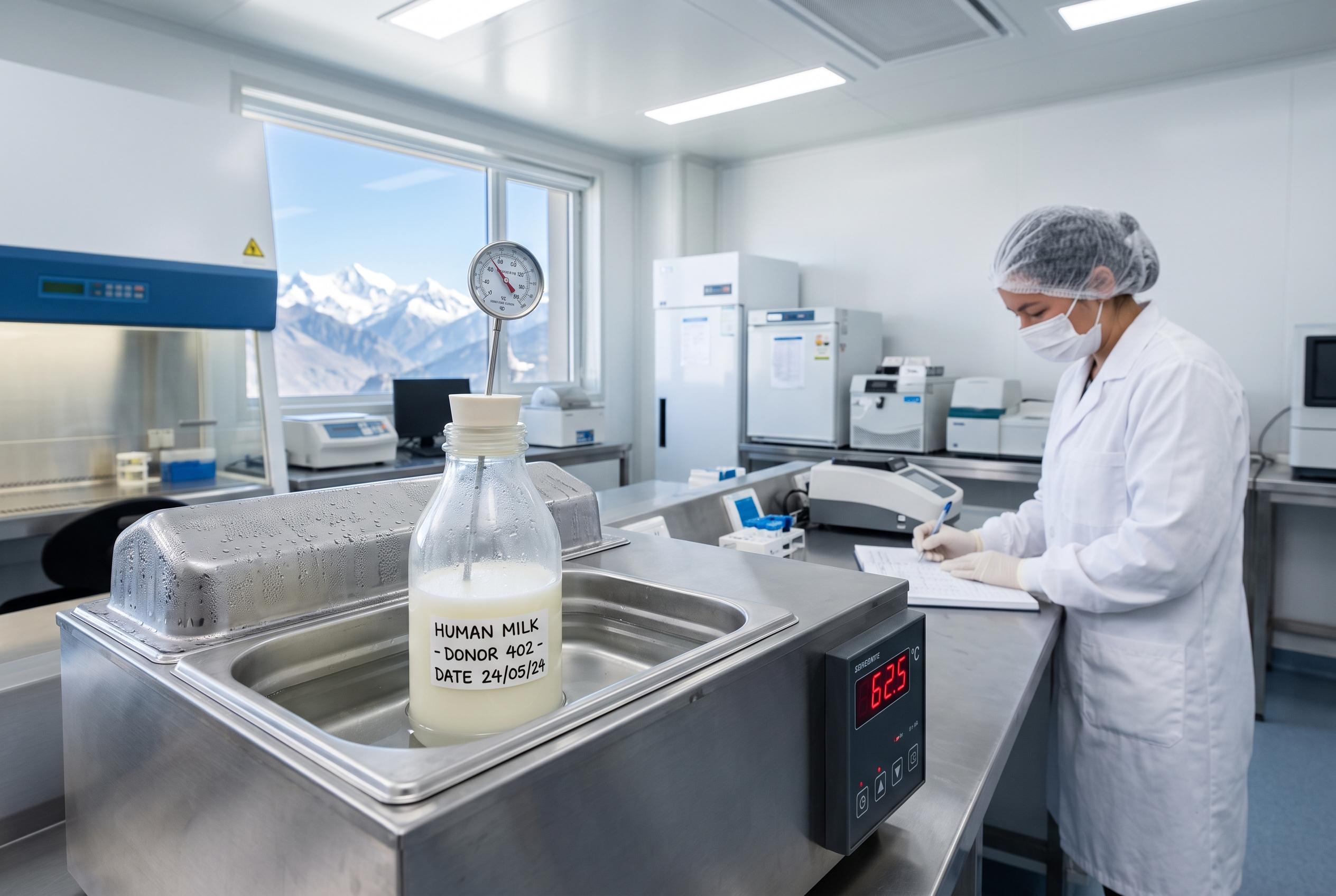

A pioneering study on human milk pasteurisation by Cusco’s regional hospital has been published in the International Breastfeeding Journal, highlighting advances in neonatal safety and immunity in high-altitude settings and earning international acclaim.
Researchers at Cusco’s regional hospital have earned international recognition after a study on human milk pasteurisation was published in the International Breastfeeding Journal in April 2026, according to the hospital and the journal’s online record. The paper examines microbiological safety and the retention of immunoglobulin A, an antibody important for infant immunity, in Holder pasteurisation when the milk is agitated in a bottle.
The work was carried out by a team from the Hospital Regional del Cusco, its Human Milk Bank, the Universidad Nacional de San Antonio Abad del Cusco and the Universidad Peruana Cayetano Heredia. Hospital director Justo Vizcarra said the publication shows that research produced in Cusco can reach a global audience, while researchers Bryan Abarca and Jorge Galdos said the study is intended to improve both safety and quality for newborns who are most at risk.
The findings matter in Cusco because neonatal care in high-altitude settings faces extra environmental challenges, the journal article said. That gives added relevance to a service that has become central to care for premature and critically ill infants in the region. In January 2024, regional health authorities said the hospital’s Human Milk Bank had pasteurised 100 litres of donated milk and was benefiting more than 1,000 babies each year.
The milk bank itself has been building capacity for several years. Peru’s health ministry said it was inaugurated in May 2019 as the first service of its kind at the Hospital Regional del Cusco, while the regional government later reported the donation of two clinical freezers in March 2024 to help preserve donated milk safely. Together, those steps have strengthened a programme that hospital staff describe as vital for protecting newborns who cannot be breastfed directly.
Disclaimer: This content is for informational purposes only and is not intended to be a substitute for professional medical judgment, advice, diagnosis, or treatment.