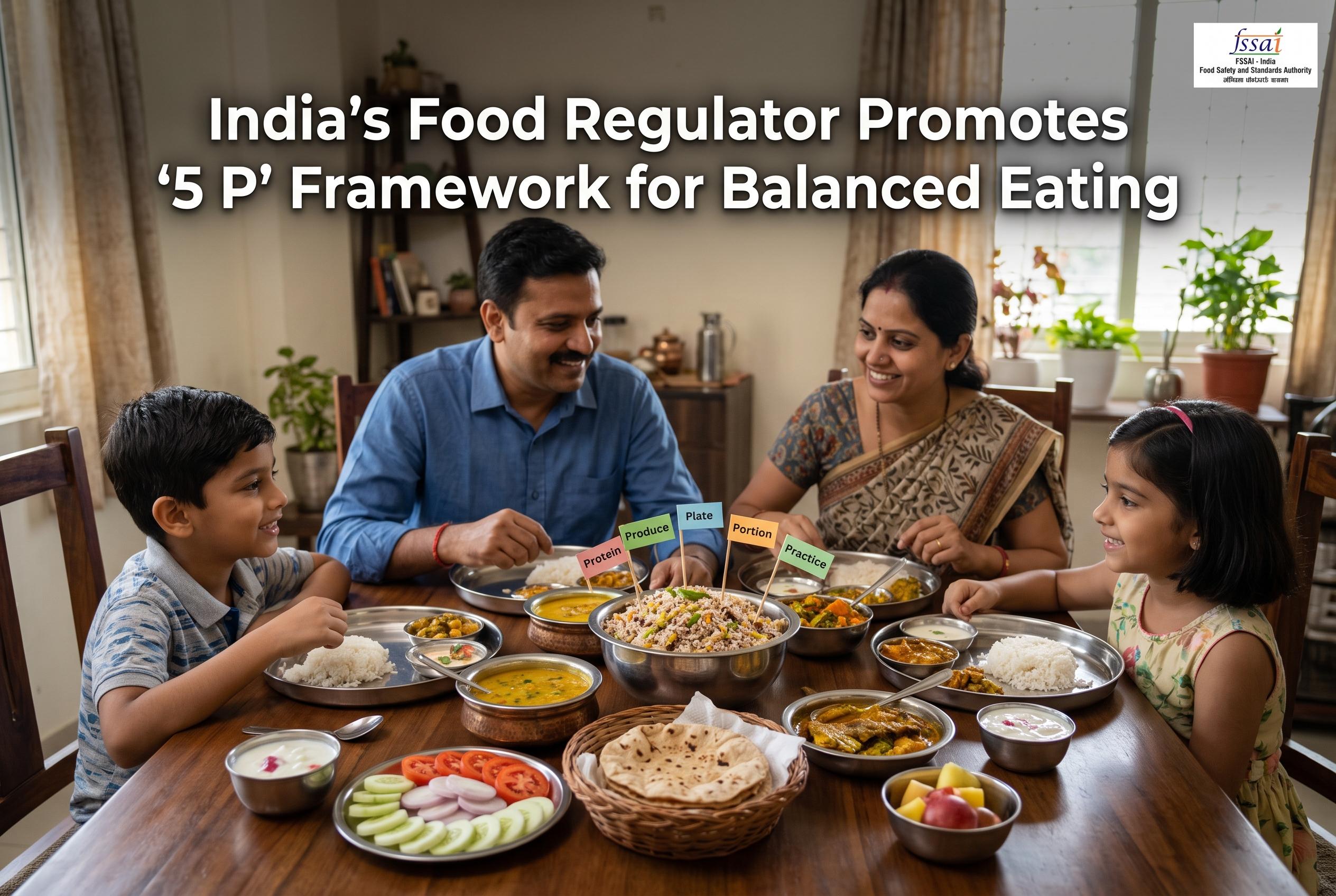

The Food Safety and Standards Authority of India introduces a simple ‘5 P’ guiding principle to help people make healthier, more mindful meal choices amid changing eating habits and routines.
India’s food regulator is urging people to rethink how they build an everyday meal, with the Food Safety and Standards Authority of India promoting a simple “5 P” framework meant to make plates more balanced, nutritious and mindful. According to FSSAI, the idea is not about dieting so much as about improving the quality and timing of what people already eat. The guidance has been shared as a practical response to poorer eating habits and increasingly irregular routines.
The first principle, “Plenty”, calls for more fruits, vegetables and water on the plate. The second, “Pick”, encourages healthier sources of fat such as nuts, seeds, olive oil and similar options. FSSAI says the third, “Power”, means making sure meals contain enough protein, along with vitamins and minerals, so the body has what it needs for daily functioning.
The agency’s fourth point, “Plan”, focuses on regular meal timing, from breakfast through dinner, rather than leaving eating to chance. The fifth, “Pay Attention”, is about portion size and food choice, with FSSAI stressing that people should be more deliberate about what and how much they eat. In its public messaging, the authority says these habits can support better health and may help lower obesity risk.
The advice broadly echoes other nutrition guidance that puts vegetables, fruit, whole grains and healthy fats at the centre of the plate. The US Food and Drug Administration, for example, says nutrient-dense foods such as vegetables, fruits, whole grains and certain fats like olive oil and nuts can fit into a healthy diet, while officials in Ontario County, New York, use a separate label-reading rule that helps shoppers identify nutrients to limit and those to prioritise. The common thread is simple: healthier eating works best when it is planned, balanced and consistent.
Disclaimer: This content is for informational purposes only and is not intended to be a substitute for professional medical judgment, advice, diagnosis, or treatment.