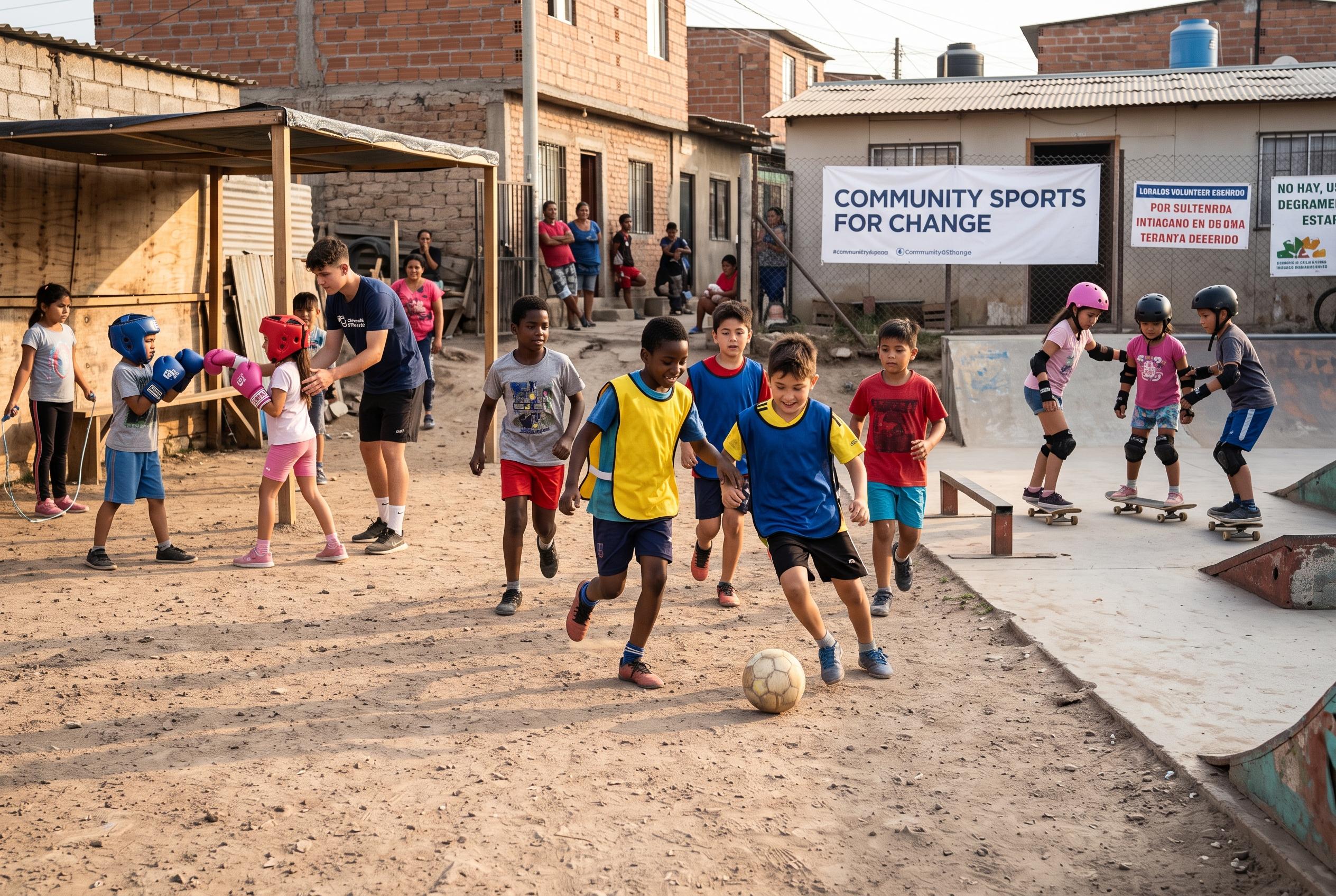

Global charities harness sports like football, boxing, and skateboarding to educate, empower, and uplift young people from impoverished communities, offering new pathways to health, education, and employment.
Sports can do more than fill spare time. In some of the world’s poorest communities, they are being used to keep children in school, build confidence and open paths to work. That matters because young people are disproportionately affected by poverty: the International Labour Organization says those aged 15 to 24 are more than twice as likely as adults to be in working poverty, with the burden especially heavy in sub-Saharan Africa.
Across Africa, Asia and Latin America, charities are turning football, boxing, skateboarding and other sports into tools for social change. The United Nations has said sport can contribute to development by supporting education, health and young people’s empowerment. In practice, that often means combining play with mentoring, lessons on health, and help with life skills such as teamwork, communication and decision-making.
Grassroot Soccer is one of the clearest examples. The adolescent health organisation uses football to deliver information, services and mentoring, with a focus on HIV prevention, mental health and reducing unintended pregnancies. It says its programmes have reached more than 25 million young people in more than 60 countries, and it works with research partners to improve impact.
In Nairobi, the Mathare Youth Sports Association has linked sport with community service for decades. Founded in 1987 in the Mathare area, it helped pioneer a model that pairs football with environmental clean-ups, HIV and AIDS prevention and social development. The organisation says it has reached more than 200,000 young people, and the UEFA Foundation for Children is also backing related projects in the area that use structured sport and life-skills training to tackle crime, substance abuse and gender-based violence.
In India, Magic Bus takes a similar approach, using sport to teach communication, teamwork and problem-solving while helping children stay in school and move towards employment. The organisation says it operates across 24 Indian states and reached about 1.8 million young people in 2023-24. It also says more than 100,000 young people have found jobs through its programmes.
Other groups show how adaptable the model can be. Fight for Peace combines boxing and martial arts with education, job training and mentoring, while Skateistan uses skateboarding alongside classroom learning, art and life-skills education. Skateistan says more than half of its participants are girls and that it has reached more than 10,000 young people. Together, these programmes show that sport cannot end poverty on its own, but it can give young people structure, support and a better chance at opportunity.
Disclaimer: This content is for informational purposes only and is not intended to be a substitute for professional medical judgment, advice, diagnosis, or treatment.