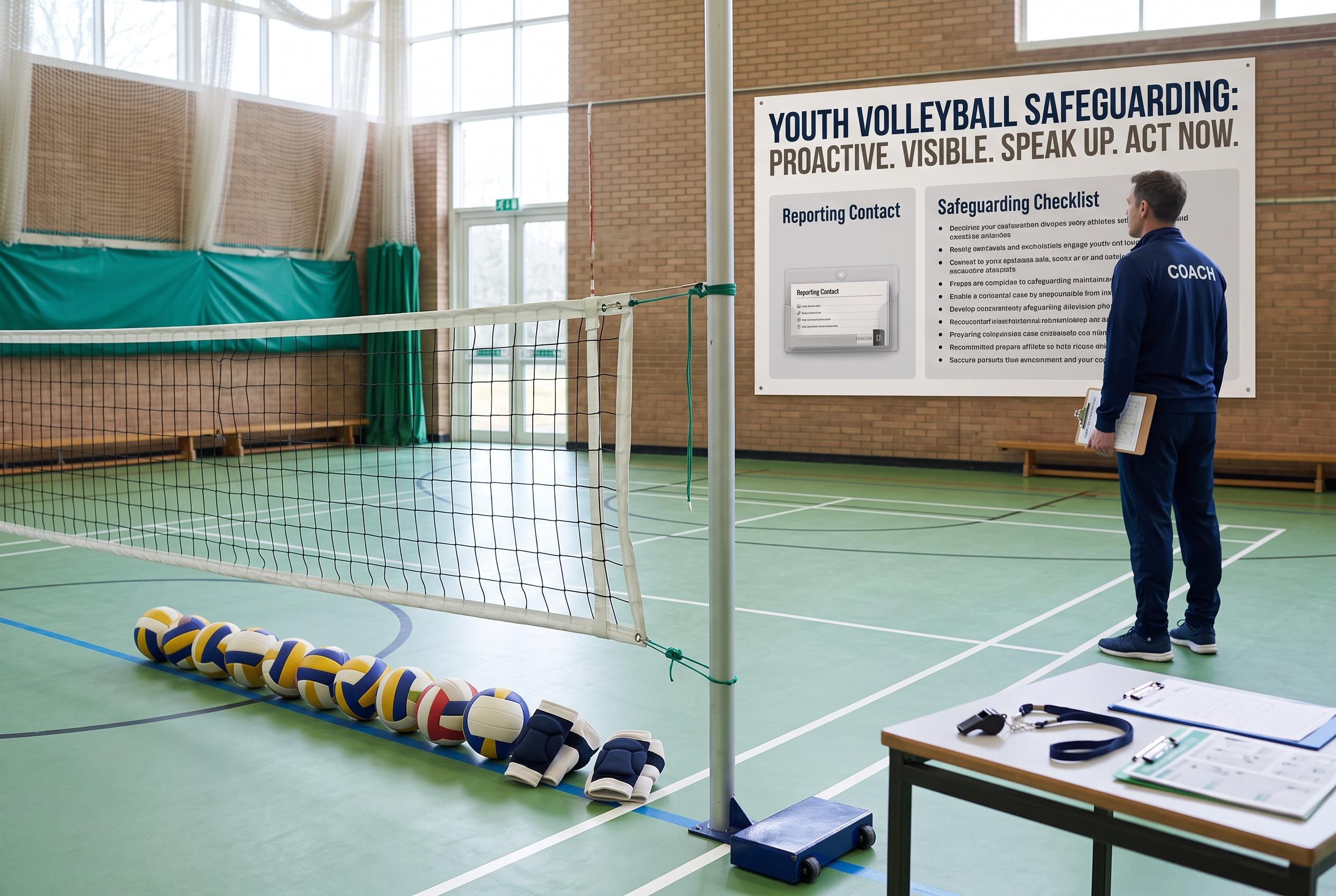

The Junior Volleyball Association calls on club leaders to move beyond compliance and foster active safeguarding practices, emphasising visibility, questioning, and immediate action to protect young athletes.
The Junior Volleyball Association is pressing club leaders to take a more active role in protecting young athletes, arguing that safety cannot be left to governing bodies alone. In a statement on its website, the organisation said clubs must treat safeguarding as part of everyday culture, not as an administrative task completed once at registration.
JVA says its Athlete Safety Programme is built on three pillars: background screening, Trusted Coach education and Minor Athlete Abuse Prevention Policies, or MAAPP. Adults who work with member clubs, including coaches, administrators, chaperones, trainers and other adults around junior athletes, are required to complete NCSI screening and approved training. The association also says it can act on disciplinary decisions from groups such as USA Volleyball, AAU and the U.S. Centre for SafeSport, while retaining its own power to intervene when conduct falls short of its standards.
The emphasis on layered protection mirrors wider youth-sport safeguarding practice. The U.S. Centre for SafeSport says MAAPP is designed to reduce one-on-one contact between adults and minors and to create conditions where misconduct is less likely to occur. AAU likewise says its athlete protection policy combines screening, prohibited-conduct rules, abuse-prevention requirements and reporting procedures. A Government Accountability Office review of youth-sport abuse prevention found that federal agencies and child-protection organisations have long recommended similar measures, including background checks, training and clear reporting systems.
But JVA’s message goes beyond compliance. The association says club directors and owners need to spend time in gyms, observe practices, watch how coaches speak to athletes and notice whether the atmosphere encourages openness or fear. It also urges leaders to attend team meals, travel and social events, ask hard questions when something seems unusual and avoid assuming that a cleared background check tells the full story about a coach’s behaviour.
The association says concerns should be raised promptly, documented and passed to the right authorities, including child-protection services, law enforcement and SafeSport when appropriate. Its broader warning is that silence, habit and reputation can all delay action. Safety, JVA says, depends on more than written rules: it depends on adults staying visible, asking questions and treating every red flag as worth examining.
Disclaimer: This content is for informational purposes only and is not intended to be a substitute for professional medical judgment, advice, diagnosis, or treatment.