

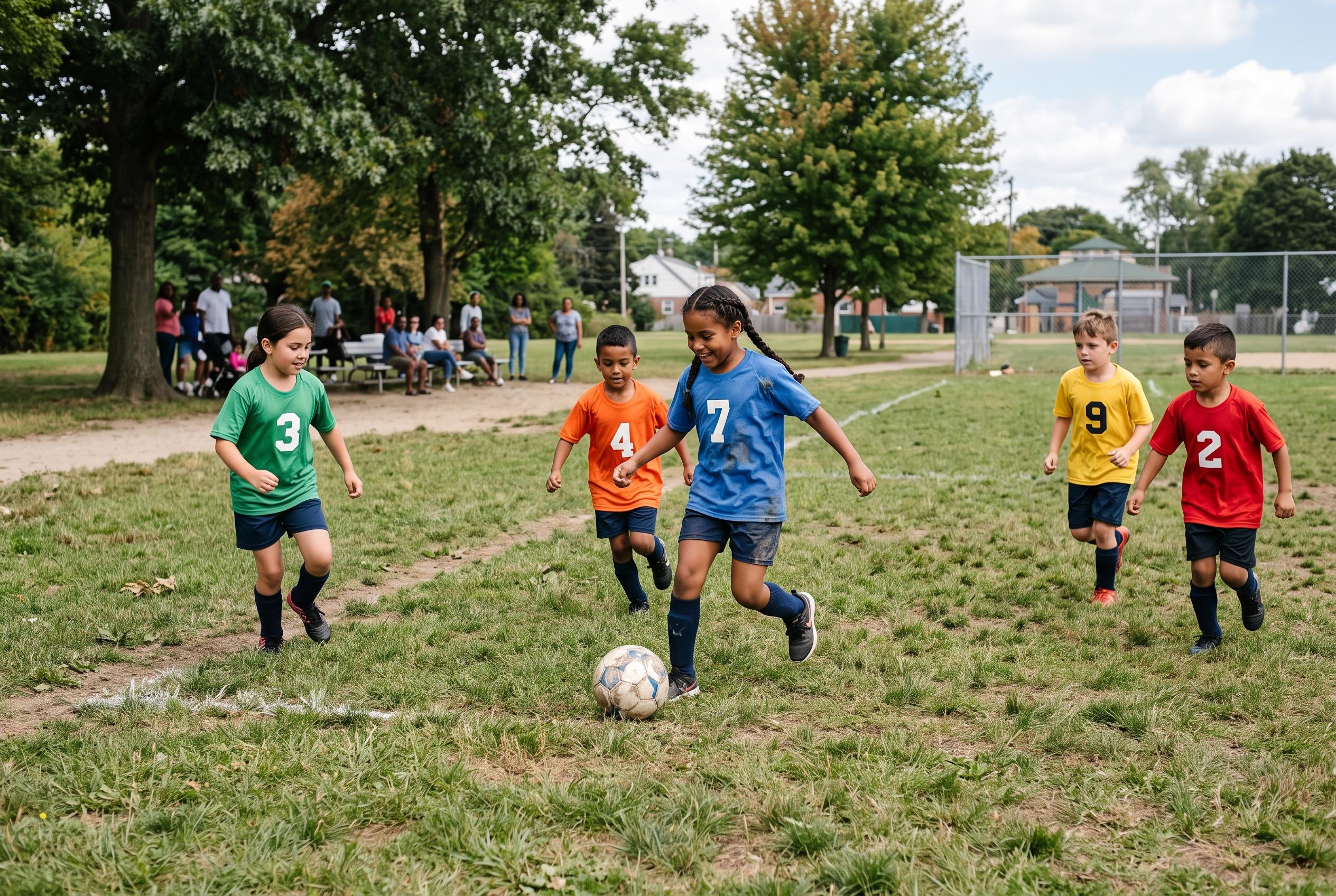

A viral post highlights how escalating expenses, commercialisation, and social media scrutiny are transforming youth sports from local community activity into a high-stakes industry, raising concerns about accessibility and the sport’s fundamental purpose.
Youth sports has always inspired strong feelings, but a viral X post this week tapped into a wider unease about how expensive and performative the whole scene has become. The image showed a family celebrating a young boy’s place on a travel baseball team for children under eight, with the occasion staged like a major signing day. The joke landed because it captured something many parents recognise: a world in which elementary-school sport can already feel like a full-scale recruitment process.
That shift is not just cultural; it is financial. According to an AP-Ipsos poll, 70% of parents in households earning more than $100,000 said their children played organised sport, compared with 40% of lower-income families. The same polling found that fees, travel, equipment and coaching can push annual costs above $2,000, a burden that many families struggle to absorb. With tournament travel, specialist training and branded kit all now part of the package, the gap between a casual local league and competitive travel sport has widened sharply.
Industry observers say the sector has also become attractive to institutional investors. White & Case described U.S. youth sports as a roughly $40 billion market that continues to grow as families spend more on year-round competition, training academies and tournament circuits. That commercial logic has helped turn what used to be a community activity into a segmented industry, with private operators increasingly able to monetise everything from facilities to media packages. FundLocker and other budgeting guides say the published team fee often tells only part of the story, because tournaments, travel and add-ons can quickly lift the total well beyond what parents expect.
Social media has amplified all of it. Families can now broadcast every milestone, while children are compared not only with classmates but with peers in expensive programmes across the country. That visibility can create a constant sense of competition, even in age groups where the main purpose ought to be exercise, friendship and fun. For many parents, the appeal of youth sport still lies in those basics. But as the cost, status and spectacle rise, the simple idea of Little League for everyone looks increasingly hard to sustain.
Disclaimer: This content is for informational purposes only and is not intended to be a substitute for professional medical judgment, advice, diagnosis, or treatment.



