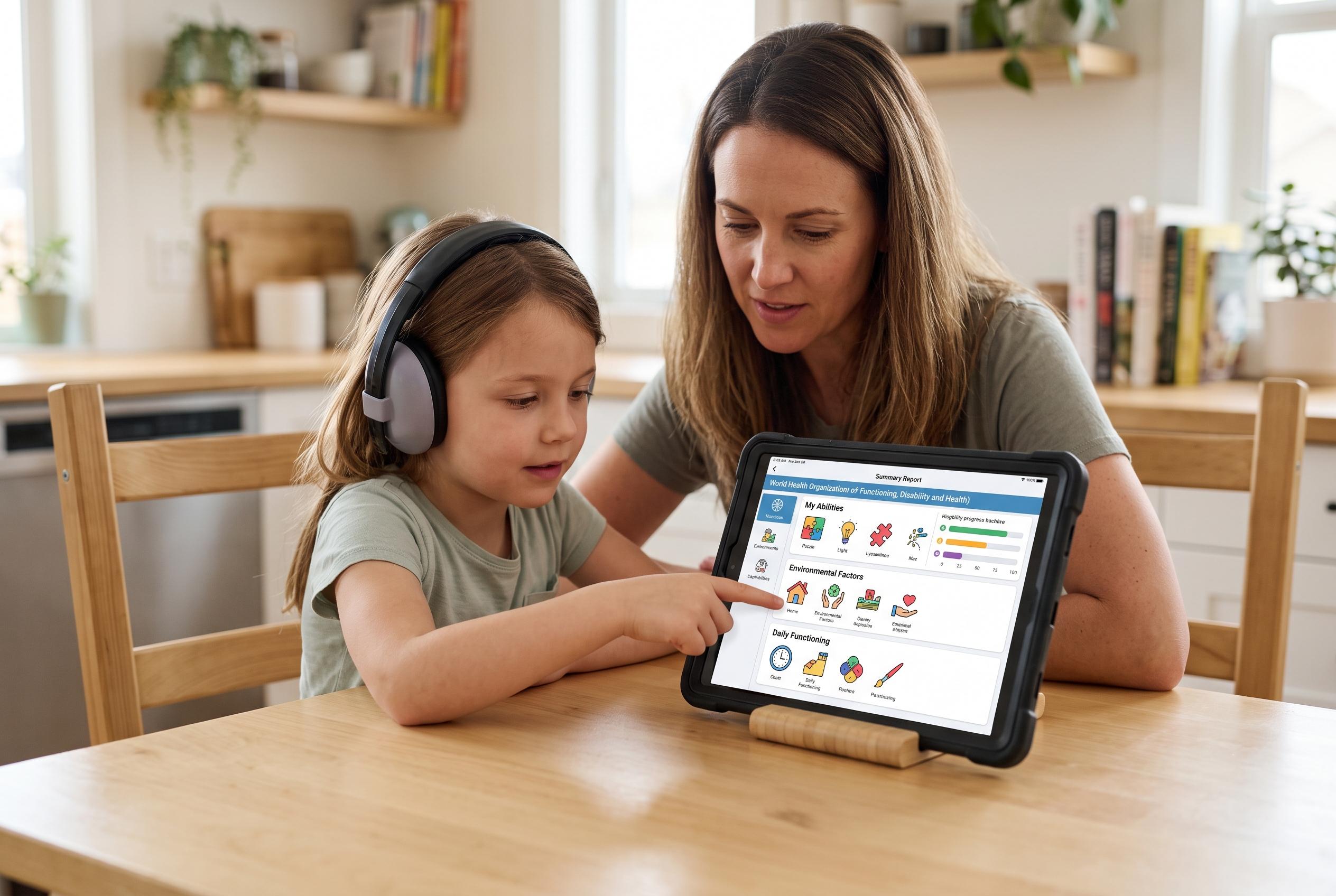

A new study reveals that structured digital summaries based on the WHO’s ICF framework empower parents of children with autism or ADHD to better understand their child’s abilities, environmental influences, and daily functioning, fostering more informed conversations with professionals.
Parents of children being assessed for autism or attention-deficit/hyperactivity disorder may gain more than a diagnosis from digital screening tools. A new study suggests that structured summaries of a child’s everyday functioning can help families see strengths, spot difficulties and better understand how home, school and other environments shape day-to-day life.
Researchers at Karolinska Institutet’s KIND centre asked 357 parents to review summaries generated from their own responses to a digital assessment built around the World Health Organization’s International Classification of Functioning framework. The aim was not simply to catalogue symptoms, but to create a clearer picture of how children function in ordinary settings.
The study, published in the Journal of Autism and Developmental Disorders, found that just over nine in 10 parents felt the summaries accurately reflected their child’s strengths and challenges. About half said the reports gave them fresh insight into both the child’s abilities and the environmental factors that can either support or hinder daily routines.
Sven Bölte, a professor at Karolinska Institutet and senior author of the study, said the summaries could help parents form a more complete picture and make conversations with schools or health professionals more productive. John Hasslinger, a researcher at KIND, said many parents reported recognising new aspects of their child and found it especially helpful that a relatively simple summary could highlight strengths as well as difficulties.
The work builds on earlier research showing that the digital platform is usable and that the ICF Core Sets for autism and ADHD can support a more individualised approach than diagnosis alone. Those Core Sets were developed to capture functioning across a broad range of domains, including environmental influences, and later studies have added psychometric evidence suggesting the framework is reliable and valid. Researchers have also explored extending it to personal factors such as values, preferences and lifestyle, underlining a wider move towards more nuanced assessments.
Disclaimer: This content is for informational purposes only and is not intended to be a substitute for professional medical judgment, advice, diagnosis, or treatment.